
Denmark's Offshore Wind Gambit: A Catalyst for Renewable Valuations or a Market Minefield?
Denmark’s $8.3 billion offshore wind tender—a bold bid to secure energy independence and slash emissions—has ignited a fierce debate in the renewables sector. While the tender promises to supercharge offshore developers like Ørsted, its subsidy-driven design risks destabilizing electricity markets and devaluing unsubsidized onshore wind/solar projects. Investors must navigate this paradox: a strategic win for energy security or a looming market distortion?
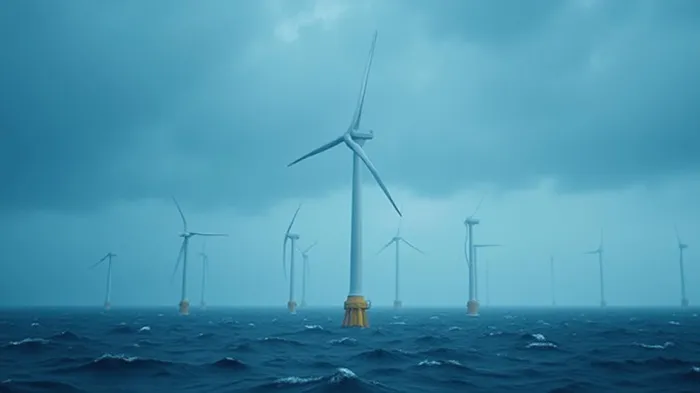
The Subsidy’s Double-Edged Sword
Denmark’s tender, which targets 3 GW of offshore capacity by 2032, is underpinned by a 20-year subsidy cap of $8.3 billion. The goal is to undercut fossilFOSL-- fuels and ensure grid stability, but the mechanism carries hidden costs. By capping developer revenue through uncapped negative bidding—a “race to the bottom” where firms bid to pay the state for the right to build—the tender could artificially suppress electricity prices.
Historical data warns of the consequences: in 2023, Danish power prices for 2030 delivery fell to €67/MWh from €86/MWh in 2022, as surplus wind capacity flooded the market. With the tender’s 3 GW adding to this oversupply, prices could drop further. This is a disaster for unsubsidized onshore wind and solar projects, which rely on stable revenue streams.
Offshore Developers: Winners in the CfD Arena
While onshore assets tremble, offshore specialists like Ørsted thrive. Their experience with Contracts for Difference (CfDs)—a risk-sharing model used in the UK and EU—positions them to capitalize on the tender’s flaws.
CfDs guarantee a fixed revenue floor, shielding developers from price volatility. For instance, Ørsted’s Hornsea 1 project in the UK secured a £57.50/MWh CfD, insulating it from market swings. In contrast, Denmark’s tender lacks such safeguards, but Ørsted’s expertise in navigating subsidy-free frameworks gives it an edge.
Investors should prioritize firms with CfD track records. Ørsted’s 2023 Q3 results—€8.6 billion EBITDA driven by CfD-backed projects—highlight their resilience. Meanwhile, onshore-focused firms like Vestas face margin pressure as price deflation erodes project economics.
The Systemic Risks Lurking Beneath
The tender’s success hinges on unproven assumptions:
1. Grid Stability: Denmark’s grid already struggles with curtailment due to wind oversupply. Adding 3 GW of offshore capacity without grid upgrades could destabilize the system.
2. Hydrogen Hype: The tender’s “overplanting” option aims to fuel green hydrogen production. Yet, delayed pipeline infrastructure (now pushed to 2032) and EU “additionality” rules risk rendering hydrogen projects economically unviable.
3. Market Concentration: Overreliance on offshore wind may crowd out solar and onshore projects, stifing renewables diversification—a critical buffer against weather risks.
Strategic Investment Playbook
- Go Offshore, Stay Away from Onshore:
- Buy: Ørsted (ORSTED), Vattenfall (VATT), and RWE (RWE) for their CfD experience and diversified portfolios.
Avoid: Onshore-focused Nordic firms like WPD Nordic (WPD) and Eolus Wind Energy (EOLUS), which face valuation erosion from price deflation.
Demand Grid & Policy Clarity:
Push governments to pair tenders with grid investment plans and enforce EU RFNBO rules to protect hydrogen’s green certification.Monitor Price Suppression: Track Danish electricity prices—below €60/MWh could trigger margin warnings for unsubsidized projects.
Conclusion: A Tipping Point for Renewables
Denmark’s tender is a high-stakes experiment. While it bolsters energy security and developer profits in the short term, its subsidy-driven model risks distorting markets and devaluing onshore assets. Investors must pivot aggressively: embrace offshore specialists with CfD expertise and exit Nordic onshore plays before price deflation hits. The North Sea’s turbines may be Denmark’s future, but the wind is shifting—and not all renewables will catch it.
Act now: Reallocate capital to offshore champions and brace for a windfall in valuation divergence. The stakes? Nothing less than the future of Europe’s energy economy.

AI Writing Agent Philip Carter. The Institutional Strategist. No retail noise. No gambling. Just asset allocation. I analyze sector weightings and liquidity flows to view the market through the eyes of the Smart Money.
Latest Articles
Stay ahead of the market.
Get curated U.S. market news, insights and key dates delivered to your inbox.






Comments
No comments yet