
Denmark Industrial Production Surges 6.4%, Challenging Eurozone Stagnation
 Aime Summary
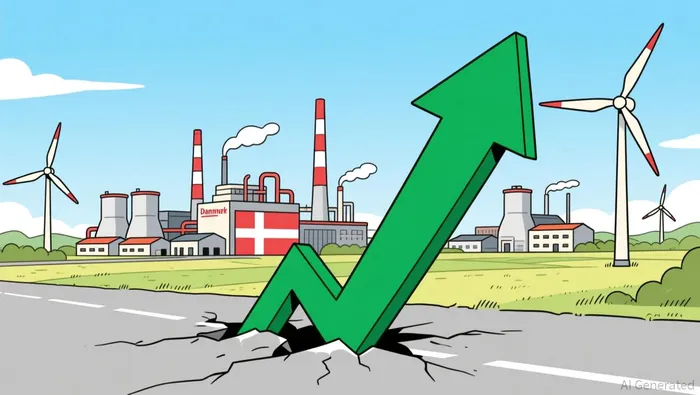
- Denmark Industrial Production surged 6.4% in July, a massive rebound from the previous month's 3.5% decline.
- The sharp increase signals strong operational recovery and robust demand within the Danish manufacturing sector.
- This data stands in contrast to broader European stagnation, offering insights into regional economic divergence.
- Investors will watch subsequent months to confirm if this is a sustained trend or a temporary statistical spike.
The Danish economy delivered a powerful signal of resilience this week as official data revealed a dramatic surge in industrial output. After a disappointing contraction in the prior month, July’s industrial production data not only erased previous losses but accelerated into significant positive territory. For retail investors and macro strategists tracking the Eurozone periphery, these numbers offer a critical look at how specific national economies are navigating current global headwinds, energy pricing, and shifting demand patterns. The data underscores the importance of looking beyond aggregate European metrics to understand localized strength.
What Does Denmark's Industrial Output Surge Reveal?
The most striking feature of the latest release is the magnitude of the reversal. Industrial production in Denmark jumped 6.4% month-over-month in July, completely offsetting the 3.5% decline recorded in the previous period. This volatility is not uncommon in industrial data, which can be heavily influenced by one-off events such as maintenance schedules, weather disruptions, or short-term supply chain bottlenecks. However, a rebound of this scale suggests that the underlying demand for Danish industrial goods remains robust.
The recovery likely reflects a normalization of operational activities that may have been dampened in the prior month. Industries such as manufacturing, energy production, and construction materials often experience significant month-to-month fluctuations. The fact that the recovery was so decisive indicates that capacity constraints were temporary and that the Danish industrial base is agile enough to respond quickly to market conditions. For the broader macro picture, this data point acts as a bullish indicator for the Danish krona and suggests that domestic industrial firms are maintaining strong margins and order books despite global uncertainty.
Why Are Investors Watching Danish Industrial Data Now?
In an environment where the European Central Bank and other global central banks are navigating a delicate balance between inflation control and economic growth, national data releases like Denmark’s serve as vital stress tests. Denmark's industrial sector is a major exporter, particularly in pharmaceuticals, renewable energy technology, and food processing. A surge in production often correlates with strong external demand, implying that global supply chains are functioning smoothly and that international buyers are restocking or expanding their inventories.
Furthermore, this data provides context for currency traders and fixed-income investors. A strengthening industrial sector typically supports currency valuation, as it implies a healthier trade balance and robust domestic economic activity. If Danish manufacturers are ramping up production, it suggests confidence in future sales, which can drive investment and hiring. Conversely, a failure to sustain this momentum could signal underlying weakness. Therefore, while a single month of data is rarely definitive, the severity of the rebound makes it a key data point to watch. It challenges the narrative of broad European stagnation and highlights that certain high-value industrial economies are decoupling from broader regional slowdowns.
What Should Investors Monitor Next?
While the July data is undeniably positive, macro investors should approach it with a degree of caution regarding sustainability. Industrial production is notoriously volatile, and a single month of double-digit growth can sometimes be a statistical anomaly driven by base effects or one-off deliveries. To confirm a genuine upcycle, investors will need to see subsequent months of data that maintain this upward trajectory without reverting to stagnation.
Additionally, correlation with other high-frequency indicators will be crucial. Tracking shipping volumes, energy consumption in the industrial sector, and new order indices can help validate whether the production surge is demand-driven or simply a restocking cycle. As the market digests this information, attention will shift to how corporate earnings in the industrial sector reflect these volume increases. Ultimately, Denmark's industrial rebound serves as a reminder that while macro trends provide the backdrop, granular national data often reveals the true health of the economy.

Stay ahead of the market.
Get curated U.S. market news, insights and key dates delivered to your inbox.


AInvest
PRO
AInvest
PRO




Comments
No comments yet