
Denmark CPI Slows to 0.7% — Hints at Soft Landing Amid Geopolitical Risks
 Aime Summary
Denmark’s CPI growth slowed to 0.7% year-over-year as of March 2026, down from 0.8% previously. The slowdown aligns with a broader global trend of easing price pressures in advanced economies. Investors are watching inflation data to gauge the likelihood of central bank rate cuts in the near term. A key caveat is that energy and geopolitical risks could still drive unexpected inflation spikes.
The Danish CPI (Consumer Price Index) has declined slightly to 0.7% YoY in March 2026, down from 0.8% in the prior report. While the decline is modest, it signals that inflationary pressures in Denmark are continuing to moderate. This is in line with broader global trends, where central banks are observing a slower rate of price growth, especially in advanced economies. The decline in CPI is notable given the ongoing geopolitical tensions affecting energy markets, particularly in the Middle East, which have the potential to drive upward price pressures.
What the Denmark CPI Data Reveals About Inflation Trends
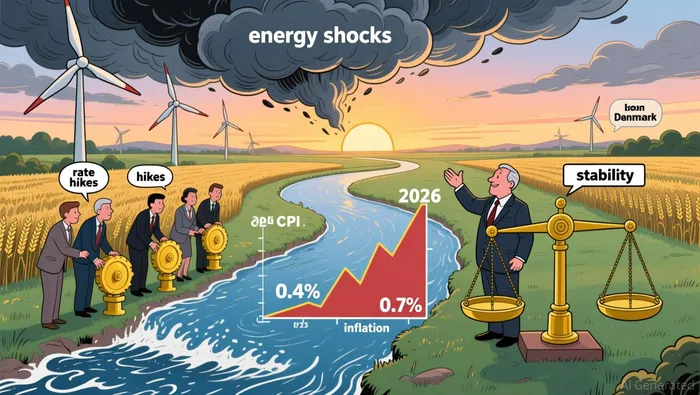
The CPI is a key indicator of price stability in an economy and is closely monitored by central banks and investors alike. In Denmark’s case, the slight decline in inflation to 0.7% suggests that the economy is experiencing a soft landing—where price growth remains positive but at a decelerating pace. This could be attributed to several factors, including a more cautious consumer behavior, the lingering effects of monetary tightening, and global disinflationary trends.
It’s also worth noting that the broader European economy has been experiencing a moderation in inflation after years of post-pandemic supply chain disruptions and energy price shocks. While the Danish CPI remains below the 2% threshold common in central bank targets, the gradual slowdown might not necessitate immediate policy changes. However, the data does contribute to the growing body of evidence suggesting that global inflation is returning to pre-pandemic levels.
Why Slowing CPI Could Influence Central Bank Policy Expectations
The Danish National Bank (DNB) typically uses CPI data to inform its monetary policy decisions. A slower rate of inflation, especially if it continues, could signal that the central bank may not need to maintain aggressive interest rate levels for long. This is in line with the broader trend seen in other major economies, where central banks are beginning to consider rate cuts amid signs of economic softening.
Research from economists shows that long-term inflation trends are closely linked to central bank policy regimes. Shifts in these regimes—such as moving from tightening to easing—can influence inflation expectations and, by extension, economic behavior. Therefore, the current CPI slowdown, if sustained, may provide a basis for the DNB to reassess its stance and potentially ease monetary policy in the coming quarters.
Investors are also watching for signs of inflation reacceleration, especially given the ongoing geopolitical tensions in the Middle East. These tensions have raised concerns about energy supply disruptions, which could push prices higher in the near term. However, for now, the data remains consistent with a narrative of moderation.
How Investors Should Interpret and Monitor the Inflation Outlook
For investors, the slowdown in Denmark’s CPI is a sign that the economy is not overheating and that there is room for more accommodative monetary policy. This may support equity valuations and debt instruments, especially in sectors sensitive to interest rates.
However, investors should remain cautious. Inflation expectations are not always aligned with actual price growth. The broader economic environment, including global trade tensions, energy prices, and domestic wage growth, will continue to shape the inflation outlook. A key risk remains that unexpected geopolitical events—such as prolonged instability in energy corridors like the Strait of Hormuz—could disrupt market expectations and push inflation higher.
The next CPI reading, expected in the coming weeks, will provide more clarity on the trajectory of price growth. Until then, the current data suggests a relatively stable inflation environment in Denmark, with room for central bank flexibility and potential market relief.

Stay ahead of the market.
Get curated U.S. market news, insights and key dates delivered to your inbox.


AInvest
PRO
AInvest
PRO



Comments
No comments yet