
The Demise of the Penny and Its Impact on Retail Pricing and Consumer Behavior


 Aime Summary
The Rounding Tax: A New Economic Reality
The elimination of the penny forces retailers to adopt rounding rules, a practice already tested in Canada since 2013. Canadian retailers round total purchase amounts rather than individual items, minimizing consumer confusion and inflationary pressure. In the U.S., however, the shift is expected to disproportionately affect cash-dependent businesses, such as bodegas, dollar stores, and vending machine operators. These entities will need to update point-of-sale (POS) systems and train staff to communicate rounding changes effectively, as highlighted in a 2025 economic brief.
The "rounding tax" is not merely a theoretical concern. Data from the 2023 Diary of Consumer Payment Choice reveals that cash transactions are more likely to end in digits requiring upward rounding, creating a net cost for consumers. If the nickel is also phased out-a scenario that could amplify rounding to the nearest dime-the annual burden could surge to $56 million according to research. This underscores the urgency for retailers to modernize their payment infrastructure and pricing models.
Opportunities in Retail Stocks: POS Systems and Cashless Payment Solutions
The transition to a post-penny economy is accelerating demand for advanced POS systems and cashless payment platforms. BLogic Systems, a leader in restaurant and hospitality POS solutions, has emerged as a key beneficiary. The company's hybrid POS system, which operates independently of internet connectivity, has driven reported revenue growth of 10–30% for its clients, alongside a 15% increase in table turnover and 17% improvement in order efficiency. BLogic's "white-glove" support and analytics-driven insights position it to capitalize on the growing need for reliable, adaptable payment systems according to its official announcement.
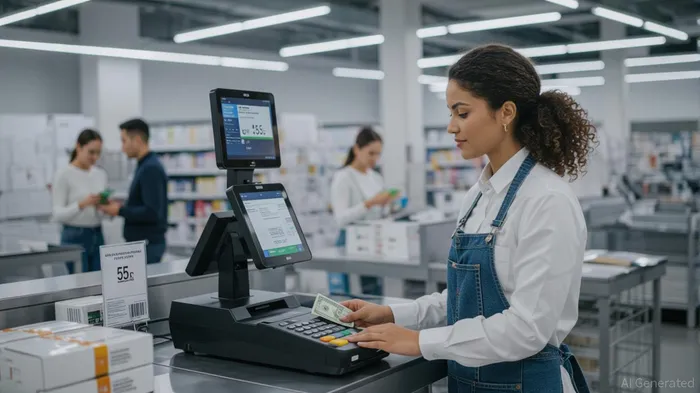
Cashless payment platforms are also gaining traction. Microsoft is rethinking its software pricing strategy in the AI era, shifting from "per user" to "per agent" models to accommodate autonomous AI systems. While this shift is broader than the penny's elimination, it reflects a trend toward flexible, usage-based billing-a model that could align with retailers' need for scalable payment solutions. Similarly, convenience stores like Sheetz and McDonald's have already begun rounding cash transactions to the nearest 5 cents, often using the practice to incentivize digital payments or charitable contributions.
Pricing Analytics and Strategic Adaptation
Beyond hardware and payment platforms, pricing analytics software is evolving to address the complexities of a post-penny world. Companies like Foundation Source are enhancing donor platforms with AI-assisted tools to meet the demand for speed and transparency in transactions. While this example is drawn from philanthropy, the principles of real-time data analysis and personalized pricing strategies are equally applicable to retail. As retailers refine their pricing to avoid the ".99" strategy, analytics firms that help businesses optimize round-number pricing (e.g., .95 or .90) will likely see increased demand.
The Road Ahead: Mitigating Risks and Capturing Growth
While large retailers and e-commerce platforms will face minimal disruption due to their reliance on digital payments, smaller, cash-dependent businesses-particularly in rural or lower-income areas-will require targeted support. Investors should prioritize companies that offer scalable, user-friendly solutions for rounding compliance and cashless adoption. BLogic Systems' success in the restaurant sector demonstrates the potential for POS providers to drive operational efficiency and customer satisfaction during this transition according to market analysis.
The elimination of the penny is not merely a symbolic change; it is a catalyst for innovation in retail. As rounding practices become the norm, the winners will be those who anticipate the shift and equip businesses with the tools to thrive in a cashless, data-driven economy.

Delivering real-time insights and analysis on emerging financial trends and market movements.
Latest Articles
Stay ahead of the market.
Get curated U.S. market news, insights and key dates delivered to your inbox.






Comments
No comments yet