
The On-Demand Pay Revolution: How Fintech is Redefining Financial Stability in an Uncertain Economy
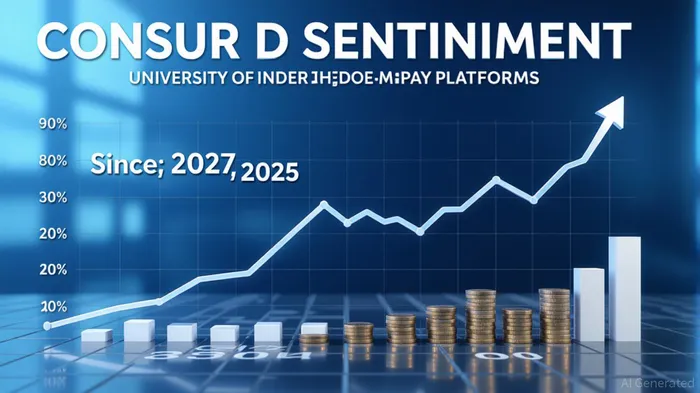
The U.S. consumer is in a precarious balancing act. Since late 2023, the University of Michigan Consumer Sentiment Index has plummeted from 68.2 to 60.7 in June 2025, with inflation and trade policy uncertainty fueling anxiety. Meanwhile, the household savings rate has eroded from 4.8% to 3.4%, leaving many Americans without a financial safety net. Against this backdrop, a quiet revolution is underway: on-demand pay platforms are emerging as critical infrastructure for millions of workers struggling to navigate economic volatility.
The Structural Shift in Worker Vulnerability
Hourly workers—comprising nearly 60% of the U.S. workforce—face compounding pressures. With wages stagnant and inflation expectations remaining stubbornly above 5%, even minor income delays can trigger cascading financial crises. The data reveals stark generational divides: Gen Z and millennials have embraced trade-down behaviors, while older generations cling to outdated spending habits. This bifurcation underscores a systemic flaw in traditional payroll systems: the inability to provide liquidity when workers need it most.
Enter earned wage access (EWA) platforms. These fintech solutions allow employees to withdraw a portion of their earned wages instantly, sidestepping the biweekly pay cycle. For a workforce where 40% of Americans can't cover a $400 emergency expense, such tools are not just convenient—they're essential. The market for EWAEWA-- is projected to grow at a 22% CAGR through 2028, driven by a trifecta of forces: rising economic anxiety, employer cost-saving incentives, and regulatory tailwinds for financial inclusion.
The Business Model Advantage
EWA providers thrive on recurring revenue streams, a model far more stable than one-off transaction fees. By partnering with employers, these firms reduce payroll friction (e.g., fewer late payment disputes) while offering workers a lifeline. Companies like FlexWage and Even have built moats through enterprise integrations with HR software like ADP and Gusto—a strategic move that creates switching costs for employers.
Regulatory risks loom, particularly around fees and transparency. Some states are proposing caps on EWA charges, which could pressure margins. However, these risks are manageable for firms that prioritize ethical pricing and compliance. The long-term upside lies in scale: as more employers adopt EWA to retain hourly talent, the customer base becomes sticky and predictable.
Investment Implications
The structural tailwinds for EWA are undeniable. Investors should target firms with:
1. Employer Network Depth: Partnerships with major payroll providers and Fortune 500 companies.
2. Diverse Revenue Streams: Those moving beyond transaction fees to offer financial wellness tools (e.g., budgeting apps, debt management).
3. Regulatory Agility: Companies that proactively engage policymakers to shape sustainable frameworks.
While volatility remains, the sector's fundamentals align with a broader shift toward financial resilience. For example, even as the S&P 500 hit record highs in June 1025, the savings rate's decline to 3.4% signals that millions of Americans are relying on EWA to bridge income gaps.
Conclusion
The on-demand pay revolution is a response to systemic inequities in the U.S. labor market—a market where economic uncertainty disproportionately impacts hourly workers. Fintech firms enabling EWA are not just innovators; they're architects of a new social contract between employers and employees. While regulatory hurdles will test the sector, the structural demand is too strong to ignore. For investors, this is a rare opportunity to profit from solutions that address both financial instability and corporate responsibility—a winning formula in any economic climate.

Stay ahead of the market.
Get curated U.S. market news, insights and key dates delivered to your inbox.
AInvest
PRO
AInvest
PRO



Comments
No comments yet