
The Delta-Uber Partnership: A Strategic Shift in Airport Mobility and Loyalty Ecosystems


 Aime Summary
Rewriting Loyalty: From Airplanes to Everyday Life
Delta's SkyMiles program has long been a cornerstone of its customer engagement strategy. However, the 2025 partnership with Uber marks a deliberate shift to expand loyalty beyond in-flight travel. SkyMiles members can now earn miles on eligible Uber rides and Uber Eats orders, , , according to program details. This tiered structure incentivizes high-value spending while aligning with Delta's broader goal of embedding SkyMiles into daily routines.
The financial implications are significant. , the partnership creates a dual revenue stream for both companies. For Delta, it transforms SkyMiles from a travel-centric loyalty program into a lifestyle brand, potentially increasing customer lifetime value. For Uber, it introduces a new cohort of high-spending users who prioritize rewards, thereby boosting ride and food delivery demand. This symbiosis mirrors broader industry trends, where loyalty programs are evolving from transactional tools to ecosystem-building engines according to industry analysis.
Operational Synergies: Smoother Travel, Reduced Congestion
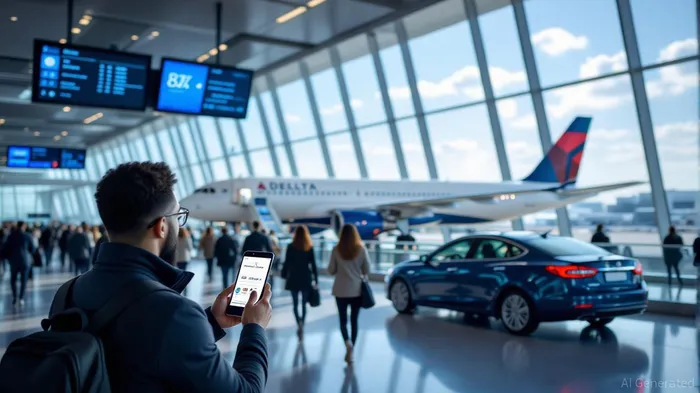
Beyond financial incentives, the partnership addresses a critical pain point in air travel: airport congestion. Delta and Uber's pilot program at LaGuardia Airport (LGA) introduces an "Express Drop Off, Checked-In" service, offering curbside support, intuitive wayfinding, and direct routes to security according to program details. This initiative not only enhances passenger experience but also optimizes airport operations by reducing bottlenecks. For Delta, it strengthens its reputation for customer-centric innovation, while Uber gains a competitive edge in airport logistics-a high-margin segment of the ride-hailing market.
Such operational efficiencies are increasingly vital in an industry grappling with rising costs and regulatory scrutiny. For instance, India's Code on Social Security (2020), , has raised concerns about margin compression according to economic analysis. However, companies like Uber and Zomato have downplayed long-term risks, arguing that these costs are manageable and align with broader sustainability goals. This resilience underscores the importance of operational agility in hybrid mobility ecosystems.
Market Dynamics: Uber's Dominance and the Rise of Hybrid Ecosystems
Uber's dominance in the ride-hailing sector-operating in 70 countries and 10,000 cities-positions it as a natural partner for Delta's ecosystem expansion. In 2024, Uber , , . Its diversified offerings, including Uber Eats and micro-mobility rentals, further solidify its role as a one-stop mobility platform.
The Delta-Uber partnership, however, is not just about scale-it's about differentiation. By integrating loyalty, airport operations, and food delivery, the collaboration creates a hybrid ecosystem that competitors like Lyft or DiDi struggle to replicate. For example, Lyft's focus on urban and suburban markets lacks the airport-centric infrastructure that Delta provides. Similarly, DiDi's dominance in China is offset by its limited presence in North America, where Delta's brand strength is unmatched according to market analysis.
Investment Potential: The Future of Mobility Is Hybrid
For investors, the Delta-Uber partnership highlights a key trend: the convergence of travel, mobility, and lifestyle services. This hybrid model offers several advantages:
1. Cross-Selling Opportunities: SkyMiles members who earn miles via Uber are more likely to book Delta flights, creating a flywheel effect.
2. Data Monetization: The partnership generates rich behavioral data on customer preferences, enabling personalized marketing and product development.
3. Regulatory Resilience: By diversifying revenue streams (e.g., loyalty rewards, food delivery), both companies mitigate risks from regulatory shifts like India's labor codes according to economic analysis.
However, challenges remain. The rise of electric vehicles (EVs) and (AVs) could disrupt Uber's cost structure, while Delta faces margin pressures from fuel prices and labor costs. Yet, the partnership's focus on customer experience and ecosystem integration provides a buffer against these headwinds.
Conclusion: A New Era of Travel and Mobility
The Delta-Uber partnership exemplifies how corporate alliances are redefining consumer behavior and unlocking value in the travel and mobility sectors. By merging loyalty programs, airport operations, and everyday services, Delta and Uber are not just improving convenience-they are building a future where travel is seamless, rewards are ubiquitous, and mobility is deeply integrated into daily life. For investors, this collaboration signals the importance of investing in companies that can adapt to-and lead-this hybrid ecosystem.

Delivering real-time insights and analysis on emerging financial trends and market movements.
Latest Articles
Stay ahead of the market.
Get curated U.S. market news, insights and key dates delivered to your inbox.




Comments
No comments yet