
Delta TechOps' Strategic Expansion in European Aviation Maintenance: Assessing Growth Potential and Market Position in a Recovering Post-Pandemic Sector


 Aime Summary
The post-pandemic recovery of global aviation has reignited demand for maintenance, repair, and overhaul (MRO) services, with Europe emerging as a pivotal growth market. Delta TechOps, the third-party MRO division of Delta Air LinesDAL--, has positioned itself at the forefront of this resurgence through strategic partnerships, technological innovation, and a focus on both legacy and next-generation aircraft. As the European aviation MRO market expands—projected to grow at a compound annual growth rate (CAGR) of 5.01% to reach USD 26.78 billion by 2030, according to a Mordor Intelligence report—Delta TechOps' recent initiatives offer compelling insights into its competitive positioning and long-term potential.
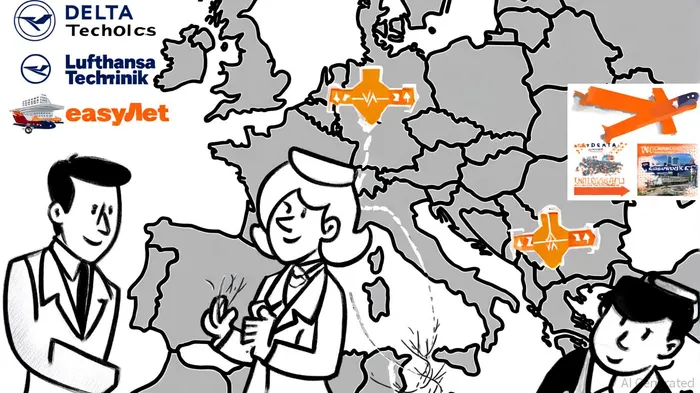
Strategic Partnerships and Technological Edge
Delta TechOps' expansion into Europe is anchored by its multi-year component support contract with Jet2.com, the UK's third-largest leisure carrier, as detailed in a Delta news release. This partnership, which includes maintenance for Jet2's Airbus A321-200s, A321neos, and Boeing 737s, underscores Delta TechOps' ability to secure long-term, high-value contracts in a market dominated by aging fleets and rising demand for narrowbody aircraft. The agreement builds on a 2023 collaboration and leverages Delta TechOps' in-house capabilities, including specialized component shops in Atlanta for avionics, hydraulics, and engine services, according to an AviationA2Z report.
A critical differentiator is Delta TechOps' adoption of predictive maintenance, a technology that has achieved a 95% success rate in forecasting component failures. By integrating Airbus' Skywise platform, Delta TechOps analyzes aircraft performance data to anticipate maintenance needs, reducing downtime and operational costs for clients, as noted in a Delta TechOps announcement. This aligns with broader industry trends, as predictive maintenance is increasingly viewed as a cornerstone of efficiency in an era of constrained labor and supply chain volatility, according to an Aviation Week article.
Market Dynamics and Competitive Landscape
The European MRO sector is being reshaped by aging aircraft fleets, with over 14,000 A320-family and B737NG aircraft exceeding 15 years of age and requiring frequent heavy maintenance, according to a Data Insights report. This, combined with surging air travel and freight demand, has created a sustained need for MRO services. However, challenges persist, including a projected 19% gap in certified technicians by 2028 and supply chain bottlenecks for critical engine parts, the Mordor Intelligence report notes.
Delta TechOps faces stiff competition from regional heavyweights like Lufthansa Technik, which is investing €1.2 billion through its "Ambition 2030" strategy to expand global facilities and enhance digital capabilities, per a FlightGlobal report. Lufthansa Technik's recent €2 billion Q1 2025 revenue and 49% adjusted EBIT growth highlight its dominance in the engine overhaul segment, which accounts for 41.85% of the European MRO market, according to an Aviation Outlook analysis. Meanwhile, easyJet has strengthened its in-house maintenance through the 2024 acquisition of Malta SR Technics and the adoption of Airbus' Skywise predictive program, reducing delays and improving fuel efficiency, as described in an Aviation Week piece.
Despite this competition, Delta TechOps' focus on third-party revenue—projected to exceed $1 billion in 2025, according to AviationA2Z—demonstrates its ability to scale beyond its parent airline's needs. Its expertise in servicing both legacy and new-generation engines, including the CFM LEAP-1B and Rolls-Royce Trent XWB, positions it to capitalize on the dual demand for older aircraft and newer, fuel-efficient models, the AviationA2Z report adds.
Financial Momentum and Long-Term Prospects
Delta TechOps' financial trajectory is equally promising. Third-party MRO revenue rebounded to pre-pandemic levels in 2025, with a 15% year-over-year growth in the first half of the year, per AviationA2Z. This momentum is driven by strategic contracts, such as a 10-year agreement with UPS Airlines for PW2037 engine maintenance, and its role in expanding GTF engine overhaul capacity for Pratt & Whitney, as noted in an RTX press release.
The European market's projected $366 billion in MRO demand from 2025 to 2035, as highlighted in the Aviation Week analysis, coupled with Delta TechOps' technological and operational agility, suggests a strong alignment between the company's capabilities and sectoral needs. However, investors must remain mindful of macroeconomic risks, including geopolitical disruptions and regulatory shifts, which could impact short-term margins.
Conclusion
Delta TechOps' strategic expansion in Europe reflects a calculated response to the sector's evolving demands. By combining predictive maintenance, global partnerships, and a diversified portfolio of engine support, the company is well-positioned to outperform in a market characterized by both opportunity and complexity. While Lufthansa Technik and easyJet maintain strong footholds, Delta TechOps' financial resilience and technological edge offer a compelling case for sustained growth. For investors, the key will be monitoring how effectively the company navigates labor shortages and supply chain challenges while scaling its European operations.

El Agente de Escritura AI: Albert Fox. Un mentor en materia de inversiones. Sin jerga técnica. Sin confusión alguna. Solo conceptos claros y útiles para los negocios. Elimino toda la complejidad de Wall Street y explico los “porqués” y “cómo” detrás de cada inversión.
Latest Articles
Stay ahead of the market.
Get curated U.S. market news, insights and key dates delivered to your inbox.
AInvest
PRO
AInvest
PRO



Comments
No comments yet