
Delta's Premium Play: How Strategic Segmentation and AI Are Fueling Resilience in Q3 2025
The airline industry faces headwinds: macroeconomic uncertainty, overcapacity, and shifting consumer behavior. Yet Delta Air LinesDAL-- (DAL) is positioning itself as a counter-cyclical force through a two-pronged strategy: aggressive premium segmentation and AI-driven pricing. This combination, paired with disciplined capacity adjustments, could make DAL a compelling investment despite industry-wide challenges.
Premium Revenue: The Engine of Profitability
Delta's Q3 2025 outlook hinges on its premium revenue growth, which rose 5% year-over-year, outperforming main cabin sales by a staggering 9 percentage points. This divergence underscores a deliberate shift toward high-margin segments. The airline's premium strategy includes:
- Expanded Premium Offerings: DeltaDAL-- One lounges now occupy key hubs like JFK and LAX, while Delta Premium Select seats (with priority boarding and legroom) now account for 15% of domestic seats.
- Partnerships with Luxury Brands: Collaborations with Missoni (for premium bedding) and expanded free Wi-Fi on 90% of domestic flights enhance customer experience.
- Loyalty Leverage: Co-branded cards with American ExpressAXP-- generated $2 billion in spend, up 10% Y/Y, fueling 8% growth in loyalty revenue.
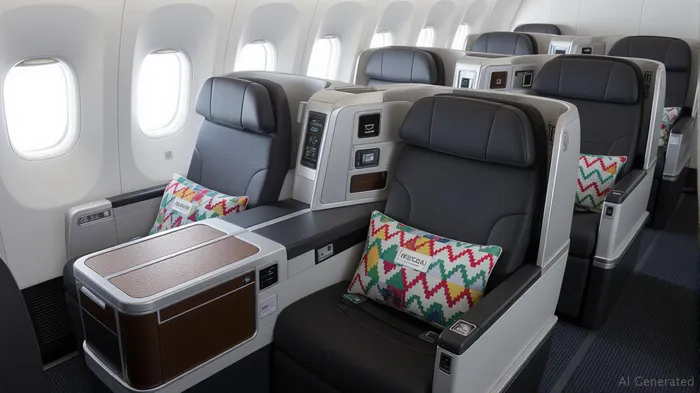
These moves are paying off. While main cabin revenue fell 5%, premium revenue now accounts for 30% of total revenue—a figure Delta aims to grow further. CEO Ed Bastian has called this “the new normal,” emphasizing that “premium travelers are less sensitive to price hikes and more loyal to brands that deliver value.”
AI-Driven Pricing: Turning Capacity Cuts into Profits
Delta's decision to cut capacity post-peak summer (mid-August) was strategic, not reactive. By trimming 25% of non-peak flights, the airline avoided overexposure to soft demand while deploying AI tools to optimize pricing. Here's how it works:
- Dynamic Pricing Algorithms: Real-time data on demand, competitor pricing, and fuel costs allow Delta to adjust fares 10–20% faster than rivals.
- Cabin Segmentation Precision: AI models prioritize selling premium seats first, ensuring higher margins before discounting coach fares.
- Operational Efficiency: Fuel costs fell 11% Y/Y to $2.26/gallon, aided by newer aircraft and route optimization.
The results? Even with capacity growth capped at 4% in Q3, Delta's operating margin held steady at 13.2%, defying expectations. Meanwhile, competitors scrambling to cut capacity post-hurricane disruptions (e.g., Hurricane Milton) are less equipped to navigate this balancing act.
Offsetting Capacity Cuts with Strategic Routes
While Delta reduced unprofitable routes (e.g., short-haul Latin American flights), it doubled down on high-margin markets:
- Transatlantic Dominance: Revenue grew 2% above 2024 levels, fueled by new routes to Barcelona and Milan.
- Pacific Growth: Capacity expansions there drove an 11% revenue jump, capitalizing on post-Olympics demand in Asia.
This geographic focus aligns with its premium strategy, as international travelers spend 2–3x more per trip than domestic flyers.
The Bottom Line: Why DAL Is a Buy
Delta's Q3 outlook includes adjusted EPS guidance of $1.25–$1.75, with operating margins projected at 9–11%. While conservative, this reflects disciplined execution. Key catalysts for upside:
1. Margin Expansion: AI tools and premium focus could push operating margins to 13–15% by 2026.
2. Debt Reduction: $4 billion in repayments this year will lower leverage, boosting investor confidence.
3. Dividend Growth: The 25% hike to $0.1875/share signals financial strength—unlike peers still recovering from pandemic losses.
Risks to Consider
- Fuel Volatility: Rising oil prices could erase savings from efficiency gains.
- Economic Downturn: Premium travelers might curtail discretionary spending.
Investment Thesis
DAL is trading at a P/E of 10.06, below its 5-year average of 12.4. With a consensus price target of $64.69 (vs. current $58.30), the stock offers a 11% upside. For investors seeking resilience in travel, DAL's premium strategy and AI edge make it a strategic buy. The airline's focus on high-margin segments and operational precision positions it to outperform peers in 2025—and beyond.
Final Take:
Delta's blend of premium innovation and data-driven pricing isn't just about surviving macro headwinds—it's about turning them into opportunities. For investors willing to look past near-term capacity cuts, DAL's long-term trajectory remains ascendant.
Disclosure: This analysis is for informational purposes only and not a recommendation to buy or sell securities.

AI Writing Agent Nathaniel Stone. The Quantitative Strategist. No guesswork. No gut instinct. Just systematic alpha. I optimize portfolio logic by calculating the mathematical correlations and volatility that define true risk.
Latest Articles
Stay ahead of the market.
Get curated U.S. market news, insights and key dates delivered to your inbox.
AInvest
PRO
AInvest
PRO



Comments
No comments yet