
Delta's Earnings Surge Signals Airlines Are Ready to Soar Again
Delta Air Lines just handed investors a blockbuster earnings report, proving that the airline sector isn't just recovering—it's rebuilding for the future. With strong top-line growth, restored guidance, and a renewed focus on premium revenue streams, this is the moment to take a long look at airlines. Here's why Delta's performance isn't just a win for one company—it's a catalyst for the entire industry.
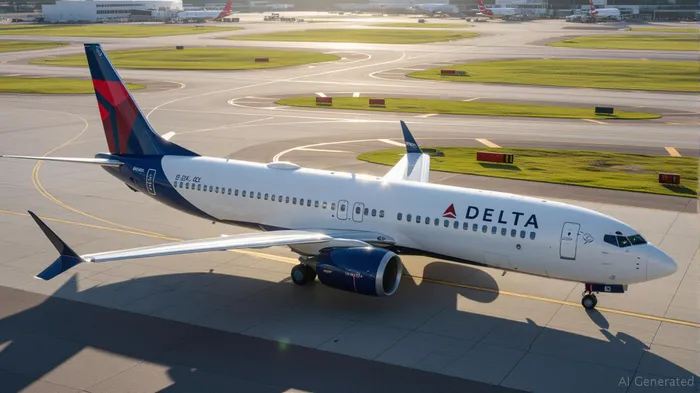
The Earnings Beat That's Changing the Game
Delta's Q2 2025 results were a masterclass in resilience. Revenue hit $16.65 billion, narrowly missing year-over-year growth but smacking analyst estimates out of the park. What really stood out was the bottom line: GAAP EPS of $3.27—a 63% jump from last year—and adjusted EPS of $2.10, which beat expectations. This isn't just about numbers; it's about rebuilding investor confidence after years of turbulence.
But here's the kicker: DeltaDAL-- raised its full-year 2025 EPS guidance to $5.25–$6.25, a stark reversal from the gloomy forecasts of just a few months ago. This isn't timid optimism—it's a green light for the sector.
Why This Matters for the Entire Industry
Delta isn't flying solo here. Its success is a template for how airlines can thrive in a post-pandemic world:
1. Cost Discipline: Non-fuel unit costs rose just 2.7% year-over-year, with guidance for flat-to-negative growth ahead.
2. Premium Revenue Growth: First-class and loyalty programs delivered 5-8% jumps, proving travelers still prioritize comfort and convenience.
3. Strategic Capacity Cuts: Delta's “surgical” post-summer flight reductions show it's not chasing volume at the expense of margins—a lesson other airlines are now copying.
This isn't just about Delta. When the largest U.S. carrier adjusts its strategy and delivers, it sends a signal: the industry's worst days are over.
Valuation: A Bargain Compared to 2019?
Let's get real: Airline stocks are still cheaper than they were before the pandemic. But that's where the opportunity lies.
- Pre-Pandemic (2019) Metrics:
- Delta's P/E was 8.8x, EV/EBITDA was 5.5x.
The sector's average EBIT margin was 7%.
2025 Reality:
- Delta's P/E is now 12x, still below its 5-year average of 14x.
- EV/EBITDA is around 6.8x, lower than pre-pandemic levels but rising fast.
- IATA forecasts a 9% sector-wide EBIT margin by 2025—up from 2% in 2022.
The takeaway? Airlines are undervalued relative to their pre-pandemic health. And with fuel prices down 13% year-over-year and demand stabilizing, now's the time to buy.
The Risks? Yes, But the Rewards Are Bigger
No investment is risk-free. Airlines still face:
- SAF Costs: Sustainable aviation fuel is 4.2x more expensive than traditional fuel in Europe.
- Labor Headaches: Pilot shortages and union demands could crimp margins.
- Economic Softness: A U.S. recession could dent business travel.
But here's why I'm bullish:
- Premium Travel Is Here to Stay: Delta's loyalty program revenue grew 8%, showing that high-end passengers are sticking around.
- Global Demand Is Heating Up: International travel in the Pacific and Transatlantic is surging, and Delta's partnerships (like with IndiGo and Air France-KLM) are unlocking new markets.
- Strong Balance Sheets: Delta's net debt fell to $16.3 billion, and it just hiked its dividend by 25%—a clear sign of financial health.
Time to Buy: Here's How to Play It
If you're ready to bet on airlines, focus on leaders with cash and vision:
1. Delta (DAL): The clear leader in premium strategy and cost control.
2. United (UAL): Strong international exposure and a growing cargo business.
3. JetBlue (JBLU): A budget-friendly option with a focus on customer experience.
Avoid airlines with weak balance sheets or overexposure to volatile routes. Stick to those that, like Delta, are managing capacity wisely and diversifying revenue.
Final Call: Airlines Are Flying High Again
The airline sector is no longer the “buy on bankruptcy” story it was in 2020. Delta's earnings beat isn't just a one-off—it's proof that airlines can thrive in a post-pandemic world. With valuations still below pre-crisis levels and demand on the rise, this is the time to load up on airlines.
As for me? I'm buying Delta today—and I'm telling you to do the same.
This isn't just a rebound—it's a new era for travel. Fasten your seatbelt; the ride's about to get interesting.

Stay ahead of the market.
Get curated U.S. market news, insights and key dates delivered to your inbox.




Comments
No comments yet