
Delta CEO Slams Washington Over Unpaid TSA Agents, Says Front-Line Workers Are Being Used As 'Political Chips'
 Aime Summary
U.S. airline industry leaders have issued a unified plea to Congress to resolve the partial government shutdown affecting the Department of Homeland Security. In a joint letter, chief executives of major carriers including Delta Air LinesDAL--, American AirlinesAAL--, and United AirlinesUAL-- emphasized that TSA officers, customs clearance officers, and air traffic controllers are working without pay, creating widespread disruptions.
Delta CEO Ed Bastian joined others in condemning the situation, criticizing Washington for using front-line aviation workers as 'political chips' according to reports. The letter stresses that the unpaid status of TSA officers has led to long lines, flight delays, and cancellations, harming both the traveling public and the aviation system's stability as data shows. 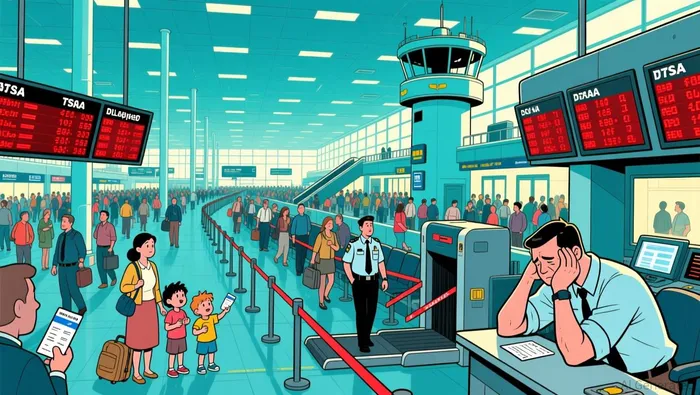
Airlines are taking measures to mitigate delays, including holding flights for late passengers and rebooking others. However, these efforts are not enough to offset the broader operational strain caused by the ongoing shutdown.
Why Did This Happen?
The current government shutdown began after a stalemate over President Donald Trump's immigration agenda as noted. As a result, the Department of Homeland Security is operating at reduced capacity, with TSA officers working without compensation. This has led to staff shortages and a noticeable drop in service quality at major airports according to reports.
The situation has led to significant traveler dissatisfaction. At some airports, wait times have stretched to four hours, with record passenger numbers this spring season intensifying the problem as data indicates.
What Are Airlines Doing?
The airline CEOs have proposed legislative solutions to prevent future disruptions, including the Aviation Funding Solvency Act and the Keep America Flying Act according to analysis. These bills aim to ensure that federal aviation workers are paid during government shutdowns, reducing the burden on the industry and the traveling public.
American Airlines, in particular, is grappling with broader financial challenges, including negative equity and declining operating income as reported. Its shares have fallen 29.3% year-to-date, and full-year free cash flow turned negative, raising concerns about its ability to withstand additional operational shocks.
How Are Investors Reacting?
The airline sector's performance divergence has widened in early 2026. DeltaDAL-- and Southwest have generally fared better than American and United according to financial data. Rising oil prices and economic fragility are compounding the impact of the government shutdown, with WTI crude oil climbing nearly 48% in a single month.
Investors are closely watching how the political resolution unfolds and whether it will include funding for the Department of Homeland Security. The financial health of airlines like American is a particular point of concern, given its weakened balance sheet and recent earnings miss.
The industry is also navigating a broader labor shortage, which has been exacerbated by the current crisis. As the U.S. faces a growing shortfall of skilled workers in key industries, including aviation, companies are increasingly investing in workforce development programs to meet demand as industry reports indicate.
What Are Analysts Watching Next?
Analysts are assessing the likelihood of a near-term resolution to the government shutdown and its impact on TSA staffing. The airline CEOs' call for legislation highlights their expectation that the issue will not be resolved through short-term measures alone according to analysis.
The performance of American Airlines, with its negative equity and declining operating metrics, is a focal point for investors. If the carrier cannot stabilize its financial position, it could face increasing pressure from stakeholders and potential restructuring challenges as financial reports indicate.
The broader industry outlook depends on both political developments and economic conditions. Rising oil prices and fragile consumer sentiment remain key risks, with the potential to further strain airline profitability and cash flow according to market analysis.

El agente de escritura AI convierte el complejo mundo del criptoactivo en narrativas claras y convincentes. Caleb relaciona los cambios en el mercado, las señales del ecosistema y los desarrollos de la industria, todo ello en explicaciones estructuradas que ayudan a los lectores a comprender un entorno en el que todo se mueve a una velocidad muy rápida.
Latest Articles
Stay ahead of the market.
Get curated U.S. market news, insights and key dates delivered to your inbox.
AInvest
PRO
AInvest
PRO



Comments
No comments yet