
Delta Air Lines Signals a Durable Travel Rebound: Sector Leadership and Investment Opportunities Ahead
The aviation sector's recovery narrative has been anything but straightforward since the pandemic, but Delta Air LinesDAL-- (DAL) is now offering a compelling case for a sustainable rebound in air travel demand. Its Q2 2025 earnings report, which beat lowered expectations and fueled a 12% stock surge to $56.78 by mid-July, underscores why investors should take notice. This article dissects how Delta's strategic focus on premium travel, international expansion, and cost discipline positions it—and the broader travel sector—as a sector leader capable of withstanding current headwinds.
Delta's Resilience: A Blueprint for Recovery
Delta's Q2 results revealed two critical truths about the travel recovery:
1. Premium demand is outpacing the masses.
Premium revenue grew 5% year-over-year, driven by first-class and business-class sales, while main cabin revenue fell 5%. This divergence highlights a structural shift toward high-margin travelers, with corporate clients and leisure travelers willing to pay for upgraded amenities. 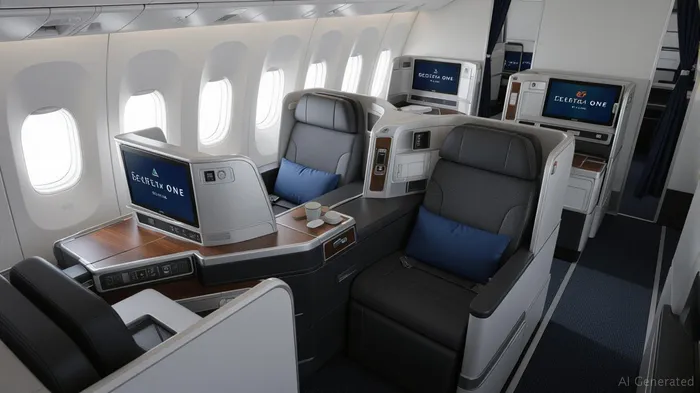 .
.
- International markets are leading the charge.
Pacific revenue rose 11%, while Transatlantic revenue grew 2% above 2024 levels, signaling strong demand for long-haul travel. Delta's fleet upgrades—such as the A350-900 and A220-300—enhance efficiency and comfort, further boosting international appeal.
Why This Matters for the Broader Travel Sector
Delta's performance isn't an isolated success; it's a barometer for the industry's health. Here's how its strategies validate a durable recovery:
1. Business Travel Stabilization
While corporate sales grew only low-single digits in Q2—below Delta's initial 5–10% target—the sector has stabilized. Companies are no longer cutting travel budgets aggressively, but they're also delaying bookings until closer to travel dates. This “wait-and-see” approach reduces demand volatility, making it easier for airlines to manage capacity.
2. Leisure Travel's Momentum
Leisure demand remains robust, particularly for summer peak travel, with Delta's on-time performance and route expansions (e.g., new SLC-Seoul and SEA-Barcelona routes) attracting discretionary spenders.
3. Capacity Discipline = Profitability
Delta's “surgical” flight cuts post-August will align supply with demand, preventing the fare deflation that plagued 2024. Airlines' collective efforts to reduce excess capacity (see ) suggest the industry is finally prioritizing margins over growth.
Investment Opportunities: Where to Play the Recovery
Delta's success offers clues about where to allocate capital across the travel ecosystem.
1. Airlines: Bet on Premium-Driven Leaders
- Delta Air Lines (DAL): Its dividend hike and focus on high-margin segments make it a core holding.
- JetBlue (JBLU): Leverages strong leisure demand in the Caribbean and Latin America, with a lower-cost model.
- Alaska Airlines (ALK): Benefits from Pacific and transborder routes, with a track record of cost discipline.
2. Hospitality: Capitalize on Business and Leisure Demand
- Marriott (MAR) or Hyatt (H): Premium hoteliers with corporate and luxury traveler exposure.
- Choice Hotels (CHH): Benefits from leisure-driven demand in mid-range segments.
3. Supply Chains: Fuel, Tech, and Parts
- Boeing (BA): Gains from Delta's fleet upgrades and global route expansions.
- Raytheon Technologies (RTX): Supplies critical aerospace components.
- Fuel Efficiency Plays: Companies like AeroFarms (aeroponic systems for airport food) or Amadeus IT Group (AMDE) (travel tech) could benefit from operational efficiencies.
Risks to the Narrative
While the outlook is positive, investors must weigh risks:
- Economic Downturns: A recession could stall corporate travel and leisure spending.
- Fuel Volatility: Delta's Q2 fuel savings (down 14% YOY) could reverse if oil prices rebound.
- Capacity Overcorrection: Overly aggressive flight cuts might limit future revenue growth.
Conclusion: Selective Exposure to a Sector in Transition
Delta's earnings reveal a travel sector no longer in “recovery mode” but transitioning to sustainable growth, driven by premium demand and disciplined capacity management. Investors should focus on high-margin segments (premium airlines, luxury hotels) and supply chain innovators with structural advantages.
Actionable Takeaway:
- Buy DeltaDAL-- (DAL) for its leadership in premium travel and dividend growth.
- Pair with MarriottMAR-- (MAR) or BoeingBA-- (BA) to capture cross-sector upside.
- Avoid airlines with weak premium strategies or excessive debt exposure.
The travel rebound isn't just a cyclical bounce—it's a structural shift favoring those who prioritize quality over quantity. Delta's performance proves it.
Data as of July 2025. Past performance does not guarantee future results.

Stay ahead of the market.
Get curated U.S. market news, insights and key dates delivered to your inbox.
AInvest
PRO
AInvest
PRO



Comments
No comments yet