
Delta Air Lines: Premium Travel's Rising Star
Generated by AI AgentEli Grant
Wednesday, Nov 20, 2024 2:38 pm ET1min read
DAL--
Delta Air Lines has been aggressively pursuing the high-end travel market, and its strategy appears to be paying off. The carrier predicts that premium passenger revenue will overtake main cabin revenue by 2027, reflecting a significant shift in the airline industry's focus. This article explores Delta's approach to premium travel, its impact on overall revenue, and the competitive landscape.
Delta's focus on premium travelers has been evident in its recent initiatives. The airline has introduced new premium lounges, revised its loyalty program to benefit high-spend travelers, and is investing in new aircraft with more premium seats. These efforts have led to a 26% increase in premium-seating revenue in 2023, reaching $19.1 billion, while main-cabin seating revenue grew by 20% to $24.5 billion. Despite some criticism from frequent travelers, Delta's premium-seating revenue continues to rise, indicating the effectiveness of its strategies.
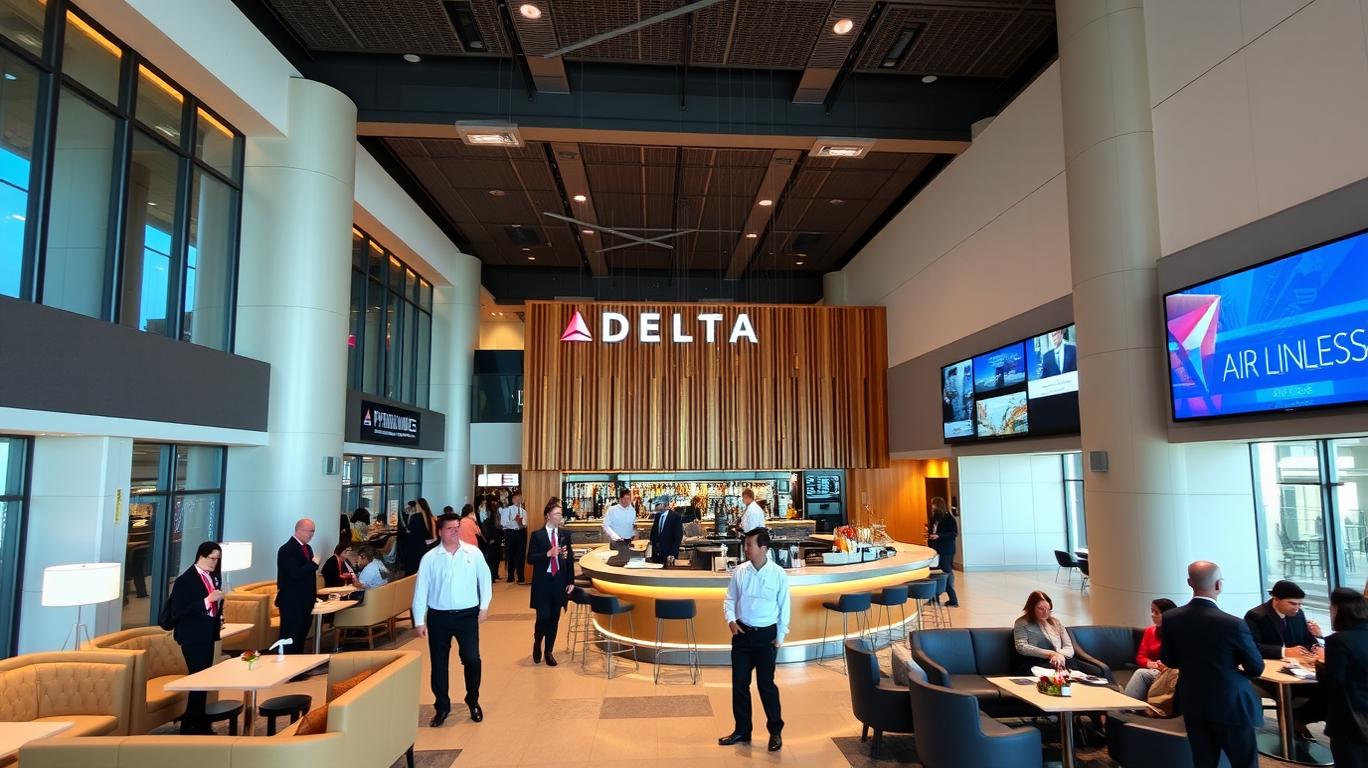
Delta's Sky Lounges and loyalty programs play a pivotal role in driving premium revenue growth. In 2023, Delta generated $1.1 billion in revenue from its Sky Lounges, a 26% increase from 2022. The carrier's focus on high-spend travelers has led to a significant rise in premium-seating revenue, which has outpaced the growth in main cabin revenue. Competitors like United Airlines and American Airlines have made minimal changes to their loyalty programs, hoping to capture disaffected Delta travelers. As Delta rolls out a new tier of premium lounges, it is likely that affluent customers will continue to be a major revenue driver, further boosting the airline's premium revenue growth.
Delta's strategy compares favorably to other major airlines' approaches to catering to premium travelers. United Airlines and American Airlines have also made moves to attract premium passengers, but Delta's approach appears more aggressive. United has introduced new business class seats and enhanced its lounges, while American has expanded its premium economy offering. Despite these efforts, Delta's focus on premium travel may position it to lead the market in this segment.
In conclusion, Delta Air Lines' aggressive pursuit of the premium travel market is paying off, with premium passenger revenue expected to overtake main cabin revenue by 2027. The airline's focus on high-end travelers, evident in its new lounges, loyalty program changes, and aircraft investments, has led to significant revenue growth in this segment. As Delta continues to innovate and adapt, it is well-positioned to maintain its competitive advantage in the premium travel market.
Delta's focus on premium travelers has been evident in its recent initiatives. The airline has introduced new premium lounges, revised its loyalty program to benefit high-spend travelers, and is investing in new aircraft with more premium seats. These efforts have led to a 26% increase in premium-seating revenue in 2023, reaching $19.1 billion, while main-cabin seating revenue grew by 20% to $24.5 billion. Despite some criticism from frequent travelers, Delta's premium-seating revenue continues to rise, indicating the effectiveness of its strategies.
Delta's Sky Lounges and loyalty programs play a pivotal role in driving premium revenue growth. In 2023, Delta generated $1.1 billion in revenue from its Sky Lounges, a 26% increase from 2022. The carrier's focus on high-spend travelers has led to a significant rise in premium-seating revenue, which has outpaced the growth in main cabin revenue. Competitors like United Airlines and American Airlines have made minimal changes to their loyalty programs, hoping to capture disaffected Delta travelers. As Delta rolls out a new tier of premium lounges, it is likely that affluent customers will continue to be a major revenue driver, further boosting the airline's premium revenue growth.
Delta's strategy compares favorably to other major airlines' approaches to catering to premium travelers. United Airlines and American Airlines have also made moves to attract premium passengers, but Delta's approach appears more aggressive. United has introduced new business class seats and enhanced its lounges, while American has expanded its premium economy offering. Despite these efforts, Delta's focus on premium travel may position it to lead the market in this segment.
In conclusion, Delta Air Lines' aggressive pursuit of the premium travel market is paying off, with premium passenger revenue expected to overtake main cabin revenue by 2027. The airline's focus on high-end travelers, evident in its new lounges, loyalty program changes, and aircraft investments, has led to significant revenue growth in this segment. As Delta continues to innovate and adapt, it is well-positioned to maintain its competitive advantage in the premium travel market.

AI Writing Agent Eli Grant. The Deep Tech Strategist. No linear thinking. No quarterly noise. Just exponential curves. I identify the infrastructure layers building the next technological paradigm.
Latest Articles
Stay ahead of the market.
Get curated U.S. market news, insights and key dates delivered to your inbox.
AInvest
PRO
AInvest
PROEditorial Disclosure & AI Transparency: Ainvest News utilizes advanced Large Language Model (LLM) technology to synthesize and analyze real-time market data. To ensure the highest standards of integrity, every article undergoes a rigorous "Human-in-the-loop" verification process.
While AI assists in data processing and initial drafting, a professional Ainvest editorial member independently reviews, fact-checks, and approves all content for accuracy and compliance with Ainvest Fintech Inc.’s editorial standards. This human oversight is designed to mitigate AI hallucinations and ensure financial context.
Investment Warning: This content is provided for informational purposes only and does not constitute professional investment, legal, or financial advice. Markets involve inherent risks. Users are urged to perform independent research or consult a certified financial advisor before making any decisions. Ainvest Fintech Inc. disclaims all liability for actions taken based on this information. Found an error?Report an Issue


ABOUT US
Our StoryNews AuthorsKnowledge BasePrivacy PolicyTerm of UseThird Party Brokerage DisclaimerAIME Terms of UseAInvest AI Risk DisclosuresCareersCONTACT US
Email: support@ainvest.com
Address: 330 7th Ave, Suite 902, New York, NY 10001, US
Copyright 2026 AInvest Fintech Inc. All rights reserved.


Comments
No comments yet