
Delta Air Lines: Navigating Post-Pandemic Recovery with Operational Excellence and Strategic Growth
Delta Air Lines (NYSE:DAL) has emerged as a bellwether of resilience in the post-pandemic travel sector, delivering a Q2 2025 performance that underscores its ability to balance cost discipline, network optimization, and growth. Amid macroeconomic headwinds and industry-wide challenges, Delta's results signal a strategic shift toward sustainable profitability. This article examines how Delta's operational rigor, route expansions, and restored financial guidance position it as a compelling investment for long-term travelers seeking exposure to the travel rebound.
Operational Resilience: Cost Control and Fuel Efficiency
Delta's Q2 2025 results reveal a company prioritizing efficiency. Its non-fuel unit cost (CASM-Ex) rose 2.7% to 13.49 cents—within expectations—and the company projects flat-to-lower growth in the September quarter. This discipline is amplified by a 14% drop in average fuel prices to $2.26 per gallon, cutting adjusted fuel expenses by 11% to $2.5B. These savings are critical as DeltaDAL-- modernizes its fleet, retiring older aircraft while adding fuel-efficient models like the A350-900 and A321neo.
The airline also achieved its highest on-time performance in years, with a 99.1% completion factor, reducing disruptions and boosting customer trust. Such operational excellence is a competitive edge in an industry where reliability drives loyalty.
Route Optimization: Leveraging High-Margin International Demand
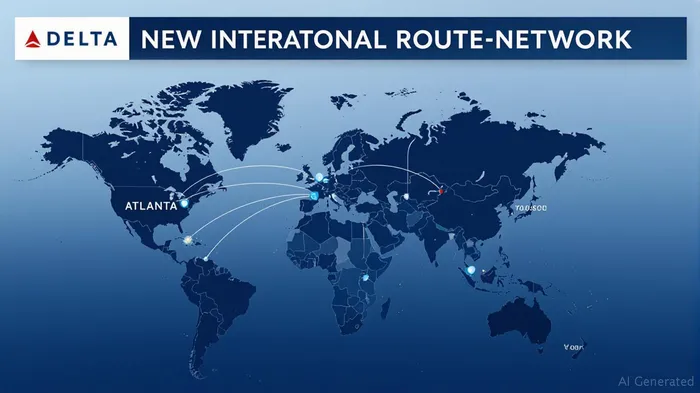
Delta's strategic route expansions are driving revenue growth. International revenue rose 2% overall, with standout performances in the Pacific (+11%) and Transatlantic (+2% vs. 2024 records). New routes—such as SLC to Seoul-Incheon and future nonstops to Barcelona and Rome—are targeting underserved markets, while partnerships with WestJet, IndiGo, and Air France-KLM enhance global connectivity.
Domestically, Delta maintained capacity growth at 4% while stabilizing unit revenue through premium pricing. High-margin streams (premium, loyalty, cargo) now account for 59% of revenue, up from 55% in 2024, reflecting a deliberate shift toward profitability over volume.
Financial Health: Dividends, Liquidity, and Debt Reduction
Delta's financial metrics affirmAFRM-- its strengthened balance sheet:
- Dividend Stability: A 25% dividend hike to $0.1875 per share, supported by a conservative 10.6% payout ratio, offers downside protection.
- Liquidity: $6.4B in cash and $16.3B in net debt (down $1.7B year-to-date) provide flexibility amid volatility.
- Guidance: Full-year EPS of $5.25–$6.25 and $3–$4B in free cash flow reflect confidence in demand resilience.
Valuation: Undervalued vs. Peers
Delta's valuation multiples highlight its bargain price:
- P/E Ratio: 8.88 vs. United's 10.2 and American's 9.5, suggesting undervaluation.
- EV/EBITDA: 4.5x, below industry averages (5.0x–6.0x), signaling room for re-rating.
Analysts' average price target of $61.67 (21% above current levels) aligns with Delta's improving fundamentals.
Risks to the Bull Case
- Fuel Prices: Sustained crude above $85/barrel could erode margins, though 60% of Q3 fuel needs are hedged.
- Demand Volatility: A recession or corporate travel slump could pressure premium revenue.
- Labor Costs: Salaries rose 10% year-over-year, requiring ongoing cost management.
Investment Thesis: A Strategic Buy at Current Levels
Delta's combination of operational discipline, high-margin revenue streams, and geographic diversification positions it as a top play on travel recovery. Key catalysts include:
- Pacific/Latin America Growth: These regions now account for ~30% of revenue, with TSA data showing record demand (3.1M travelers on June 22).
- Premium Pricing Power: Business and first-class cabins grew 5% in Q1, underscoring resilience.
- Balance Sheet Strength: Debt reduction and liquidity buffer ($6.8B) mitigate macro risks.
Recommendation:
- Buy: Accumulate shares at current levels (~$51) with a $45 stop-loss.
- Target: $60 by year-end, aligning with analyst consensus and 2025 guidance.
- Long-Term Play: Delta's shift to premium-focused travel aligns with post-pandemic demand trends, making it a core holding for investors betting on travel's structural rebound.
Conclusion
Delta Air Lines is rewriting its narrative from pandemic survivor to post-pandemic leader. By mastering cost controls, expanding high-margin routes, and maintaining liquidity, it has positioned itself to capitalize on travel's recovery. While risks like fuel prices and economic slowdowns linger, Delta's resilience and undervalued multiples make it a compelling buy for long-term investors. As the skies clear, DAL is primed for sustained growth.
Investment Risk Disclaimer: The analysis is based on public data and may not account for all market risks. Always conduct your own research before making investment decisions.

Stay ahead of the market.
Get curated U.S. market news, insights and key dates delivered to your inbox.
AInvest
PRO
AInvest
PRO



Comments
No comments yet