
Delta Air Lines Enhances Efficiency with International Remote Baggage Screening Program
 Aime Summary
Delta Air Lines has announced a series of strategic enhancements designed to streamline the travel experience for its international passengers. By leveraging industry partnerships and innovative technology, DeltaDAL-- is offering a more seamless journey for travelers connecting through key airports, particularly focusing on its operations between Seoul's Incheon International Airport (ICN) and Atlanta Hartsfield-Jackson International Airport (ATL).
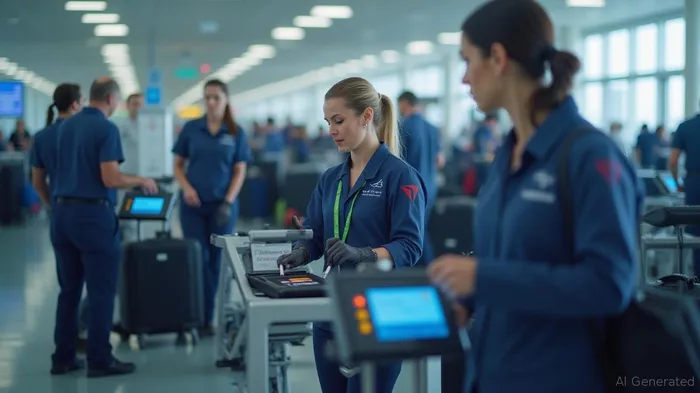
At the heart of Delta's latest initiative is the introduction of the International Remote Baggage Screening (IRBS) program. This program, in collaboration with Korean Air, U.S. Customs and Border Protection (CBP), and the Transportation Security Administration (TSA), aims to expedite baggage handling processes for passengers arriving in the U.S. from South Korea. Under IRBS, X-ray images of checked baggage are transmitted in advance from Incheon to CBP in the U.S., allowing for remote screening. This pre-screening negates the need for passengers to reclaim and recheck their luggage once they arrive in Atlanta, effectively saving an average of 20 to 25 minutes in connection time. This process not only reduces stress for travelers but also enhances efficiency at one of the world's busiest airports.
The IRBS initiative represents a significant step forward in Delta's commitment to enhancing international travel. The program currently benefits travelers on the ICN to ATL route, with plans to expand this convenience to other international routes. This aligns with Delta's strategy to strengthen its global network and partnerships, particularly through its joint venture with Korean Air. The system positions Incheon International Airport as only the third airport worldwide, after Sydney and London's Heathrow, to implement such an advanced baggage handling system for U.S.-bound flights.
Delta's efforts extend beyond baggage handling. The airline is also expanding its Touchless ID technology across its U.S. hubs, facilitating quicker and more convenient security processing. This technology allows TSA PreCheck members and Delta's SkyMiles customers to move through security using facial recognition, significantly reducing the traditional wait times associated with boarding pass and ID checks. Initial deployment is already underway at major airports, including Atlanta, Los Angeles, and New York, with full implementation expected by the end of the year.
Additionally, Delta is focusing on delivering a digital-first travel experience with the App Bag Drop service. Available at key hubs such as Atlanta, Boston, Detroit, and Seattle, this service allows passengers to print baggage tags and drop their luggage off swiftly, minimizing time spent in queues. This initiative underscores Delta's dedication to employing technology to enhance passenger satisfaction, offering travelers a more stress-free start to their journey.
By pursuing these initiatives, Delta not only aims to elevate the passenger experience but also to reinforce the U.S. as a preferred destination for international tourists. The streamlined processes enhance the reputation of U.S. airports as traveler-friendly, offering a positive first impression for visitors. Furthermore, Delta’s continued partnerships, such as that with Korean Air, underscore its commitment to global connectivity and improving transpacific travel.
These strategic developments are particularly timely as the global travel industry rebounds post-pandemic. As international tourism gradually returns to previous levels, Delta's investment in innovative solutions positions it as a leader in the realm of customer-centric travel services. The airline's initiatives not only enhance operational efficiency but also provide substantial benefits to the wider travel and tourism ecosystem, facilitating smoother transit experiences and fostering increased international travel to the United States.
Through expanding programs like IRBS and refining technological solutions such as Touchless ID and App Bag Drop, Delta continues to revolutionize travel, setting a new benchmark for the industry's future. These advances reflect the airline's proactive approach to meeting passenger needs, ensuring a more expedient, enjoyable, and seamless travel experience from start to finish.

Stay ahead of the market.
Get curated U.S. market news, insights and key dates delivered to your inbox.




Comments
No comments yet