
The Dell Dynasty and Its Influence on Tech and Private Equity Markets


 Aime Summary
The DellDELL-- family's wealth and investment strategies have long been a case study in how family offices shape industries. At the heart of this influence lies DFO Management, the single-family office established in 1998 to steward the assets of Michael Dell and his family. Over the past 25 years, ,
leveraging its unique structure to influence both technology and private equity markets. This article examines how the Dell family's wealth architecture, from its investment philosophy to its corporate governance, has created a ripple effect across global capital markets.
The Architecture of DFO Management
DFO Management operates as a quintessential single-family office, with a structure designed to balance long-term capital preservation and strategic growth. The firm's rebranding in 2022 marked a strategic pivot,
reflecting its expanded role beyond managing the Dell family's wealth to engaging third-party investors through MSD Partners. Under the leadership of CEO , who succeeded co-managing partners and ,
DFO Management has maintained a disciplined approach to risk management, emphasizing downside protection and risk-adjusted returns.
The firm's organizational model includes specialized teams such as the Partnership Investments Group,
which allocates capital to third-party funds for the Michael & Foundation, blending philanthropy with investment strategy. This structure not only diversifies the Dell family's exposure but also amplifies its influence in sectors like education and healthcare, where the foundation's investments align with broader societal goals. 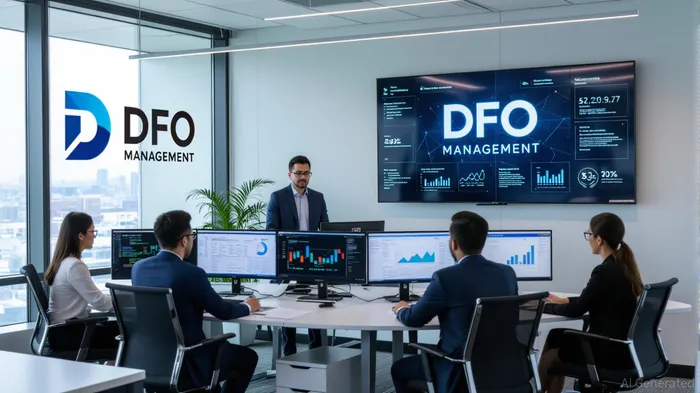
Investment Philosophy: "Protect Capital" and Beyond
DFO Management's investment philosophy is anchored in the mantra "protect capital," a principle that
prioritizes downside protection while seeking growth opportunities. This approach has manifested in a diversified portfolio spanning private equity, real estate, credit, and growth equity. For instance,
the firm's acquisition of luxury resorts . Similarly,
its 2008 acquisition of OneWest Bank-a troubled financial institution during the housing crisis-demonstrates a willingness to capitalize on distressed assets with long-term potential.
In the technology sector, . This controlling interest has allowed the family to shape corporate strategy, . .
These transactions not only solidified Dell's position in the enterprise technology market but also showcased how family-controlled capital can drive transformative corporate strategies.
Impact on Private Equity and Growth Equity Markets
DFO Management's recent pivot toward growth equity investments has further amplified its footprint in private markets. Through MSD Partners, the firm has
leveraged Michael Dell's extensive network to secure late-stage investments in high-growth tech companies. This strategy aligns with broader trends in private equity, where family offices increasingly seek direct access to innovation-driven sectors. By bypassing traditional intermediaries, DFO Management can deploy capital more efficiently, often at the expense of institutional investors who rely on fund structures with higher fees and longer time horizons.
The firm's approach also highlights the growing role of family offices in shaping corporate governance. For example, the Dell family's significant stake in Dell TechnologiesDELL-- grants them a seat at the table in major corporate decisions, from executive compensation to M&A activity. This level of control contrasts with publicly traded companies, where shareholder interests are often fragmented.
As noted by Sahm Capital, .
Conclusion
The Dell dynasty's influence on tech and private equity markets is a testament to the power of well-structured family wealth. Through DFO Management, the Dell family has not only preserved its capital but also redefined how family offices engage with global capital markets. Their emphasis on downside protection, strategic diversification, and direct access to innovation-driven sectors offers a blueprint for other family offices seeking to balance risk and reward. As the lines between family wealth and corporate strategy continue to blur, the Dell model may well serve as a benchmark for future generations of investors.

Stay ahead of the market.
Get curated U.S. market news, insights and key dates delivered to your inbox.




Comments
No comments yet