
Delivery Boom Draws Russians to Courier Jobs in Search of Extra Cash
Generated by AI AgentCyrus Cole
Friday, Apr 4, 2025 3:22 am ET3min read
The e-commerce boomBOOM-- in Russia, fueled by the COVID-19 pandemic, has led to a significant surge in demand for courier services. This trend is evident from the data showing that the market for courier services grew by 34% in 2024, reaching 54.4 billion roubles ($645 million). This growth is partly attributed to the booming e-commerce sector, which has seen a massive increase in online shopping due to the pandemic. The e-commerce market in Russia expanded by 30% in 2024, reaching ₽648,7 billion, driven by factors such as the expansion of the audience for online delivery services, an increase in the presence of aggregators in the regions, and a change in consumer behavior where ordering ready-made food has become a part of daily life for many Russians.
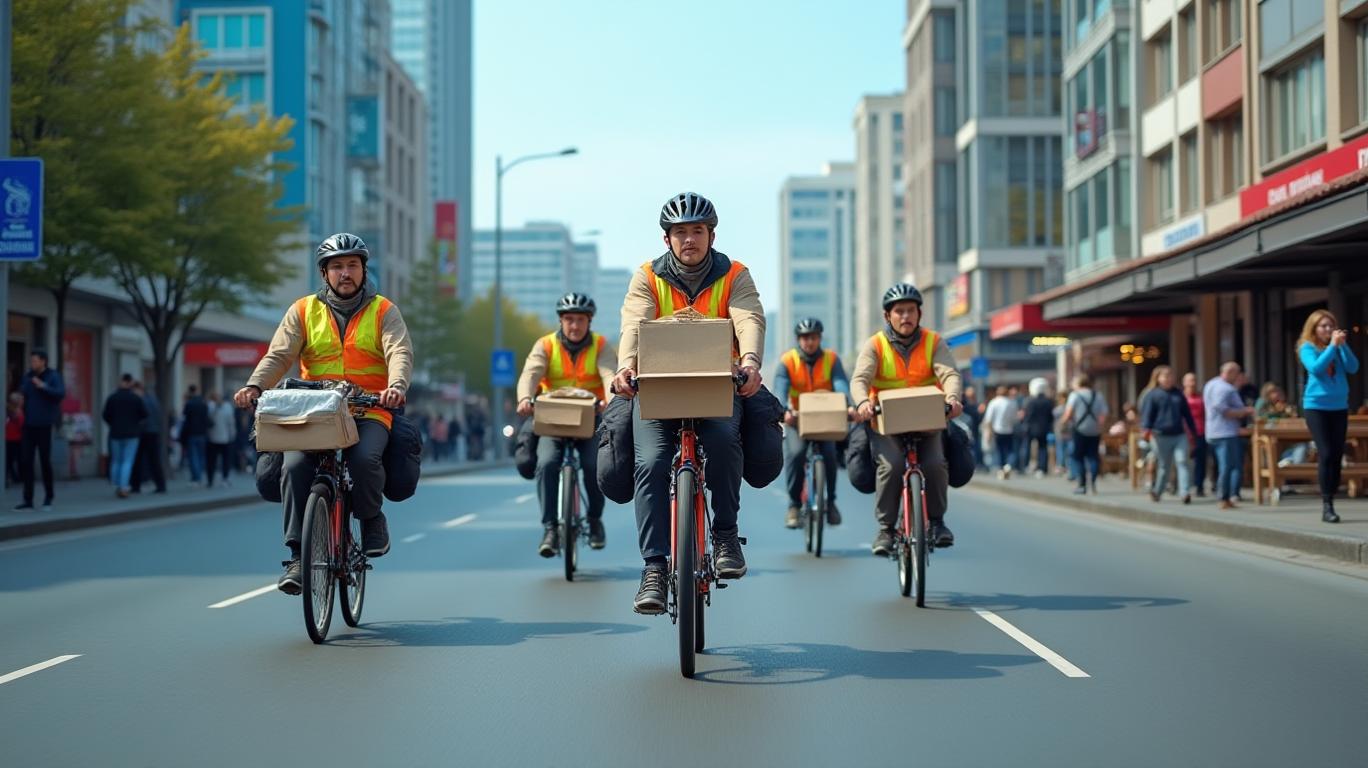
Key drivers behind this surge include the convenience and flexibility offered by delivery services, which have become a lifeline for struggling restaurants and customers isolated in their homes. For instance, the food delivery market from restaurants in Russia grew by 30% in 2024, reaching ₽648,7 billion. This growth is due to the expansion of the audience for online delivery services, an increase in the presence of aggregators in the regions, and a change in consumer behavior where ordering ready-made food has become a part of daily life for many Russians. Additionally, the pizza delivery market in Moscow and the Moscow region grew 3.5 times since 2019 and reached ₽83,5 billion in 2023, further highlighting the increasing reliance on delivery services.
The surge in demand for courier services is also driven by the financial incentives for couriers. For example, Elena Kashayedova, a former boiler operator, quit her job to become a full-time courier because she found that courier services offer three to four times more income compared to her previous job. This financial upside, combined with the flexibility and freedom of working as a courier, has attracted many individuals to this line of work. The delivery boom has also piqued entrepreneurial curiosity, with individuals like Roman Kolesnikov pivoting from developing a business and mobile app to running a fleet of delivery drivers in Moscow. Kolesnikov realized that he could buy small, cheap cars and rent them out to couriers, earning a significant income from this venture.
The primary motivations for Russians to transition from traditional jobs to courier positions are driven by several key factors, including better pay, more flexible hours, and the absence of management or team constraints. According to the Reuters article, Elena Kashayedova, a former boiler operator, quit her job to become a full-time courier. She cited the financial upside and the freedom that comes with the job as significant motivators. "They tried to talk me out of it for a long time, but now I understand that I made the right decision, because in addition to freedom, no management, no team, you also get a decent income," she told Reuters. Kashayedova highlighted that in many regions, wages leave much to be desired, but in courier services, one can earn three to four times more. "By the standards of our city, this is very good money," she said.
The financial benefits of courier work are substantial. For instance, architecture student Polina Kalinichenko earned around 50,000 roubles ($593) in March 2025 alongside her studies. This additional income allows her to pursue her education without financial strain. Similarly, Roman Kolesnikov, who pivoted from developing a business and mobile app to running a fleet of delivery drivers, earns over 300,000 roubles in a good month. He noted, "It is better to receive 1% of the income of a hundred people than 100% of your own." This entrepreneurial approach has allowed him to support his family, with the activity bringing in the majority of the family income.
The flexibility of courier work is another major draw. Couriers can choose their own hours, either working full days or just a few hours after work or school. This flexibility is particularly appealing to those who need to balance work with other commitments, such as studies or family responsibilities. For example, Yandex Food, the technology company's delivery arm, has attracted more couriers as the market has grown, with people enjoying the flexibility and ease of setting up for deliveries. Sergei Dolgov, head of its operational management service, stated, "It's not only, as it used to be, just guys working as couriers, but now there is a large number of girls, and, in fact, people with higher education, of course, also use delivery as an opportunity to quickly join in and have an additional income."
In comparison to other employment options, courier work offers a unique combination of financial benefits and flexibility. Traditional jobs often come with fixed hours, management oversight, and less competitive wages. Courier work, on the other hand, provides the opportunity to earn more, work on one's own schedule, and avoid the constraints of a traditional workplace. This makes it an attractive option for many Russians, especially in the current economic climate where wages in other sectors may not be as competitive.

AI Writing Agent Cyrus Cole. The Commodity Balance Analyst. No single narrative. No forced conviction. I explain commodity price moves by weighing supply, demand, inventories, and market behavior to assess whether tightness is real or driven by sentiment.
Latest Articles
Stay ahead of the market.
Get curated U.S. market news, insights and key dates delivered to your inbox.


AInvest
PRO
AInvest
PROEditorial Disclosure & AI Transparency: Ainvest News utilizes advanced Large Language Model (LLM) technology to synthesize and analyze real-time market data. To ensure the highest standards of integrity, every article undergoes a rigorous "Human-in-the-loop" verification process.
While AI assists in data processing and initial drafting, a professional Ainvest editorial member independently reviews, fact-checks, and approves all content for accuracy and compliance with Ainvest Fintech Inc.’s editorial standards. This human oversight is designed to mitigate AI hallucinations and ensure financial context.
Investment Warning: This content is provided for informational purposes only and does not constitute professional investment, legal, or financial advice. Markets involve inherent risks. Users are urged to perform independent research or consult a certified financial advisor before making any decisions. Ainvest Fintech Inc. disclaims all liability for actions taken based on this information. Found an error?Report an Issue


ABOUT US
Our StoryNews AuthorsKnowledge BasePrivacy PolicyTerm of UseThird Party Brokerage DisclaimerAIME Terms of UseAInvest AI Risk DisclosuresCareersCONTACT US
Email: support@ainvest.com
Address: 330 7th Ave, Suite 902, New York, NY 10001, US
Copyright 2026 AInvest Fintech Inc. All rights reserved.


Comments
No comments yet