
The Delicate Balance: How Shifting Rig Counts Reshape Energy Equity Portfolios
 Aime Summary
The U.S. Baker HughesBKR-- Oil Rig Count for August 2025 offers a nuanced snapshot of the energy sector's evolving dynamics. With 412 active oil rigs as of August 15—a marginal 0.24% increase from the prior week but a 15.05% decline year-over-year—the data underscores a sector in transition. While the rig count remains below its 2014 peak of 1,609, it has stabilized in a narrow range, reflecting cautious optimism amid volatile market conditions. For equity investors, this stabilization signals a critical inflection point: a slight uptick in upstream activity could favor oil and gas producers, but it also creates near-term headwinds for energy equipment and services firms.
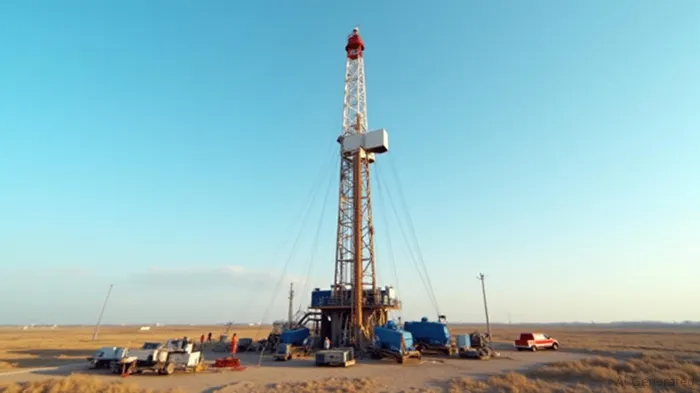
The Upstream Advantage: Oil and Gas Producers
The modest rise in oil rigs, coupled with the U.S. Energy Information Administration's (EIA) projection of 13.4 million barrels per day (bpd) in 2025 output, suggests that exploration and production (E&P) companies may benefit from a gradual recovery in drilling activity. While crude prices are expected to decline for a third consecutive year, the EIA's forecast implies that production growth will outpace price erosion, preserving margins for operators with disciplined cost structures.
For investors, this dynamic favors E&P stocks with strong balance sheets and low breakeven costs. Companies like ChevronCVX-- (CVX) and OccidentalOXY-- (OXY) are well-positioned to capitalize on incremental output, particularly if they can leverage technological efficiencies to offset flat capital expenditures. reveals a steady trajectory, outperforming the S&P 500 in 2024 despite macroeconomic headwinds. Similarly, Occidental's recent focus on shareholder returns and debt reduction aligns with the sector's broader shift toward capital preservation.
However, the long-term outlook for E&P firms hinges on the rig count's ability to sustain its current trajectory. A sustained increase in active rigs—driven by higher oil prices or policy tailwinds—could unlock value for producers, but a return to 2023's 20% rig count decline would likely force another round of production cuts and asset divestitures.
The Services Sector's Squeeze
Conversely, the Energy Equipment and Services (EES) sector faces a more precarious outlook. The 4% projected reduction in E&P capital expenditures for 2025, combined with the rig count's historical decline since 2023, suggests that demand for drilling services will remain subdued. This is particularly true for companies reliant on traditional rig-based contracts, such as HalliburtonHAL-- (HAL) and SchlumbergerSLB-- (SLB), which have seen revenue stagnation amid flat rig counts.
illustrates the sector's vulnerability: despite a rebound in 2024, the stock remains below its 2022 peak, reflecting persistent margin pressures. The shift toward efficiency-driven drilling—such as multi-well pad operations and automation—has reduced the need for labor-intensive services, further compressing revenue per rig.
Investors in EES firms must now differentiate between companies adapting to this new reality and those clinging to outdated business models. Firms like National Oilwell Varco (NOV) and Baker Hughes (BKR) are investing in digital solutions and modular equipment to reduce clients' operational costs, potentially insulating them from near-term rig count volatility. However, for smaller, niche players, the path to profitability may require consolidation or strategic pivots.
Strategic Positioning for Energy Investors
The current rig count environment demands a balanced approach to energy equity portfolios. For those bullish on the sector's long-term fundamentals, overweighting E&P stocks with strong cash flow generation and disciplined capital allocation makes sense. Conversely, EES investors should prioritize companies with diversified revenue streams or exposure to emerging technologies like carbon capture and hydrogen production.
A key consideration is the interplay between rig counts and macroeconomic factors. highlights the cost-of-capital challenge for energy firms: with interest rates remaining elevated, debt-heavy EES companies may struggle to fund growth, while E&P firms with low leverage could gain a competitive edge.
Conclusion: Navigating the Tightrope
The U.S. oil rig count is more than a number—it's a barometer of the sector's health and a guidepost for investors. As of August 2025, the data suggests a fragile equilibrium: upstream activity is stabilizing, but the broader industry remains cautious. For equity investors, the path forward lies in hedging against volatility by diversifying across the energy value chain while favoring companies that align with the dual imperatives of efficiency and sustainability.
The next Baker Hughes data release on August 22 will offer further clarity, but one thing is certain: in an era of constrained capital and shifting priorities, the winners in energy will be those who adapt—not just to the rig count, but to the evolving demands of a post-pandemic world.

Stay ahead of the market.
Get curated U.S. market news, insights and key dates delivered to your inbox.
AInvest
PRO
AInvest
PRO



Comments
No comments yet