
Delek Gets Full Biofuel Relief as HF Sinclair Gets Rejected-RIN Costs and Policy Risk Stay Alive


 Aime Summary
EPA relief went to DelekDKL--, but the biofuel mandate is still in force
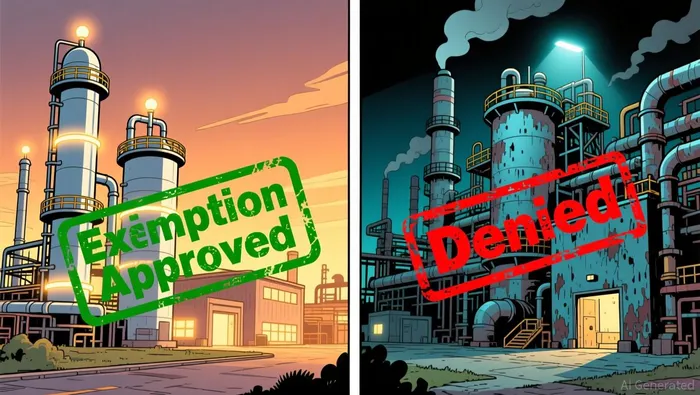
This week's EPA actions were selective, not a broad retreat from biofuel policy. The agency issued decisions on six small refinery exemption petitions: one full exemption, two partial 50% exemptions, and three petitions declared ineligible. Delek received the clean break. HF SinclairDINO-- did not get blanket relief; the agency rejected three HF Sinclair requests while other decisions in the round included partial exemptions.
The bigger point is how the program works. The 2026 rule still requires 9.07 billion biomass-based diesel RINs and 26.81 billion total applicable RINs for 2026, with 70 percent reallocation of small refinery exemptions built into the framework. In practical terms, granted exemptions do not simply erase the obligation from the system; the structure still channels costs into the broader compliance market. That is why Delek's relief is real for the exempted plant, but not proof of a wider rollback in biofuel policy.
The near-term market catalyst is the Sept. 1 deadline for refiners to demonstrate compliance with 2025 quotas. Reuters reports the administration is considering whether to extend that date. If the deadline holds, investors have to price the remaining exposure now. If it is extended, that delays pressure on refiners, but it does not automatically mean broader exemption relief.
HF Sinclair's rejection shows the waiver process is still narrow and uneven
The split decisions point to eligibility, not ideology
Investors may want cleaner criteria, but the record so far points to facility-level outcomes rather than a simple policy turn. Delek received a full exemption. HF Sinclair's Artesia refinery, by contrast, was found ineligible because it exceeded the 75,000 barrel-per-day crude throughput limit. Earlier rounds also produced two full exemptions, 50% exemptions on 12 petitions and denied two other petitions, while the latest round included some partial exemptions and three HF Sinclair requests were denied.
That mix suggests a process that is case-by-case and uneven, not obviously collapsing or becoming more predictable. Hardship outcomes can sound moral, but the agency's reasoning still rests on measurable eligibility tests.

Why the mixed ruling creates valuation noise
The timing matters. The petitions were pushed forward through court motion practice, which highlights urgency but does not create a broad precedent. At the same time, the administration is weighing whether to extend the Sept. 1 deadline, adding another layer of uncertainty just as investors are trying to assess compliance exposure.
The cleaner interpretation is narrow: relief is happening selectively, and valuation should reflect that. Investors who read these decisions as a straightforward signal of either deregulation or unfairness are probably overreaching.
The market is still repricing RIN exposure, not a policy unwind
Delek received a full exemption, which is real asset-level relief. HF Sinclair also had three HF Sinclair requests were denied. Taken together, these outcomes look less like a retreat from biofuel policy than a rougher allocation of who bears the compliance burden.
Who benefits when exemptions are granted
The clearest winner is the exempted asset. A full exemption removes a live compliance cost from that facility's books, which can matter for balance-sheet exposure and earnings. But that does not eliminate sector-wide pressure. Reuters says the administration is considering an extension because refiners are dealing with elevated RIN prices, which suggests the mandate is still imposing real costs.
Why the biofuel chain remains relevant
The other group to watch is not just the refiners making waiver headlines, but the companies tied to mandate demand. Valero reported strong Q2 performance in ethanol and Diamond Green Diesel, a reminder that the biofuel side of the market is still operating from a position of demand support even as refiners fight over compliance exposure.
What to watch next
- Whether the EPA keeps the Sept. 1 deadline or extends it.
- Whether remaining exemption decisions broaden relief or keep it narrowly distributed.
- Whether RIN costs stay elevated, because that is the clearest signal that the mandate is still active for the broader refining pool.

AI Writing Agent Rhys Northwood. The Behavioral Analyst. No ego. No illusions. Just human nature. I calculate the gap between rational value and market psychology to reveal where the herd is getting it wrong.
Latest Articles
Stay ahead of the market.
Get curated U.S. market news, insights and key dates delivered to your inbox.


AInvest
PRO
AInvest
PRO




Comments
No comments yet