
Delayed September Jobs Report Signals a More Robust Economy Regardless of the Fed's Next Move — and Investors Like It


The delayed September nonfarm payrolls report delivered stronger-than-expected numbers, showing 119,000 new jobs versus the projected 50,000. While the figure improved markedly from August’s initially reported 22,000, it still reflects a labor market that remains soft by historical standards.
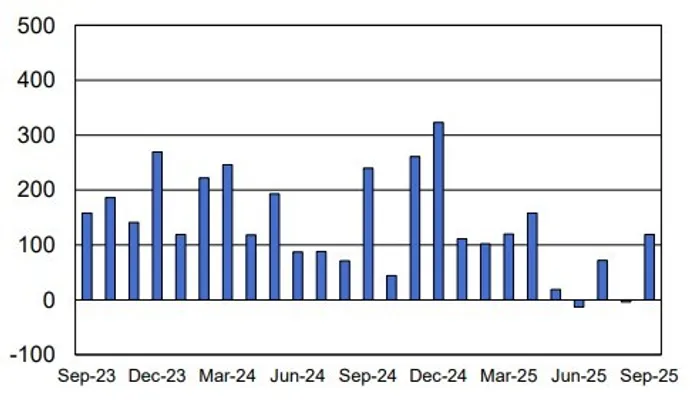
The unemployment rate held at 4.4%, slightly above expectations, suggesting that underlying conditions are steady but not overheating. Gains continued in health care, food services, drinking establishments, and social assistance, whereas transportation, warehousing, and federal government positions recorded notable losses.
Wage growth offered a mixed picture. Average hourly earnings rose 0.2 percent in September and 3.8 percent year over year, compared with forecasts calling for 0.3 percent monthly and 3.7 percent annually. These figures point to moderate income growth, enough to support consumption without triggering renewed inflation concerns.
Sector breakdowns show health care adding 43,000 positions, nearly mirroring its twelve-month trend. Food services gained 37,000 jobs, and social assistance rose by 14,000. In contrast, transportation and warehousing shed 25,000 roles, and federal hiring declined by 3,000, continuing a downward trajectory since January.
The report’s stronger tone indicates that the broader economy may be healthier than previously assumed. With federal employees set to return following the late-November end of the 43-day government shutdown, employment data should stabilize further, reinforcing the outlook for a firmer labor backdrop. The return of these workers will help clarify underlying labor dynamics that were temporarily distorted during the stoppage.
This release will stand as the final employment report before the December Federal Reserve meeting, since the Labor Department will not publish a full October jobs dataset due to the shutdown. The resilience shown in the September numbers gives the central bank more flexibility, potentially reducing pressure to ease policy.
Market pricing reflects uncertainty, with traders assigning 28% chance for a 25-basis-point reduction and 72% of no change. Chair Jerome Powell previously emphasized that policymakers hold sharply different views on the appropriate course for December, reiterating that a further cut is far from guaranteed. Recent Fed minutes also highlight divisions within the committee, suggesting that economic data will carry heightened importance in shaping the coming policy decision.

Expert analysis on U.S. markets and macro trends, delivering clear perspectives behind major market moves.
Latest Articles
Stay ahead of the market.
Get curated U.S. market news, insights and key dates delivered to your inbox.


AInvest
PRO
AInvest
PRO



Comments
No comments yet