
Deflation's Double-Edged Sword: Why China's Luxury Sector Holds Hidden Gems for Recovery
China's economy is grappling with persistent deflation, but beneath the surface of falling prices lies a unique opportunity for investors to identify undervalued luxury brands poised for recovery. While deflationary pressures have battered consumer confidence and suppressed spending, certain luxury players are adapting to the new reality by targeting niche markets, leveraging global pricing strategies, and capitalizing on cultural shifts. Here's why now could be the time to position for a rebound in this sector.
The Deflationary Landscape: A Double-Edged Sword
China's consumer price index (CPI) has been negative for four consecutive months through May 2025, with core inflation stuck near 0.6%. Meanwhile, producer prices (PPI) have fallen into a deep deflationary spiral (-3.3% year-on-year in May), driven by automotive price wars and weak industrial demand. This environment has hit luxury retailers hard: domestic sales declined 18-20% in 2024, as consumers shifted spending to cheaper overseas options (40% of total luxury purchases in 2024) and the “grey market” (Daigou resellers) eroded margins.
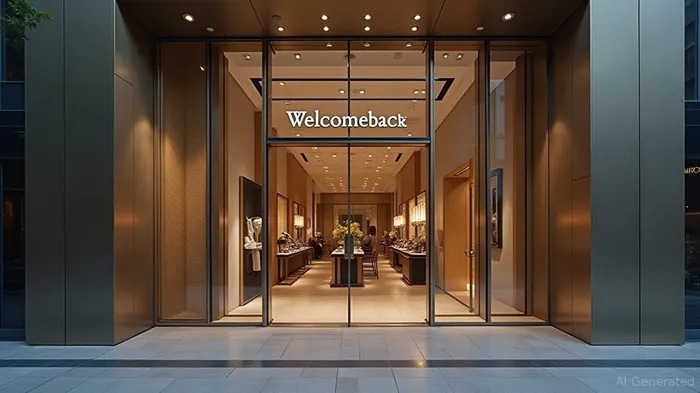
Yet deflation isn't all bad for luxury brands. The same pressures that squeeze discretionary spending are driving a shift toward discreet, timeless purchases—a trend favoring “quiet luxury” brands. Consumers are now prioritizing heritageCASK--, craftsmanship, and exclusivity over flashy logos, creating an opening for undervalued names that align with this mindset.
Identifying the Undervalued: Where to Look
To find recovery candidates, focus on three criteria: pricing discipline, cultural resonance, and exposure to resilient consumer segments.
1. Kering (KER): The Quiet Luxury Play
Kering's portfolio includes Gucci, Bottega Veneta, and Brioni—brands that have already pivoted toward understated elegance. Bottega Veneta's focus on clean designs and “no logo” aesthetics has boosted its appeal in China, where “luxury shame” (aversion to overt displays of wealth) is rising.
Why it's undervalued: Kering's valuation multiples have compressed due to short-term sales pressures, but its strategy of reducing logo-heavy products and emphasizing craftsmanship positions it well for a rebound.
2. Swatch Group (UHR): The Hard Luxury Hedge
Swatch's dominance in luxury watches (via brands like Omega and Breguet) is a deflation-resistant bet. Unlike fashion or jewelry, watches are seen as long-term investments, with demand tied to wealth preservation rather than cyclical spending.
Why it's undervalued: Swatch trades at a 20% discount to its five-year average P/E ratio. Its focus on mid-tier luxury watches (e.g., $500–$5,000 price points) aligns with China's affluent but cautious middle class, which still prioritizes high-value goods.
3. Burberry (BRBY): The Comeback Kid
Burberry's valuation has been battered by weak sales in China and a reliance on logo-driven products. However, its recent pivot to smaller-scale stores in secondary cities and its embrace of “British heritage” storytelling (a key theme for China's Guochao movement) could unlock growth.
Why it's undervalued: Burberry trades at a 30% discount to its peers, despite its strong brand equity. Management's cost-cutting and localized marketing (e.g., partnerships with Chinese influencers) suggest it's positioning for a recovery.
4. Domestic Brands: Shangxia and Lao Feng Xiang
While foreign brands dominate, domestic luxury names like Shangxia (owned by Shanghai Tang) and Lao Feng Xiang are gaining traction by blending traditional Chinese aesthetics with modern minimalism. These brands cater to the Guochao movement, which appeals to younger, culturally conscious consumers.
Why they're undervalued: Domestic luxury stocks are often overlooked by international investors. Shangxia's focus on sustainable materials and bespoke services positions it as a “quiet luxury” alternative to Western brands, at a fraction of their valuation.
Risks and Triggers for Recovery
The biggest risk remains the persistence of deflation. If the People's Bank of China fails to stimulate demand (e.g., through deeper rate cuts or bond purchases), consumer spending could stay depressed. Additionally, the grey market (Daigou) remains a thorn: discounts on platforms like Xianyu have widened to 8% in 2025, eating into margins.
However, two catalysts could ignite a rebound:
1. Hainan's Revival: If China's duty-free zone in Hainan can attract tourists through policy reforms (e.g., simplified visa processes), sales could stabilize.
2. Global Pricing Harmonization: Brands like LVMH that have closed the China-Europe price gap (e.g., by aligning new product launches globally) are already seeing reduced leakage to grey markets.
Investment Thesis
China's luxury sector is in a “value trap” today, but patient investors can capitalize on the mispricing. Focus on:
- Kering and Swatch for their strategic alignment with consumer preferences and valuation discounts.
- Burberry for its turnaround potential and underappreciated brand strength.
- Domestic players like Shangxia as thematic bets on the Guochao movement.
Avoid brands overly reliant on logo-driven sales or those with weak control over grey markets (e.g., LVMH's Loro Piana division).
The road to recovery will be bumpy—deflation isn't going away soon—but the current undervaluation of these names offers a compelling risk/reward trade. As China's economy stabilizes, these brands are positioned to rebound harder than the market expects.
Final Take: The deflationary storm has washed away the froth of China's luxury market. What's left are resilient brands that can weather the downturn and emerge stronger. For investors, this is a chance to buy tomorrow's winners at yesterday's prices.

Delivering real-time insights and analysis on emerging financial trends and market movements.
Latest Articles
Stay ahead of the market.
Get curated U.S. market news, insights and key dates delivered to your inbox.


AInvest
PRO
AInvest
PRO



Comments
No comments yet