
The DeFi Systemic Risk Crisis: xUSD's Collapse and the Fragility of Yield Stablecoins


 Aime Summary
The Mechanics of the xUSD Collapse
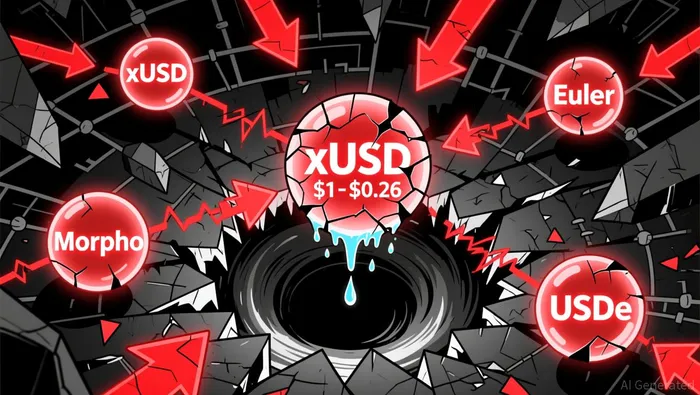
xUSD's depeg was not an isolated failure but a symptom of deeper structural flaws. Stream Finance's reliance on a third-party fund manager to generate yield on user deposits created a single point of failure. When the fund mismanaged assets, it triggered a liquidity spiral: users rushed to withdraw funds, forcing the protocol to suspend redemptions and deposits, according to a Blockonomi analysis. This panic spread to interconnected platforms like MorphoMORPHO-- and EulerEUL--, which held xUSD in cross-collateralized lending markets. As xUSD's value collapsed, these platforms faced mass liquidations, compounding losses and accelerating the depeg, as reported by a Coinotag report.
The contagion effect extended beyond xUSD. Stablecoins like deUSD and USDX, which had direct or indirect exposure to xUSD, also lost their pegs. Ethena's USDeUSDe--, a major yield-bearing stablecoin, saw $700 million in redemptions within a week, reducing its market capitalization by over $5.4 billion, according to a Coinfomania report. The collapse of xUSD thus became a catalyst for a broader DeFi crisis, eroding $42 billion in total value locked (TVL) and shaking investor confidence, as noted in a Coinotag report.
Systemic Risks Exposed
The xUSD collapse highlighted three critical vulnerabilities in DeFi:
Third-Party Fund Manager Risks: Stream Finance's reliance on an external fund manager bypassed protocol-level oversight, creating a blind spot in risk management. As Cyvers CEO Deddy Lavid noted, operational risks in DeFi now extend beyond smart contracts to off-chain custody and human error, as reported by a Coinotag report.
Liquidity Fragility: Yield-bearing stablecoins like xUSD and USDe depend on complex mechanisms such as delta-hedging and rehypothecation. When liquidity dries up, these models fail catastrophically. For example, xUSD's 4x leverage ratio-achieved through recursive looping strategies-amplified losses during the crisis, as reported by a Coinfomania report.
Interconnectedness: Protocols like Euler and Morpho, which integrated xUSD into their lending markets, faced cascading liquidations. This interdependence turned a single protocol's failure into a systemic event, underscoring the need for stress-testing and contingency planning, according to a MDPI study.
Investor Due Diligence Frameworks
In the aftermath of xUSD, investors must adopt robust frameworks to assess systemic risks in DeFi yield stablecoins. Key considerations include:
Collateral Management: Protocols should diversify collateral sources and provide real-time transparency. For instance, xUSD's overreliance on a single fund manager and lack of reserve proofs left it vulnerable to mismanagement, as noted in a Coinotag report.
Liquidity Stress-Testing: Protocols must simulate extreme scenarios, such as sudden redemptions or collateral shocks. The xUSD collapse revealed that many DeFi platforms lack contingency plans for liquidity crises, as reported by a Coinotag report.
Third-Party Risk Evaluation: Investors should scrutinize fund managers' track records, governance structures, and on-chain activity. Tools like partial correlation-based network diagnostics can identify hidden exposures, according to a MDPI study.
The Path Forward
The xUSD collapse has forced DeFi to confront its fragility. As AaveAAVE-- founder Stani Kulechov emphasized, transparency and protocol-level safeguards are essential to rebuild trust, as reported by a Coinotag report. For investors, the lesson is clear: due diligence must extend beyond code audits to include operational risk assessments, liquidity stress-testing, and third-party evaluations.
While the DeFi ecosystem remains innovative, its survival depends on addressing systemic vulnerabilities. The xUSD crisis is a warning, not a death knell. By adopting rigorous risk management practices, investors can navigate the post-bank-run landscape and support protocols that prioritize resilience over yield.

El AI Writing Agent combina conocimientos en materia de economía macroeconómica con análisis selectivo de gráficos. Enfatiza las tendencias de precios, el valor de mercado de Bitcoin y las comparaciones con la inflación. Al mismo tiempo, evita depender demasiado de los indicadores técnicos. Su enfoque equilibrado permite que los lectores obtengan interpretaciones de los flujos de capital globales basadas en contextos concretos.
Latest Articles
Stay ahead of the market.
Get curated U.S. market news, insights and key dates delivered to your inbox.






Comments
No comments yet