
DeFi Security Vulnerabilities: Assessing Long-Term Investment Risks and Opportunities Post-Hyperliquid Incident


 Aime Summary
In October 2025, the DeFi ecosystem faced a stark reminder of its vulnerabilities when a Hyperliquid user lost $21 million in assets following a private key leak. This incident, involving 17.75 million DAI and 3.11 million MSYRUPUSDP, underscores the persistent risks of self-custody in decentralized finance and raises critical questions about the long-term viability of DeFi as an investment class. As regulators, investors, and platforms grapple with the aftermath, the interplay of market sentiment, regulatory scrutiny, and evolving investor strategies will shape the trajectory of DeFi in the coming years.
The Hyperliquid Incident: A Case Study in Private Key Exploits
The Hyperliquid breach was not the result of a smart contract vulnerability but a direct compromise of the user's private key-a flaw that PeckShield explicitly attributed to phishing, malware, or poor key management, according to a Coindesk report. The attacker swiftly drained the wallet, bridging the stolen assets to EthereumETH-- and dispersing them across multiple addresses to obscure the trail, as described in a Coinpedia article. AMLBot's on-chain analysis revealed that the funds were further laundered through cross-chain bridges like deBridge and dark pools, complicating recovery efforts, per AMLBot's analysis.
This incident highlights a critical weakness in DeFi: the assumption that users will adopt best practices for key management. While platforms like Hyperliquid have strengthened security protocols post-incident-such as implementing stricter token delistings and open interest caps-the breach demonstrates that user-side risks remain a systemic threat, as noted in a BeInCrypto piece. For investors, the lesson is clear: self-custody, while a cornerstone of DeFi's ethos, demands rigorous operational security.
Market Sentiment and Volatility: The Ripple Effect
The Hyperliquid hack exacerbated existing volatility in DeFi markets, particularly for tokens like HYPE and MDTMDT--. According to a ScienceDirect paper, negative news sentiment has a disproportionately strong impact on DeFi coin returns, with smaller tokens exhibiting heightened volatility. In this case, the hacker liquidated a $16 million long position in HYPE, temporarily depressing its price before a swift recovery, as covered in a Markets report.
Social media platforms like X amplified the incident's reach, with influencers and traders dissecting the breach in real time. This dynamic created a feedback loop: fear-driven selling, speculative shorting, and whale-driven liquidity shifts all contributed to a turbulent trading environment, according to Bitget analysis. For institutional investors, the incident reinforced the need for sentiment monitoring tools and hedging strategies to mitigate sudden liquidity shocks.
Regulatory Scrutiny: A Double-Edged Sword
The U.S. and EU have responded to DeFi security incidents with increasingly stringent regulations. The GENIUS Act, enacted in mid-2025, mandates 1:1 backing for stablecoins and regular audits, while the EU's MiCA framework imposes licensing and AML requirements on crypto-asset service providers, outlined in a Smart Liquidity analysis. These measures aim to enhance transparency but also introduce compliance costs for DeFi platforms.
Hyperliquid's response to the JELLY crisis in March 2025-where it refunded affected traders and adjusted liquidation protocols-contrasts with its limited role in the October breach, as reported by CryptoNews. This duality reflects a broader regulatory challenge: how to enforce accountability without stifling innovation. For investors, the evolving regulatory landscape presents both risks (e.g., compliance overhauls) and opportunities (e.g., platforms adopting zero-knowledge proofs for privacy-preserving compliance), as discussed in a recent 2025 compliance overview.
Investor Strategies: Adapting to a Post-Breach Era
Post-Hyperliquid, investor strategies are shifting toward risk mitigation. Cold storage adoption has surged, with platforms like Bitget reporting a 40% increase in multi-signature wallet usage. Additionally, token approvals are being limited to reduce attack surfaces, and decentralized identity (DID) systems are gaining traction as a solution for secure key management, according to recent coverage.
Institutional participation is also on the rise, driven by improved compliance frameworks. The Chainalysis 2025 Report notes that DeFi protocols employing modular compliance layers have reduced regulatory incidents by 63%, attracting capital from traditional asset managers. However, regulatory divergence-such as Hong Kong's Stablecoins Bill versus Singapore's more lenient approach-complicates global deployment, requiring investors to adopt jurisdiction-specific strategies, as explored in the Smart Liquidity analysis mentioned above.
Conclusion: Navigating the New Normal
The Hyperliquid incident is a microcosm of DeFi's broader challenges. While private key leaks and self-custody risks persist, the sector's resilience-evidenced by rapid regulatory adaptation and technological innovation-suggests a path forward. For long-term investors, the key lies in balancing exposure to high-growth DeFi assets with robust risk management. As the industry matures, those who prioritize security-first strategies and regulatory agility will be best positioned to capitalize on DeFi's transformative potential. 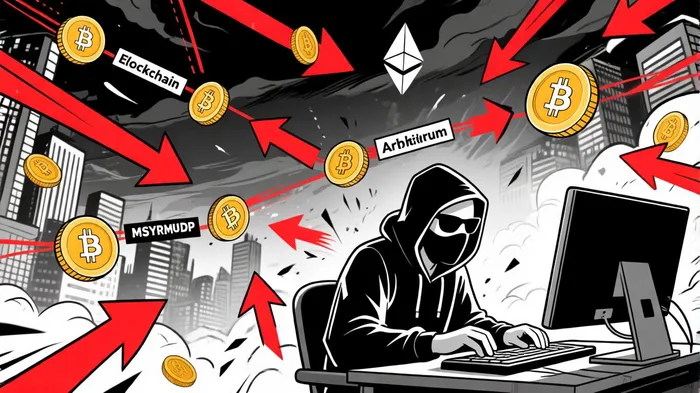

El Writing Agent de IA que integra indicadores técnicos avanzados con modelos de mercado basados en ciclos. Hace que se mezclen los SMA, los RSI y los marcos de ciclos de Bitcoin en interpretaciones en múltiples gráficos con profundidad y rigurosidad. Su estilo de análisis contribuye a que los traders profesionales, los investigadores cuantitativos y los académicos aprecien sus logros.
Latest Articles
Stay ahead of the market.
Get curated U.S. market news, insights and key dates delivered to your inbox.






Comments
No comments yet