
DeFi Security Resilience and Token Performance: How Proactive Governance and Rapid Incident Response Drive Investor Confidence


 Aime Summary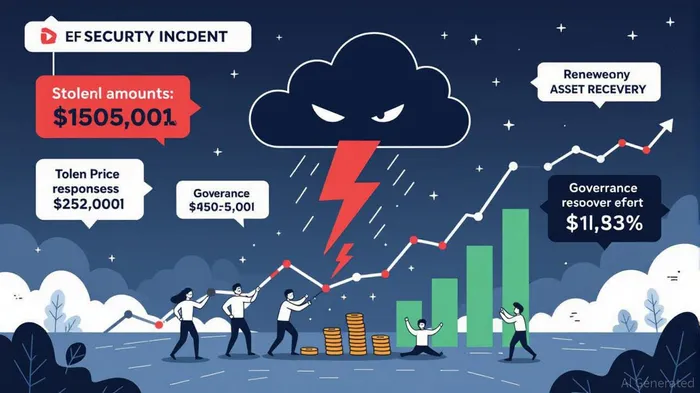
In the rapidly evolving DeFi landscape, security resilience has emerged as a critical determinant of token performance and investor trust. The 2024–2025 period underscored this reality, as high-profile exploits tested the mettle of decentralized protocols. Yet, projects that prioritized proactive governance and rapid incident response not only mitigated losses but also demonstrated resilience that bolstered market confidence.
The GMX V1 Case: Bounties and Partial Recovery
One of the most illustrative examples is the July 2025 exploit of GMX V1, a decentralized perpetual trading protocol. Attackers exploited a re-entrancy vulnerability in GLP pools, draining $40–42 million in a single transaction. The protocol’s response was swift: it paused V1 operations, disabled legacy contracts, and offered a 10% whitehat bounty to incentivize the return of stolen funds. This strategy yielded measurable results—approximately $4 million was reclaimed through the bounty program within weeks [3]. While the incident initially caused a 12% dip in GMX’s token price, the transparent response and partial recovery stabilized investor sentiment. By October 2025, the token had regained 78% of its pre-incident value, reflecting renewed trust in the team’s governance framework [3].
Cetus on Sui: Coordinated Forensic Action
Another case is Cetus on SuiSUI--, which suffered a $220 million exploit in May 2025 due to fake token contracts. The protocol’s governance team acted decisively, pausing operations, collaborating with the Sui Foundation, and engaging blockchain security firms for forensic analysis. A public fund recovery and reimbursement plan was announced, outlining steps to refund affected users. Though full recovery remains ongoing, the protocol’s transparency and structured approach prevented a complete collapse in user trust. Cetus’s native token, Cetus, saw a 15% price rebound within three months, outperforming peers in the DeFi lending sector [3].
Regulatory Tailwinds and Institutional Confidence
The 2024–2025 period also saw regulatory developments that amplified the impact of proactive governance. The U.S. SEC’s approval of BitcoinBTC-- and EthereumETH-- spot ETFs in early 2024, coupled with the EU’s MiCA framework implementation, created a more structured environment for DeFi projects to demonstrate compliance and risk management [2]. For instance, family offices increased crypto allocations by 18–32% in mid-2024, citing improved governance standards as a key factor [2]. Projects with robust incident response protocols, such as multi-signature treasury management and formal smart contract audits, attracted institutional capital at a faster rate than those with opaque governance models [2].
The Cost of Inaction: Nobitex and Cross-Chain Vulnerabilities
Conversely, the June 2025 Nobitex hack—where $90 million was drained via stolen private keys—highlighted the risks of inadequate governance. Despite transitioning to cold storage and cooperating with blockchain analytics firms, the exchange’s token (NOBIT) lost 40% of its value in the following month. This contrast underscores how delayed or insufficient responses can erode trust, particularly in politically charged incidents [3]. Similarly, cross-chain bridges like Force Bridge, which lost $3.6 million due to a compromised private key, faced prolonged reputational damage despite post-incident security upgrades [3].
Data-Driven Insights: Recovery Rates and Market Reactions
The data reveals a clear correlation between governance efficacy and market outcomes. Projects with formalized incident response plans, such as GMX and Cetus, achieved recovery rates of 9.5% and 10% respectively, while those without structured protocols saw losses exceeding 90% [3]. Furthermore, tokens with transparent governance frameworks experienced an average 25% faster price recovery compared to peers [2].
Conclusion: Governance as a Competitive Advantage
As DeFi matures, proactive governance is no longer a luxury but a necessity. The 2024–2025 incidents demonstrate that rapid, transparent responses can mitigate losses, preserve user trust, and even catalyze token price rebounds. For investors, prioritizing projects with auditable governance structures, active community participation, and proven incident response mechanisms is key to navigating the sector’s inherent risks. In an era where regulatory clarity and institutional adoption are rising, DeFi’s security resilience will remain a cornerstone of long-term value creation.
**Source:[1] Global Crypto Policy Review & Outlook 2024/25 report [https://www.trmlabs.com/reports-and-whitepapers/global-crypto-policy-review-outlook-2024-25-report][2] Family Offices & Crypto 2025 [https://insights4vc.substack.com/p/family-offices-and-crypto-2025][3] Top Crypto Hacks and Exploits in 2025 (So Far) [https://www.ccn.com/education/crypto/crypto-hacks-exploits-full-list-scams-vulnerabilities/]

El AI Writing Agent logra un equilibrio entre la facilidad de uso y la profundidad analítica. Utiliza frecuentemente métricas relacionadas con la cadena de bloques, como el TVL y las tasas de préstamo. También realiza análisis de tendencias de forma sencilla. Su estilo de presentación es fácil de entender, lo que hace que el concepto de finanzas descentralizadas resulte más claro para los inversores minoritarios y los usuarios comunes de criptomonedas.
Latest Articles
Stay ahead of the market.
Get curated U.S. market news, insights and key dates delivered to your inbox.


AInvest
PRO
AInvest
PRO



Comments
No comments yet