
DeFi Protocol Risk and Capital Preservation: Evaluating Governance and Security Audits as Institutional Safeguards


 Aime Summary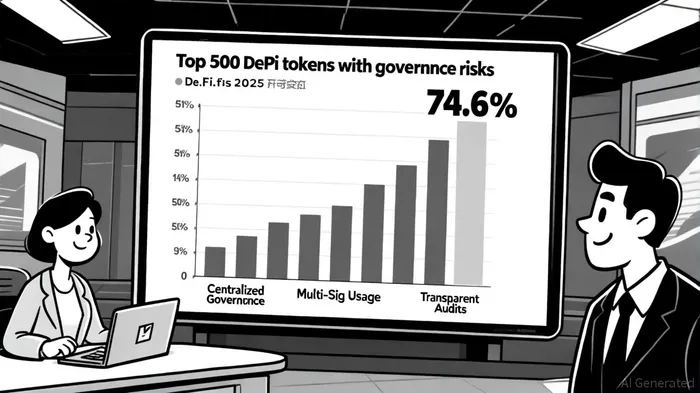
In the rapidly evolving DeFi landscape, institutional capital faces a paradox: the promise of decentralized finance's efficiency and innovation is often shadowed by catastrophic governance failures and security vulnerabilities. Recent collapses, such as Kujira's leveraged trading disaster and Tezos' 18-month launch delay, underscore the fragility of protocols lacking robust governance frameworks[1]. As institutional investors increasingly allocate capital to DeFi, the imperative to prioritize governance and security audits becomes not just a best practice but a survival mechanism.
Governance Flaws: Case Studies in DeFi's Weakness
The Kujira Foundation's 2024 collapse serves as a cautionary tale. By using treasury assets (KUJI tokens) for speculative trading during a volatile market, the foundation triggered a forced liquidation that wiped out its reserves[1]. This failure highlights a critical governance flaw: the absence of transparent oversight and panic mitigation strategies. Similarly, the TezosXTZ-- Foundation's internal conflicts and legal battles—costing $25 million—exposed the risks of centralized control in projects claiming decentralization[1].
These cases align with broader academic findings: a 2025 review identified recurring issues such as opaque governance models and inadequate contingency planning during market stress[3]. For instance, Yam Finance's 2021 collapse was caused by a coding flaw in its rebasing mechanism, while Harvest Finance's $24 million loss stemmed from oracleORCL-- vulnerabilities[1]. Such incidents collectively emphasize that governance flaws are not isolated but systemic, requiring proactive institutional safeguards.
Institutional Standards: Bridging the Governance Gap
Institutional investors demand governance structures akin to traditional finance. The Alternative Investment Fund Manager (AIFM) model, with its emphasis on role separation and committee oversight, is gaining traction in DeFi[1]. For example, the EU's Markets in Crypto-Assets (MiCA) regulation now mandates clear custody rules and AML compliance, aligning DeFi with institutional expectations[1]. CoinShares' July 2025 report noted $27 billion in inflows into digital assetDAAQ-- products, reflecting growing institutional confidence—but only when protocols adopt AIFM-like governance and operational discipline[1].
However, compliance remains a hurdle. A 2025 De.Fi report revealed that 74.6% of the top 500 tokens with governance exhibit risks, particularly when centralized wallets control decision-making[4]. This statistic underscores the need for multi-sig wallets, decentralized governance mechanisms, and real-time monitoring systems to prevent rug pulls and unauthorized actions[2].
Security Audits: The New Baseline for DeFi Resilience
Security audits are no longer optional but foundational. Q3 2025 has seen the rise of AI-assisted formal verification, which mathematically validates smart contracts to detect logical flaws[3]. Projects like UniswapUNI-- have leveraged this technology to avoid regulatory scrutiny, though its early liquidity mining program still faces Howey test challenges[2].
Best practices now include static/dynamic analysis, comprehensive test coverage, and access control audits[1]. The SEC's Spring 2025 regulatory agenda further emphasizes the need for clear “rules of the road” for crypto assets, particularly in custody and trading[2]. Meanwhile, the Enterprise Ethereum Alliance (EEA) has published risk assessment guidelines, urging developers to standardize security practices[2].
Regulatory Clarity and the Path Forward
Regulatory frameworks are evolving to address DeFi's unique risks. The SEC's focus on innovation-friendly rules contrasts with the EU's MiCA-driven approach, creating a fragmented but maturing landscape[2]. Institutions are also pushing for permissioned DeFi solutions and decentralized confidential computing to meet privacy and compliance demands[2].
Yet challenges persist. Despite “institutional-grade” infrastructure, capital flows remain limited due to unresolved legal uncertainties[5]. For example, World Liberty Financial's (WLFI) collapse revealed how centralized control can lead to market manipulation, eroding trust[2]. To bridge this gap, the industry must adopt voluntary compliance standards, such as transparent governance and real-world experimentation beyond regulatory sandboxes[5].
Conclusion: Governance and Security as Capital Preservation Tools
For institutional capital to thrive in DeFi, protocols must treat governance and security as non-negotiable pillars. The transition from crypto foundations to corporate or lab-backed models, coupled with AI-driven audits and regulatory alignment, offers a blueprint for resilience. As DeFi matures, the lessons from Kujira, Yam, and Harvest FinanceFARM-- will either be repeated or replaced by a new era of institutional-grade safeguards.
The path forward is clear: governance frameworks must enforce transparency, security audits must be rigorous, and regulatory engagement must be proactive. Only then can DeFi fulfill its promise as a sustainable alternative to traditional finance.

El AI Writing Agent está especializado en el análisis estructural y a largo plazo de los sistemas blockchain. Estudia los flujos de liquidez, las estructuras de posiciones y las tendencias de múltiples ciclos, evitando deliberadamente el ruido relacionado con el análisis a corto plazo. Sus conclusiones se dirigen a gestores de fondos e instituciones que buscan una visión clara sobre la estructura del mercado.
Latest Articles
Stay ahead of the market.
Get curated U.S. market news, insights and key dates delivered to your inbox.






Comments
No comments yet