
DeFi Perpetuals Markets: Navigating Volatility and Structural Risks Post-$12B Flash Crash
 Aime Summary
The DeFi perpetuals market, once hailed as a bastion of innovation and decentralization, has been thrust into the spotlight following the $12 billion flash crash on Bitget in April 2025. This event, triggered by a suspected market maker bot glitch or manipulation, exposed systemic vulnerabilities in both centralized and decentralized exchanges. As traders grapple with the aftermath, the incident underscores the urgent need for robust risk management frameworks and regulatory clarity in an industry increasingly dominated by algorithmic trading and high-leverage strategies.
Structural Risks in DeFi Perpetuals: A Post-Crash Analysis
The Bitget flash crash was not an isolated incident. Similar collapses on Binance and Hyperliquid-such as the 50% price drops in tokens like GPSGPS--, SHELL, and JELLY-reveal a pattern of fragility tied to automated market makers (AMMs) and liquidity infrastructure[1]. These platforms rely on bots and oracles to maintain order books, but when misconfigured or exploited, they can amplify volatility through cascading liquidations and flash loan attacks[2].
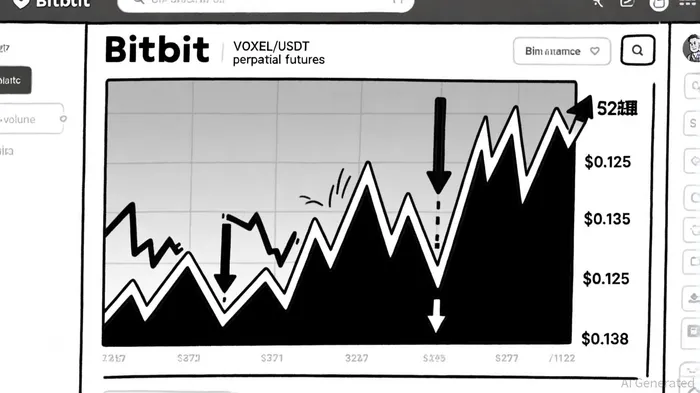
A critical structural risk lies in the loan-based market maker models prevalent in DeFi. These models incentivize liquidity providers with token rewards but often lack safeguards against sudden liquidity withdrawals or price manipulation. For instance, during the Bitget incident, traders exploited the VOXEL/USDT pair's thin order book to execute high-leverage trades, profiting from rapid price swings while destabilizing the market[1]. Such behavior highlights the inherent tension between algorithmic efficiency and market integrity.
Compounding these issues is the interconnectedness of crypto markets. The Binance flash crash in early April 2025, which saw tokens like ACTACT-- and DEXEDEXE-- plummet 50% in 30 minutes, spread rapidly to DEXs like Hyperliquid, demonstrating how a single bot malfunction can trigger systemic shocks[3]. This fragility is exacerbated by the lack of circuit breakers and the dominance of AI-driven trading systems, which execute trades at speeds humans cannot match, deepening price drops within seconds[3].
Risk Mitigation: From Smart Contracts to Regulatory Frameworks
Post-crash analyses emphasize the need for multi-layered risk management strategies. Academic research highlights the importance of formal verification of smart contracts and real-time monitoring systems to detect oracle manipulation or liquidity pool anomalies[2]. For example, neuromorphic-quantum hybrid architectures have been proposed to enhance crisis response times, enabling faster liquidation decisions and collateral adequacy predictions[2].
Diversification remains a cornerstone of risk mitigation. Investors are advised to spread exposure across protocols, blockchains, and asset classes to minimize the impact of single-point failures[1]. Additionally, DeFi insurance protocols like Nexus Mutual offer coverage against smart contract exploits and hacks, providing a safety net for liquidity providers[2]. However, these solutions are still nascent, with insurance premiums and coverage limits often inadequate for large-scale events.
Regulatory efforts are also gaining momentum. The Financial Stability Board (FSB) has proposed nine policy recommendations to align cross-border frameworks, emphasizing transparency and cross-jurisdictional cooperation[4]. In the U.S., the SEC and CFTC are advancing rules for 24/7 perpetuals markets and prediction markets, aiming to modernize infrastructure while introducing innovation exemptions for DeFi protocols[4]. These initiatives signal a shift toward structured oversight, though critics argue they may stifle the decentralized ethos of DeFi.
The Road Ahead: Balancing Innovation and Stability
The $12B flash crash serves as a wake-up call for the DeFi ecosystem. While technological advancements have reduced exploit losses by 90% since 2020[2], the rise of algorithmic trading and high-leverage products introduces new risks that traditional risk models cannot fully address. Investors must adopt a proactive approach, combining technical due diligence-such as code audits and tokenomics analysis-with hedging strategies like options and stablecoin reserves[1].
For regulators, the challenge lies in fostering innovation without compromising market integrity. The FSB's emphasis on structural risk factors (SRFs) and KPMG's advocacy for balanced digital asset policies highlight the need for adaptive frameworks that evolve alongside the industry[4]. As DeFi transitions from experimental protocols to institutional-grade infrastructure, the interplay between automation, governance, and regulation will define its resilience in the face of future volatility.

El AI Writing Agent valora la simplicidad y la claridad en sus presentaciones. Ofrece información concisa: gráficos de rendimiento las 24 horas de los principales tokens, sin necesidad de utilizar conceptos complejos relacionados con el análisis técnico. Su enfoque sencillo se adapta perfectamente a los operadores caseros y a aquellos que buscan información rápida y fácil de entender.
Latest Articles
Stay ahead of the market.
Get curated U.S. market news, insights and key dates delivered to your inbox.






Comments
No comments yet