
DeFi Outflows Highlight Investor Behavior Shift Amid Market Volatility
 Aime Summary
Spot BitcoinBTC-- and EthereumETH-- ETFs have experienced $4.3 billion in outflows over five consecutive weeks, signaling a shift in investor sentiment and behavior.
The recent legal win for UniswapUNI--, which shields DeFi platforms from liability for third-party scam tokens, reduces legal uncertainty and may attract more liquidity providers.
Institutional adoption and technological advancements in Ethereum, including Layer 2 upgrades and tokenization, position it as a long-term settlement layer for high-value financial activity.
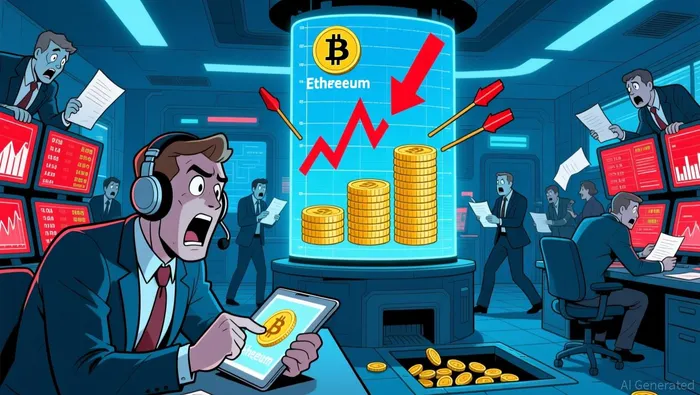
The recent outflows from Spot Bitcoin and Ethereum ETFs reflect a broader trend of investors reevaluating their exposure to crypto assets in a volatile market. These outflows, totaling $4.3 billion over five weeks, indicate that investors may be shifting capital into alternative strategies or asset classes according to market data. This trend raises questions about the sustainability of ETF-driven demand and the potential for further market consolidation as reported.
Meanwhile, the DeFi sector is seeing some positive developments. A federal judge recently dismissed a class action lawsuit against Uniswap, ruling that developers cannot be held liable for third-party scam tokens traded on the protocol. This decision reinforces legal clarity for DeFi platforms and may encourage increased capital flow into liquidity pools according to analysis. The TVL for Uniswap currently stands at $3.08 billion, with the price of UNI rising by 6% in response as noted.
Ethereum is also gaining traction as a long-term investment due to its robust ecosystem and ongoing upgrades. Sharplink's CEO highlighted Ethereum's dominance in stablecoin transactions, financial asset tokenization, and institutional DeFi participation as key drivers of its long-term value. These factors position Ethereum as a potential settlement layer for high-value financial activity, reinforcing its appeal to long-term investors according to CEO insights.
Why Are DeFi Outflows Significant for Investors?
DeFi outflows can signal shifting investor priorities and risk preferences in the current market environment. Over the past five weeks, Spot Bitcoin and Ethereum ETFs have faced significant outflows, which could indicate a reallocation of capital to alternative strategies or more liquid assets according to market data. This trend may also reflect broader uncertainty and the need for investors to hedge against macroeconomic risks. While ETFs have historically served as a marginal demand source, their declining inflows suggest a potential recalibration of investor sentiment as indicated.
The legal developments around DeFi are also important for investors. The Uniswap ruling provides a precedent that could reduce legal uncertainty for liquidity providers and platform developers. This could lead to increased participation in DeFi protocols and potentially higher TVL according to market analysis. The ruling aligns DeFi with peer-to-peer technologies like Venmo, where developers are not held responsible for illicit user activity as explained.
How Are Institutional and Technological Trends Shaping Ethereum's Long-Term Prospects?
Ethereum's long-term investment potential is being reinforced by institutional adoption and technological maturity. Sharplink's CEO emphasized that stablecoins, tokenization, and institutional DeFi participation are key factors driving Ethereum's dominance in high-value financial activity according to CEO statements. The tokenization of financial assets allows for 24/7 trading and instant settlement, making Ethereum an attractive settlement layer as highlighted.
Layer 2 upgrades continue to enhance Ethereum's scalability and reduce transaction costs, making it more competitive with other blockchains like SolanaSOL--. Institutional participation in DeFi is also expanding beyond experimentation into real-world usage, with more firms leveraging DeFi for borrowing, lending, and swapping according to industry analysis. These developments suggest that Ethereum is evolving into a more mature and institutional-grade blockchain platform as reported.
The broader crypto market is also experiencing a short-term rebound, with stablecoin issuer CircleCRCL-- reporting strong earnings and a 72% increase in USDC circulation year over year according to earnings data. This has led to a rise in the company's stock price and increased activity in altcoins like Ethereum, XRPXRP--, and Solana as noted. However, despite the rebound, some analysts remain cautious, warning that Bitcoin could test lower levels according to market forecasts.
The evolving regulatory landscape also plays a role in shaping investor behavior. The U.S. banking regulator, OCC, has proposed new stablecoin rules under the GENIUS Act to ensure safety and stability as announced. TetherUSDT-- has invested $200 million in Whop to integrate USD₮ into e-commerce, aiming to expand stablecoin usage beyond speculation according to business reports. These regulatory and business developments highlight the ongoing integration of crypto into traditional financial systems as observed.
What Risks and Limitations Should Investors Be Aware Of?
While DeFi and Ethereum show promise, investors should remain cautious about potential risks. The legal precedent set by the Uniswap ruling may not extend to all DeFi models, particularly those with more centralized control according to legal analysis. This could result in uneven regulatory treatment and uncertainty for investors as indicated. Additionally, the ongoing legal case against Jane Street for alleged market manipulation has raised concerns about institutional influence and uneven access to market data according to legal developments.
Smart contract security remains a challenge, with current analyzers often falling short in detecting certain types of vulnerabilities according to research. This underscores the importance of due diligence and risk management for DeFi investors as emphasized. The evolving complexity of smart contracts continues to present challenges for automated security tools as noted.
In summary, DeFi outflows highlight a shift in investor behavior amid market volatility. Legal and technological developments are shaping the long-term prospects of Ethereum and other DeFi protocols. Institutional adoption and regulatory clarity are key factors influencing the market. However, investors should remain cautious about potential risks, including legal uncertainty, smart contract vulnerabilities, and market manipulation concerns.

Blending traditional trading wisdom with cutting-edge cryptocurrency insights.
Latest Articles
Stay ahead of the market.
Get curated U.S. market news, insights and key dates delivered to your inbox.


AInvest
PRO
AInvest
PRO



Comments
No comments yet