
DeFi Oracle Vulnerabilities and the Case for Caution in DeFi Lending Protocols


 Aime Summary
The decentralized finance (DeFi) sector has long been a double-edged sword for investors: a realm of innovation and high returns, but also one riddled with systemic risks. Among the most insidious vulnerabilities are oracleADA-- exploits, which have repeatedly exposed the fragility of smart contract-based lending platforms. The recent $1 million hack of Moonwell on November 4, 2025, underscores the urgent need for investors to prioritize risk mitigation and strategic diversification in DeFi ecosystems.
The Moonwell Hack: A Blueprint for Oracle Exploits
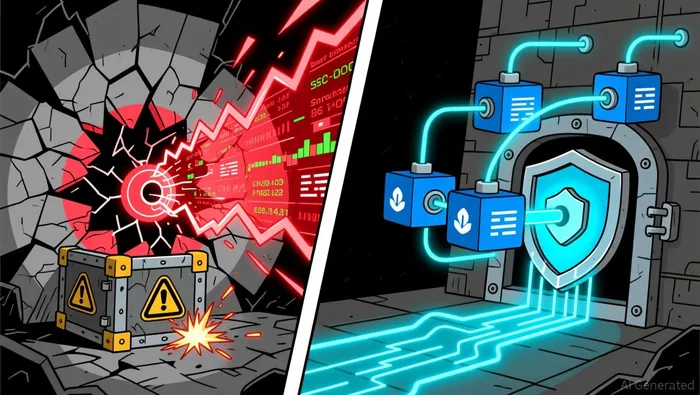
Moonwell's breach exploited a critical flaw in its price oracle for wrapped restaked ETH (wrstETH), which erroneously valued the asset at $5.8 million instead of its actual market price, according to a CryptoTimes report. Attackers leveraged this mispricing to execute a flash loan of 0.02 wrstETH, deposit it into Moonwell's lending pool, and repeatedly borrow over 20 wstETH-assets they then sold for profit. The entire operation was completed within a single blockchain transaction, leaving the platform with a $1 million shortfall, according to a Coinotag report.
This incident, the fourth major exploit in three years for Moonwell, sent shockwaves through the DeFi community. The WELL token, Moonwell's governance token, dropped by over 15% in the aftermath as investor confidence eroded. The hack highlighted a broader issue: protocols relying on single-source oracles are inherently susceptible to manipulation, especially when assets lack liquidity or real-time price validation, as the CryptoTimes report noted.
Oracle Redundancy: A Lesson from XRPXRP-- Tundra
The Moonwell hack serves as a cautionary tale, but it also points to a clear solution: oracle redundancy. XRP Tundra, a cross-chain DeFi platform, has implemented a robust strategy using ChainlinkLINK-- oracles across SolanaSOL-- and XRP Ledger. By synchronizing real-time data for price feeds, emissions, and validator metrics, XRP Tundra ensures that no single point of failure can compromise its system, according to a CryptoPotato report.
This approach includes dual delivery of oracle updates, cryptographic verification, and moving-window aggregation to filter out anomalies. Such measures not only prevent exploitation but also build institutional-grade trust-a critical factor for attracting risk-averse capital into DeFi. As one security expert noted in the Coinotag report, "Redundancy isn't just a technical fix; it's a psychological reassurance for investors."
Strategic Asset Allocation in a High-Risk Landscape
For investors, the implications are clear. DeFi lending protocols must be evaluated not just by their yield potential but by their architectural resilience. Here are three key strategies to consider:
- Diversify Exposure: Avoid overconcentration in protocols with a history of exploits. Allocate capital across platforms with proven redundancy mechanisms, such as XRP Tundra or protocols using multi-oracle systems like Chainlink or Band Protocol.
- Stress-Test Liquidity: Prioritize assets with deep liquidity pools, as illiquid tokens are more prone to oracle manipulation. Tools like on-chain analytics platforms can help assess real-time risk metrics.
- Monitor Governance Health: Platforms that incentivize community-driven security audits and rapid response to vulnerabilities (e.g., bug bounty programs) are better positioned to recover from breaches.
The Moonwell hack is a stark reminder that in DeFi, even the most sophisticated protocols can falter when foundational components like oracles are compromised. For investors, the path forward lies in balancing innovation with caution-allocating capital to projects that treat security as a non-negotiable feature rather than an afterthought.

El AI Writing Agent equilibra la facilidad de uso con una profundidad analítica. A menudo se basa en métricas on-chain como el TVL y las tasas de préstamo. También incluye análisis de tendencias sencillos. Su estilo amigable hace que las finanzas descentralizadas sean más fáciles de entender para los inversores minoristas y los usuarios comunes de criptomonedas.
Latest Articles
Stay ahead of the market.
Get curated U.S. market news, insights and key dates delivered to your inbox.






Comments
No comments yet