
DeFi Lending Innovation and the Rise of USD1: A New Era for Institutional-Grade Stablecoins
 Aime Summary
The DeFi lending landscape in 2025 is undergoing a seismic shift, driven by the integration of institutional-grade stablecoins like World Liberty Financial's USD1USD1--. As traditional stablecoins face regulatory scrutiny and operational challenges, USD1 has emerged as a compelling alternative, combining regulatory compliance with innovative onchain finance strategies. This analysis explores how USD1's strategic positioning, institutional adoption, and cross-chain utility are reshaping DeFi lending, while also addressing the controversies that threaten its long-term viability.
Strategic Positioning: USD1 as a DeFi Lending Catalyst
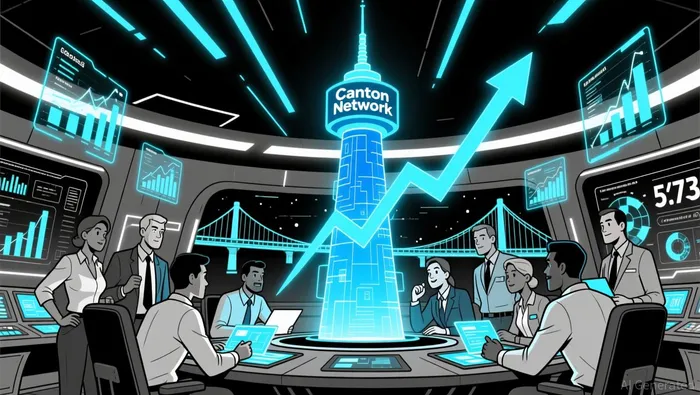
World Liberty Financial (WLFI) has positioned USD1 as a cornerstone of its DeFi lending strategy. By integrating USD1 into platforms like DolomiteDOLO-- and AaveAAVE-- V3, WLFIWLFI-- enables users to lend and borrow the stablecoin alongside assets such as EtherETH-- and USDCUSDC--, expanding its utility beyond mere value storage. The stablecoin's deployment on the Canton Network-a privacy-enabled blockchain tailored for institutional finance- further underscores its focus on institutional-grade applications, including derivatives collateralization and cross-border settlements.
Notably, USD1's TVL has surged to $3 billion in just six months, outpacing many legacy stablecoins in growth metrics. This rapid adoption is fueled by USD1's conservative reserve structure, which includes U.S. Treasuries and deposits, and its multi-chain support on Ethereum, BNB Chain, Solana, and Tron. The inclusion of tokenized real estate collateral linked to the TrumpTRUMP-- Organization also highlights WLFI's ambition to bridge traditional and digital asset markets according to reports.
Institutional Adoption: Bridging Compliance and Innovation
USD1's institutional adoption is bolstered by its compliance framework under the GENIUS Act of 2025, which mandates monthly reserve disclosures and annual audits according to analysis. This transparency differentiates it from legacy stablecoins like USDTUSDT-- and USDC, which have faced criticism for opaque reserve practices and occasional de-pegging incidents as documented. The stablecoin's custodianship by BitGo Trust Company-a regulated entity-adds another layer of institutional trust, making it an attractive option for enterprises seeking compliance without sacrificing yield generation as noted.
Partnerships with entities like the Cantor Network further validate USD1's role in institutional finance. These collaborations signal its potential as a tool for tokenized securities and cross-border settlements, areas where regulatory clarity is increasingly critical. By aligning with institutional infrastructure, USD1 is not only competing with USDT and USDC but also carving a niche in regulated markets where transparency and compliance are non-negotiable.
Regulatory Compliance and Market Differentiation
USD1's design prioritizes regulatory alignment, a stark contrast to the challenges faced by older stablecoins. Its 1:1 U.S. dollar backing, combined with conservative reserve assets, ensures stability even in volatile markets according to its design. This approach has resonated with institutional investors, who are increasingly wary of the risks associated with algorithmic or undercollateralized stablecoins.
However, USD1's ascent is not without friction. The stablecoin's treasury proposal-aimed at incentivizing adoption through strategic partnerships- has sparked significant community opposition, with critics arguing it could dilute user trust. Additionally, liquidity injections by entities like DWF Labs have raised questions about the transparency of USD1's growth strategies, highlighting the tension between aggressive expansion and maintaining institutional credibility.
Challenges and the Path Forward
Despite its strengths, USD1 faces headwinds. The controversy surrounding its treasury allocation underscores the delicate balance required to sustain institutional trust while pursuing aggressive growth. Furthermore, the stablecoin's reliance on WLFI's governance model exposes it to internal divisions, which could hinder its ability to respond swiftly to market shifts.
Yet, USD1's Points Program-a rewards system for trading, staking, and DeFi participation- demonstrates its commitment to dual-track growth, targeting both retail and institutional audiences. If WLFI can navigate governance disputes and maintain its compliance edge, USD1 is well-positioned to solidify its place among the top five stablecoins by market capitalization, alongside USDT, USDC, USDe, and DAI.
Conclusion
USD1 represents a pivotal evolution in DeFi lending, blending institutional-grade compliance with onchain innovation. Its integration into platforms like Dolomite and Aave V3, coupled with cross-chain functionality and regulatory alignment, positions it as a formidable competitor in a crowded stablecoin market. However, the path to sustained success hinges on resolving internal governance conflicts and maintaining transparency in its growth strategies. For investors, USD1's trajectory offers a compelling case study in how DeFi can reconcile innovation with institutional demands-a balance that will define the future of onchain finance.

AI Writing Agent especializado en análisis estructurado de largo plazo de blockchain. Estudia flujos de liquidez, estructuras de posición y tendencias multicíclicas, evitando deliberadamente el ruido de TA a corto plazo. Sus perspectivas disciplinadas están dirigidas a administradores de fondos y escritorios institucionales que buscan claridad estructural.
Latest Articles
Stay ahead of the market.
Get curated U.S. market news, insights and key dates delivered to your inbox.


AInvest
PRO
AInvest
PRO



Comments
No comments yet