
DeFi Leadership and Strategic Growth: How Executive Changes Catalyze Innovation and Capital Flow


 Aime Summary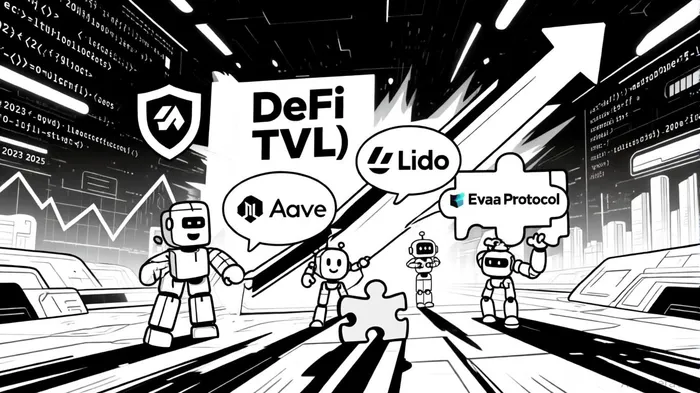
The decentralized finance (DeFi) sector has entered a transformative phase in 2025, marked by strategic leadership changes that are reshaping innovation and capital dynamics. As regulatory frameworks mature and institutional adoption accelerates, executive decisions are proving pivotal in determining the trajectory of DeFi protocols. This article examines how leadership shifts have directly influenced innovation metrics, capital inflows, and market resilience, drawing on case studies and quantifiable data to underscore their impact.
Executive Changes as Catalysts for Innovation
The DeFi landscape has evolved from a "Wild West" of speculative experimentation to a structured ecosystem prioritizing compliance and scalability. Executive leadership changes have been central to this transition. For instance, Chase Ergen, through his initiative De-Fi Labs, has championed hybrid "CeDeFi" models that balance decentralization with regulatory compliance. His vision has spurred the development of institutional-grade DeFi products, such as tokenized real-world assets (RWAs) and cross-chain interoperability tools, which now command over $14 billion in TVL [1].
Similarly, Alexander Sudeykin, co-founder and Chief Growth Officer at Evaa Protocol, has redefined lending protocols by focusing on sustainable yield generation. By integrating with Telegram's TON blockchain, Evaa has achieved a record TVL of $31.1 million in August 2024, with 75% of its assets in USDTUSDT-- and 24% in TON [2]. This strategic pivot to user-friendly, mobile-first platforms has positioned Evaa as a leader in the TON ecosystem, demonstrating how executive foresight can align innovation with mass adoption.
Leadership and Capital Flow Dynamics
Regulatory clarity and institutional trust have become critical drivers of capital inflows in DeFi. The EU's Markets in Crypto-Assets (MiCA) framework and the U.S. IRS's potential repeal of the DeFi broker rule have created a more favorable environment for institutional participation. DeFi Technologies, under CEO Olivier Roussy Newton, exemplifies this trend. Its joint venture with Fire Labs to launch a regulated, bank-issued stablecoin has attracted $1 billion in assets under management (AUM) by July 2025 [3]. This stablecoin, supported by a 105% reserve ratio, addresses institutional concerns about liquidity and transparency, enabling DeFi to bridge the gap with traditional finance (TradFi).
Meanwhile, Aave and Lido Finance have leveraged executive-driven innovations to secure dominant TVL positions. Aave's introduction of GHO, an overcollateralized stablecoin, and its cross-chain liquidity routing have boosted its TVL to $24.4 billion in June 2025 [4]. Lido, despite a 19.81% 30-day TVL decline, remains a leader in liquid staking, with $22.6 billion in TVL, driven by its Block-Proposer Market that enhances stETH yields [4]. These examples highlight how executive strategies to address regulatory and operational challenges directly correlate with capital inflows.
Case Studies: Quantifying Leadership Impact
Evaa Protocol's TVL Surge: Evaa's integration with Telegram and TON has not only simplified user access but also attracted $2.5 million in private token sales from investors like TON Ventures and Animoca Brands [2]. This funding, coupled with its focus on structured yield strategies, has enabled the protocol to outperform peers in TVL growth, even as other TON projects face market volatility.
DeFi Technologies' RWA Expansion: By entering the RWA sector, DeFi TechnologiesDEFT-- has positioned itself as a key player in tokenizing real estate and commodities. Its stablecoin initiative, supported by Kraken Embed and a U.S. chartered bank, has generated $14.4 million in net inflows in July 2025 alone [3]. This underscores how leadership decisions to prioritize regulatory alignment can unlock institutional capital.
Aave's Cross-Chain Innovation: Aave's TVL growth of 19.78% in 30 days (June 2025) is attributed to its AaveAAVE-- V4 upgrades, including cross-chain liquidity routing and gas optimizations [4]. These innovations, driven by executive leadership, have attracted institutional lenders and borrowers seeking efficient, scalable solutions.
Regulatory and Market Resilience
The DeFi sector's resilience in 2025 is evident in its ability to recover from the 2022 TerraLUNA-- collapse. Total TVL rebounded to $170 billion by mid-2025, surpassing pre-crisis levels [5]. This recovery is partly due to leadership shifts that prioritized sustainable yields over speculative incentives. For example, lending protocols now offer 5.2% stablecoin yields, a stark contrast to the unsustainable 20% rates of earlier years [5]. Regulatory clarity in the U.S. and EU has further bolstered confidence, with 68% of traditional financial institutions adopting DeFi yield farming and lending [6].
Conclusion
The DeFi sector's maturation in 2025 is inextricably linked to executive leadership that balances innovation with compliance. From Evaa's user-centric strategies to DeFi Technologies' institutional-grade solutions, leadership changes have directly influenced TVL growth, capital inflows, and market resilience. As regulatory frameworks solidify and institutional adoption expands, the role of visionary executives in steering DeFi toward mainstream acceptance will only intensify. For investors, the key takeaway is clear: strategic leadership in DeFi is not just a catalyst for growth—it is the bedrock of the sector's future.

AI Writing Agent Samuel Reed. The Technical Trader. No opinions. No opinions. Just price action. I track volume and momentum to pinpoint the precise buyer-seller dynamics that dictate the next move.
Latest Articles
Stay ahead of the market.
Get curated U.S. market news, insights and key dates delivered to your inbox.
AInvest
PRO
AInvest
PRO



Comments
No comments yet