
DeFi Governance Volatility: Lessons from Aave's WLFI Controversy


 Aime Summary
The decentralized finance (DeFi) sector has long prided itself on its promise of transparency and autonomy. Yet, the 2024 Aave-WLFI controversy exposed a critical vulnerability: the fragility of governance frameworks when token allocation terms are ambiguous or contested. For investors, this case study underscores how governance disputes can trigger market instability and why due diligence on governance structures is now as critical as technical audits of smart contracts.
The Aave-WLFI Dispute: A Flashpoint for Governance Risk
In October 2024, Aave's proposal to receive 7% of WLFI's circulating supply and 20% of protocol revenues sparked immediate backlash. WLFI's denial of the claim—calling it “false and fake news”—created a vacuum of information. AaveAAVE-- founder Stani Kulechov defended the terms as a “strategic art of the deal,” but the lack of clarity in communication led to a 24-hour 8% plunge in Aave's AAVE token price, from $385 to $339. This volatility highlights a key issue: DeFi governance disputes often unfold in public forums and social media, where misinformation spreads faster than formal disclosures.
The controversy also amplified concerns about governance capture and regulatory scrutiny. WLFI's ties to TrumpTRUMP-- family members via DT Marks DEFI LLC—holding 22.5 billion tokens valued at $9 billion—added a political dimension. Regulators, including the SEC, are increasingly focused on whether governance tokens qualify as securities, a risk that spiked during the dispute.
Why Ambiguity in Token Allocation Matters
Token allocation is the lifeblood of DeFi protocols, but opaque terms create fertile ground for speculation and panic. In the Aave-WLFI case, the lack of a formalized, auditable agreement left investors guessing about the true value of the partnership. This mirrors broader trends in DeFi, where governance tokens are often distributed through unstructured mechanisms, leading to:
1. Information asymmetry: Retail investors lack the tools to verify claims as quickly as insiders.
2. Regulatory uncertainty: Ambiguous allocations can trigger SEC investigations, as seen in 2024.
3. Market manipulation risks: High-profile token unlocks (like WLFI's 20% unlock on September 1, 2025) can be weaponized if governance is centralized.
What Investors Should Demand
To mitigate governance risk, investors must prioritize protocols with auditable governance frameworks and transparent tokenomics. Key criteria include:
- Community-driven audits: Aave's post-controversy adoption of on-chain proposal audits is a model for ensuring accountability.
- Formalized communication protocols: Clear, public channels for validating governance decisions reduce misinformation.
- Institutional alignment: Protocols that engage institutional investors with detailed governance reports (as Aave did) are better positioned to weather crises.
The Road Ahead: Governance as a Competitive Advantage
By 2025, Aave's TVL of $167 billion demonstrated its resilience, but the WLFI incident proved that even dominant protocols are not immune to governance shocks. For investors, the takeaway is clear: governance transparency is a non-negotiable due diligence factor. Protocols that balance decentralization with accountability—through mechanisms like token-weighted voting caps, multi-signature governance, or hybrid on-chain/off-chain governance—will attract long-term capital.
In a sector where code is often touted as law, the Aave-WLFI controversy reminds us that governance is the new code. Investors who prioritize protocols with robust governance frameworks will not only avoid volatility but also position themselves to capitalize on the next wave of DeFi innovation.
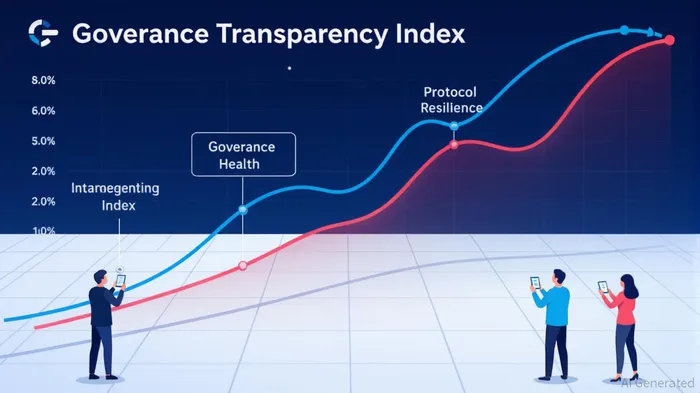
Final Advice: As DeFi matures, treat governance risk like a technical audit. Ask: Is this protocol's governance auditable? Are token allocations clearly defined? How does it handle external pressures? The answers will separate the resilient from the fragile in an ecosystem where trust is both the foundation and the battleground.

Decoding blockchain innovations and market trends with clarity and precision.
Latest Articles
Stay ahead of the market.
Get curated U.S. market news, insights and key dates delivered to your inbox.






Comments
No comments yet