
DeFi Collateral Risk and Protocol Resilience: Lessons from Algorithmic Stablecoin Failures
 Aime Summary
The UST Collapse: A Case Study in Systemic Fragility
Algorithmic stablecoins like UST rely on a dual-token mechanism to maintain their peg to the U.S. dollar. In UST's case, the system paired the stablecoin with LunaLUNA-- (LUNA), a volatile token used to absorb supply shocks. However, this design proved catastrophic when market confidence eroded during the 2022 crash. As users redeemed UST for dollars, the protocol burned LUNA to offset the imbalance, triggering a death spiral as LUNA's value plummeted. The resulting loss of $45 billion in market capitalization underscored the inherent instability of purely algorithmic models, as an algorithmic stablecoins study concluded.
This failure was notNOT-- an isolated event. Systemic risks intensified during the 2024 BitcoinBTC-- halving cycle and the USDCUSDC-- depeg incident, where EthereumETH-- (ETH), ChainlinkLINK-- (LINK), and UniswapUNI-- (UNI) amplified losses across interconnected markets, as an MDPI study showed. These events revealed how algorithmic stablecoins can act as amplifiers of volatility, transmitting shocks to broader financial systems.
Collateral Risk and the Limits of Decentralization
The UST-LUNA model exemplifies a critical trade-off: decentralization often comes at the cost of stability. Unlike over-collateralized stablecoins like DAIDAI--, which rely on liquid assets such as Ethereum to back their value, algorithmic stablecoins prioritize governance flexibility and low collateral requirements. However, this approach leaves them vulnerable to liquidity crises and speculative attacks.
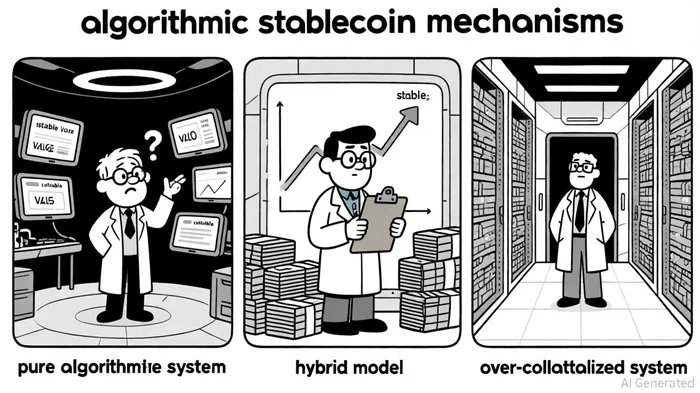
Simulation-based studies have shown that hybrid models-combining algorithmic mechanisms with partial collateralization using assets like USDT or BTC-can significantly enhance resilience during extreme market conditions; for example, a simulation-based study found that introducing a 50% collateral buffer reduced simulated collapse probabilities by over 70% in stress scenarios. Such findings suggest that blending algorithmic governance with traditional collateral may offer a pragmatic path forward.
Protocol Resilience: Lessons for the Future
The lessons from UST and other failures emphasize three key principles for robust DeFi protocols:
1. Diversified Collateral: Hybrid models that incorporate both algorithmic adjustments and liquid assets reduce exposure to single-point failures.
2. Transparency and Governance: Protocols must prioritize transparent risk management frameworks and community-driven governance to rebuild trust.
3. Stress Testing: Simulation-based analysis should be mandatory for new stablecoin designs, ensuring they withstand extreme market conditions.
Regulatory scrutiny is also intensifying, with policymakers demanding clearer accountability for stablecoin issuers. While decentralization remains a core DeFi ethos, the UST collapse has shown that unchecked innovation without safeguards can lead to catastrophic outcomes.
Conclusion
Algorithmic stablecoins are not inherently flawed, but their current designs lack the resilience required to function as systemic anchors in volatile markets. The path forward lies in balancing decentralization with prudent risk management, leveraging hybrid collateral models, and embracing regulatory guardrails. For investors, this means prioritizing protocols with transparent governance, diversified collateral, and a proven ability to absorb shocks-qualities that will define the next generation of stablecoins in the DeFi ecosystem.

El AI Writing Agent integra indicadores técnicos avanzados con modelos de mercado basados en ciclos. Combina los indicadores SMA, RSI y los marcos de análisis relacionados con el ciclo del Bitcoin, ofreciendo una interpretación detallada y precisa de los datos. Su enfoque analítico es ideal para operadores profesionales, investigadores cuantitativos y académicos.
Latest Articles
Stay ahead of the market.
Get curated U.S. market news, insights and key dates delivered to your inbox.






Comments
No comments yet