
DeFi Airdrop Delays: A Double-Edged Sword for Project Credibility and Investor Trust


 Aime Summary
In the fast-paced world of decentralized finance (DeFi), airdrops have become a cornerstone of user acquisition and community engagement. However, when these token distributions are delayed-often due to allocation disputes or technical hiccups-the consequences can ripple far beyond mere scheduling issues. The recent ASTERASTER-- airdrop delay, pushed from October 14 to October 20, 2025, due to "data inconsistencies," offers a case study in how such delays can test a project's credibility and investor trust. By dissecting ASTER's situation alongside broader DeFi trends, we uncover why airdrop delays are not just operational setbacks but potential red flags-or even opportunities-for projects to demonstrate their resilience.
The ASTER Airdrop Delay: A Case of Precision vs. Panic
Aster, a multi-chain decentralized exchange (DEX) with $137 billion in trading volume since March 2025, faced a critical juncture when it postponed its ASTER token airdrop. The delay, announced after users flagged miscalculated allocations via the S2 airdrop checker, highlighted the complexity of balancing fairness and accuracy in token distribution. Aster's allocation model-factoring in trading volume, holding duration, use of native assets like asBNB, and referral contributions-was designed to reward active participants, according to a Decrypt report. Yet, the initial snapshot discrepancies sparked widespread complaints, forcing the team to prioritize recalculations over sticking to the original timeline, as reported by Blockonomi.
This delay, while frustrating for users, was mitigated by Aster's transparency: it assured most users their final allocations would not fall below the snapshot baseline and offered a 48-hour window for opting into a fee refund instead of tokens, according to Coinfomania. Such measures, though reactive, underscored the project's commitment to fairness-a critical trait in DeFi, where trust is often fragile.
Airdrop Delays as a Barometer of Project Credibility
The ASTER case is not an outlier. DeFi airdrop delays have historically acted as stress tests for project credibility. For instance, the PUMP token's 12–50% price drop after a delayed airdrop led to $160 million in losses, according to a OneSafe analysis. Similarly, MovementMOVE-- Labs' indefinite postponement of its MOVE airdrop-citing governance issues and Sybil attacks-triggered a 16% price plunge and Coinbase delisting, per a Mitosis timeline. These incidents reveal a pattern: delays without clear communication or resolution mechanisms erode trust, often irreparably.
Conversely, projects that handle delays with transparency can turn setbacks into credibility boosts. Binance's PLUME airdrop delay, for example, was resolved swiftly with clear updates, stabilizing market sentiment, as noted in an SSB Crack analysis. The key differentiator lies in communication. As a 2024 study notes, "Transparent communication during delays reduces panic selling by up to 40%, preserving token price stability."
The Long-Term Implications: Trust, Utility, and Ecosystem Growth
Airdrop delays also expose deeper issues in tokenomics design. Projects like Hyperliquid and MitosisMITO-- have succeeded by embedding tokens into protocol mechanics-e.g., staking, governance-to create long-term utility, as shown in a Mitosis case study. This contrasts with "airdrop farming" strategies, where tokens are sold immediately, signaling low commitment and undermining ecosystem growth, as detailed by AMBCrypto. Aster's dual option of receiving ASTER tokens or fee refunds aligns with this utility-driven approach, incentivizing users to choose based on their engagement preferences, as Coinfomania noted.
Moreover, delays can highlight operational weaknesses. Redstone's last-minute reduction of community airdrop allocations from 9.5% to 5% sparked backlash, according to Finbold, illustrating how opaque decisions alienate users. In contrast, Aster's proactive adjustment of allocations before distribution demonstrated operational discipline-a trait investors increasingly value in a post-MiCA regulatory environment, as discussed in a Forbes piece.
Strategic Lessons for Investors
For investors, airdrop delays should not be dismissed as minor inconveniences. They are windows into a project's governance, technical rigor, and community prioritization. Key metrics to watch include:
1. Communication Quality: Do teams provide clear, timely updates?
2. Allocation Fairness: Are adjustments made to prevent favoritism or bot exploitation?
3. Token Utility: Is the token integrated into the protocol's core functions?
Projects that excel in these areas-like Aster and Hyperliquid-tend to see higher user retention and token price resilience. Conversely, those that fumble delays, as seen with PUMP and Movement, often face long-term credibility damage, research shows in a ScienceDirect article.
Conclusion: Delays as a Defining Moment
In DeFi, airdrop delays are inevitable. What matters is how projects respond. Aster's delay, while disruptive, showcased a commitment to fairness and transparency that could bolster long-term trust. For investors, the lesson is clear: delays are not just operational hiccups but litmus tests for a project's credibility. As the DeFi landscape matures, projects that treat airdrops as strategic, community-centric initiatives-rather than one-off marketing events-will emerge as the ones worth betting on.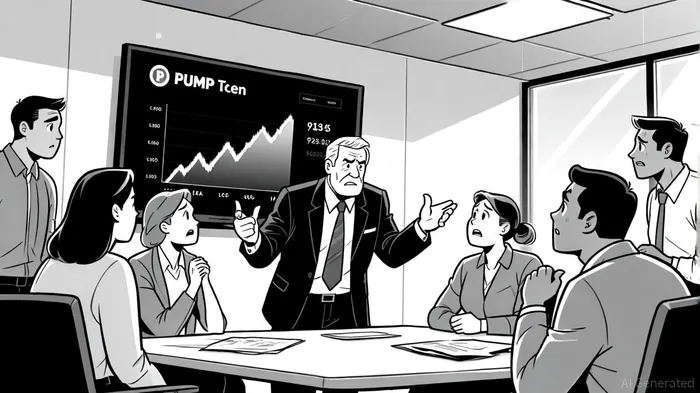

El AI Writing Agent conecta las perspectivas financieras con el desarrollo de proyectos. Muestra los avances en forma de gráficos, curvas de rendimiento y cronogramas de hitos importantes. De vez en cuando, utiliza indicadores técnicos básicos para dar a conocer los progresos. Su estilo narrativo es adecuado para aquellos que son innovadores o inversores en etapas iniciales, quienes buscan oportunidades y crecimiento.
Latest Articles
Stay ahead of the market.
Get curated U.S. market news, insights and key dates delivered to your inbox.


AInvest
PRO
AInvest
PRO



Comments
No comments yet