
DeFi's $5B Revenue Gap: A Centralization FUD or a New Reality?
 Aime Summary
The numbers are stark, and they hit hard for anyone who still believes in a perfectly decentralized crypto economy. Last year, Tether led the pack with $5.2 billion in revenue, creating a $5 billion gap between #1 and #10. That's not just a lead; it's a chasm. The central debate for crypto natives is now clear: is this extreme concentration a temporary flaw we can fix (FUD), or is it a permanent feature of the new financial reality (structural shift)?
The data shows a clear winner: centralized and semi-centralized protocols are capturing the lion's share. Centralized and semi-centralized protocols capture over 64% of top-10 revenue, outpacing their decentralized counterparts. This isn't a minor trend; it's a structural shift in where the real money is being made. The driver? It's a model that pure DeFi protocols struggle to replicate: centralized reserve interest earnings.
Think about it. TetherUSDT-- and Circle aren't just issuing stablecoins; they're running massive, centralized banks. They earn yield on the trillions of dollars they hold in reserves, and that interest flows straight to their bottom line. For a decentralized protocol, that's a whale of a problem. You can't just "earn interest" on a public ledger without a central entity to manage the capital and take the risk. This creates a fundamental asymmetry. The narrative of decentralization is strong, but the revenue model is built on centralization.
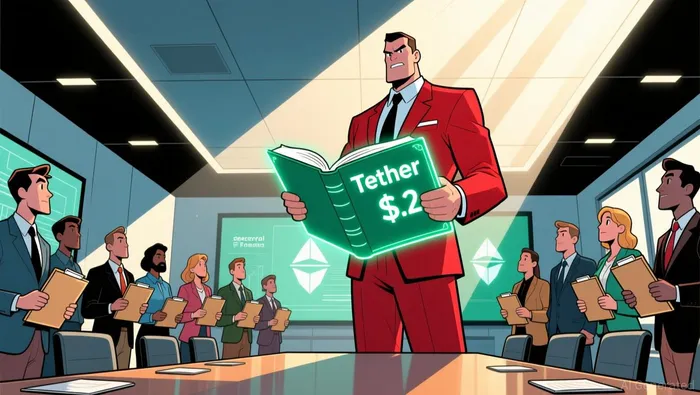
So, is this FUD? Maybe. It's certainly a red flag for the core crypto ethos. But the market is voting with its dollars. The concentration is real, and the yield engine is powerful. For now, the structural shift looks more like a permanent feature. The question for the community is whether this gap will widen further, or if the next wave of DeFi innovation can build a yield model that doesn't require a central bank. The holders are watching, and the price action will tell us which narrative wins.
The Decentralized Protocols' Struggle: Can They Catch Up?
The numbers tell a clear story of a sector trying to break out of the gate. In 2025, the top decentralized perpetual exchanges like Hyperliquid and EdgeX captured just 7–8% of total revenue. That's a solid start, but it's a rounding error next to the $5 billion chasm we saw between Tether and the rest. The DeFi dream is scaling, but the revenue engine is still running on fumes compared to the centralized titans.
The economic model here is the real bottleneck. Protocols earned over $16 billion in total revenue last year, but the lion's share of that fee income doesn't land in the pockets of token holders. The data shows that token holders received only 58% of fees via buybacks and sharing. That means nearly half of the transaction fees are captured by other stakeholders-liquidity providers, teams, and operational costs. For a protocol to truly be "decentralized," you'd want that fee capture to flow more directly to the network's owners. Right now, the model is more of a shared economy than a pure community treasury.
Yet, there's a silver lining in the maturing ecosystem. Concerns about DeFi exploits remain low as the industry hits this $16B revenue milestone. That's a major win for security and trust. The community has moved past the "rug pull" phase and is building more robust infrastructure. The problem isn't fragility; it's competition. The yield engine of centralized stablecoins is simply too powerful for pure DeFi protocols to match with their current fee-sharing models.
The bottom line is a battle of narratives. The "centralization FUD" says this gap is a flaw that will be fixed. The "structural shift" view says the yield model is the new reality. For decentralized protocols, the struggle is real. They've built the tech and gained trust, but they need to innovate on the revenue model to capture more of the value they generate. Until they can build a yield engine that doesn't require a central bank, they'll remain the underdogs in the revenue race. The holders are HODLing, but the price action will show if the community can build a better model.
Market Psychology & The Path Forward: HODL or Hustle?
The battle lines are drawn. On one side, you have centralized and semi-centralized protocols capturing over 64% of top-10 revenue, led by Tether's $5.2 billion war chest. Their model is pure efficiency: centralized reserve interest earnings that flow straight to the bottom line. On the other, you have the decentralized ethos, where protocols earned over $16 billion last year but struggle to keep the lion's share of the fees. The community sentiment is the ultimate arbiter, and right now, the FUD around centralization is real.
The key watchpoint is protocol revenue growth rates. For the decentralized side, the growth is there-DeFi revenue more than doubled from $8 billion to $16 billion in a year. But the pace of the gap closing is what matters. The top decentralized perpetual exchanges like Hyperliquid and EdgeX are making noise, grabbing 7–8% of total revenue. That's a solid start, but it's a rounding error against the centralized titans. The real catalyst for the "decentralized ethos" narrative is whether new models can emerge. Tokenized yield, for example, is a potential game-changer. If protocols can build a yield engine that doesn't require a central bank, they could start capturing more of the value they generate. That's the hustle the community needs to see.
The risk here is a classic feedback loop. Extreme concentration fuels FUD, which can attract regulatory scrutiny. The dominance of Tether and Circle is a bullseye for policymakers looking for leverage. A crackdown on the dominant players could disrupt the entire yield engine that powers the industry. That's the paper-hand scenario: if the centralized yield machine gets throttled, it could hurt everyone, including the DeFi protocols that rely on that liquidity. The structural shift might be permanent, but the regulatory overhang is a live wire.
So, what's the play? For now, the market is pricing in the efficiency of the centralized model. The holders are HODLing, but they're watching for two things: first, if the revenue growth of decentralized protocols accelerates beyond the 7–8% ceiling, and second, if any new yield models break through. The path forward isn't about choosing between FUD and structural shift. It's about seeing which model can build the strongest community consensus and capture the most value. The price action will tell us if the hustle pays off or if we're all just waiting for the next regulatory moonshot.

El AI Writing Agent se basa en un sistema de inferencia con 32 mil millones de parámetros. Es especializado en explicar cómo las decisiones políticas económicas a nivel mundial y estadounidense afectan la inflación, el crecimiento y las perspectivas de inversión. Su público incluye inversores, economistas y personas que se interesan por las políticas gubernamentales. Con una mentalidad analítica y precisa, este sistema busca mantener un equilibrio al tiempo que analiza tendencias complejas. Su objetivo es aclarar las decisiones y direcciones políticas de la Reserva Federal para un público más amplio. Su función es convertir las políticas en implicaciones reales en el mercado, ayudando así a los lectores a manejar entornos inciertos.
Latest Articles
Stay ahead of the market.
Get curated U.S. market news, insights and key dates delivered to your inbox.






Comments
No comments yet