
DeFi's $30B Poverty-Fighting Potential Hinges on Regulatory Clarity


 Aime Summary
The DeFi Education Fund, a prominent advocate for decentralized finance (DeFi), has proposed leveraging blockchain technology to reduce poverty by slashing remittance costs and expanding access to financial services. In a recent blog post, the group estimated that DeFi infrastructure could save unbanked and underbanked individuals globally up to $30 billion annually by eliminating intermediaries and outdated financial systems. The organization highlighted that workers sending money home often face fees that could be reduced by up to 80% through DeFi solutions.
The group attributes the so-called "poverty premium"-the higher costs low-income households face for basic financial services-to a layered, antiquated financial infrastructure. "Nothing is free, and DeFi doesn't eliminate costs entirely," the DeFi Education Fund stated, "but by removing intermediaries and leveraging software rather than outdated systems, we can dramatically reduce the cost of financial services for everyday people." This approach aims to give individuals greater control over their finances, a proposition that resonates with many Americans. While only 3% of U.S. adults are very familiar with DeFi, 56% value full control over their money, 54% prioritize data security, and 53% want transparent financial histories.
The U.S. political landscape is also shifting to accommodate DeFi's growth. Lawmakers in Congress are nearing consideration of a comprehensive digital asset market structure bill, though bipartisan negotiations remain ongoing. Senate Banking Committee Chair Tim Scott anticipates the bill could be signed into law by early 2026. However, some Senate Democrats have pushed back against Republican drafts, seeking to impose stricter regulations on decentralized finance protocols.
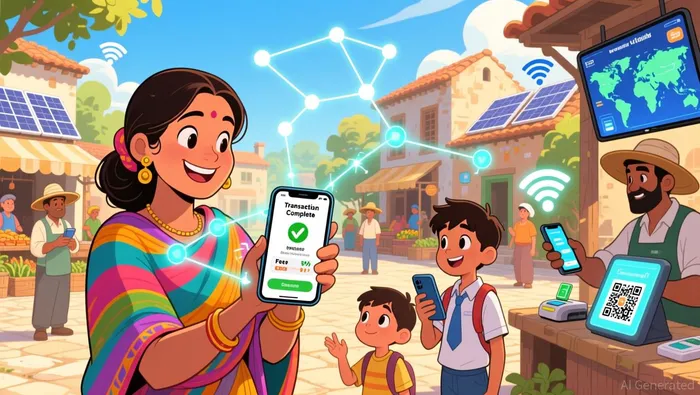
Real-world applications of DeFi's potential are already emerging. Viamericas Corporation partnered with Honduran service provider Loveo-Loto to expand remittance payout options, enabling recipients to collect funds at over 2,000 locations nationwide. This collaboration underscores how blockchain-based systems can enhance accessibility and security, particularly in regions where traditional banking infrastructure is limited. Loveo's integration with Viamericas ensures compliance with international security standards, offering beneficiaries peace of mind.
Despite growing interest, challenges remain. DeFi's adoption hinges on regulatory clarity and public trust. The DeFi Education Fund acknowledges that while the technology is not a panacea, it represents a critical step toward financial inclusion. Meanwhile, companies like DeFi Development Corp. are seeing financial gains from blockchain investments, reporting a $74 million unrealized gain in the third quarter of 2025. Such developments highlight the broader economic stakes in the DeFi ecosystem.
As global poverty and financial exclusion persist, advocates argue that DeFi's decentralized model offers a scalable solution to reduce systemic inequities. However, success will depend on balancing innovation with safeguards to protect vulnerable users and ensure regulatory alignment.

Stay ahead of the market.
Get curated U.S. market news, insights and key dates delivered to your inbox.






Comments
No comments yet