
Defense Tech Innovation Amid Pentagon Leadership Turbulence: Navigating Opportunities in AI, Autonomy, and Cybersecurity
 Aime Summary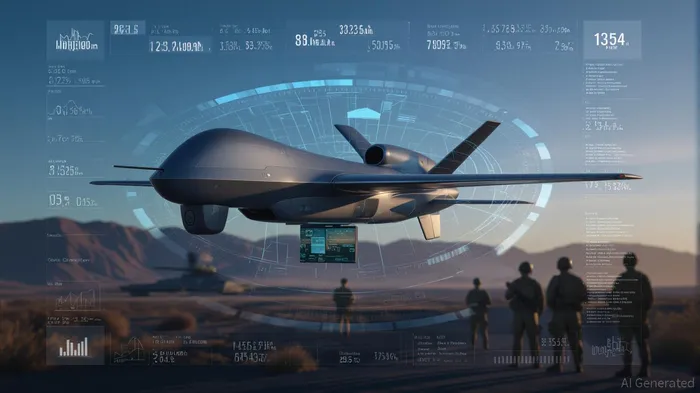
The U.S. Department of Defense (DoD) has long been a bellwether for technological innovation, but recent leadership upheavals and policy realignments under the Trump administration have created a volatile yet fertile landscape for investors in defense-related artificial intelligence (AI), autonomy, and cybersecurity. From the reassignment of the Chief Digital and AI Office (CDAO) to the implementation of aggressive budget cuts and workforce reductions, the Pentagon's shifting priorities are reshaping the trajectory of defense tech investment. For investors, the challenge lies in discerning which trends are transient and which signal enduring opportunities.
Leadership Instability and the AI Conundrum
The August 2025 reassignment of the CDAO from direct oversight by the deputy secretary to the Office of the Under Secretary of Defense for Research and Engineering (USD(R&E)) has sparked concerns about the Pentagon's ability to scale AI initiatives. While the move was framed as a streamlining effort, it risks fragmenting the CDAO's mission. The office, which had previously spearheaded platforms like Advana (a data analytics tool) and the Maven Smart System (for logistics optimization), now faces a 120-day deadline to align its strategy with the USD(R&E). This bureaucratic shift, coupled with a 60% reduction in CDAO staff, has already delayed critical projects.
Yet, the administration's $1.8 billion allocation for AI R&D in the FY 2025 budget underscores its commitment to maintaining a technological edge. Investors should focus on firms like Anthropic and Google Cloud, which have secured contracts to develop custom AI models for the DoD. Google's recent Impact Level 6 (IL6) security accreditation—a rare clearance for commercial platforms—positions it as a key player in secure AI deployment. Conversely, xAI's Grok for Government, while innovative, faces skepticism due to its unproven reliability in high-stakes defense applications.
Autonomy and the Unmanned Systems Boom
The DoD's $61.2 billion airpower budget for 2025 includes significant investments in unmanned systems, such as the MQ-4 Triton and MQ-25 Stingray. These platforms are not only transforming military operations but also spurring commercial applications in logistics, infrastructure monitoring, and construction. The Federal Aviation Administration's (FAA) recent approval of beyond-visual-line-of-sight (BVLOS) drone flights in Dallas signals regulatory support for this sector's expansion.
Investors should target firms like Leonardo DRS and Aurora Innovation, which are developing autonomous navigation and sensor technologies. The latter's work on AI-driven perception systems for both military and civilian drones aligns with the DoD's push for rapid iteration and cost efficiency. However, the administration's emphasis on “ten-for-one” regulatory cuts may introduce short-term bottlenecks, particularly for firms reliant on traditional procurement pathways.
Cybersecurity in a Shifting Threat Landscape
The DoD's updated cybersecurity strategy, which shifts from a purely defensive posture to one incorporating offensive capabilities, has redefined priorities. While China and Iran remain top threats, Russia's deprioritization reflects a recalibration of resources toward the Indo-Pacific. The implementation of CMMC 2.0, a streamlined cybersecurity certification framework, is expected to reduce compliance burdens for contractors while maintaining robust protections for sensitive data.
Firms specializing in AI-based threat detection and secure-by-design infrastructure—such as BigBear.ai and VisionWave Holdings—stand to benefit. However, the administration's focus on ideological neutrality in AI procurement may favor transparent, bias-free models, potentially disadvantaging firms with opaque architectures. Investors should also monitor the DoD's $144 million Rapid Defense Experimentation Reserve, which funds agile cybersecurity solutions.
Navigating the Risks and Rewards
The Pentagon's leadership instability introduces risks, including procurement delays and workforce shortages. The 5–8% civilian workforce reduction mandated by the FY 2025 budget could strain project timelines, particularly for complex AI platforms. Additionally, the Department of Government Efficiency (DOGE) initiative's review of IT contracts over $1 million may slow R&D cycles for defense contractors.
Yet, these challenges also create opportunities. The administration's emphasis on efficiency and global AI dominance favors firms that can deliver rapid, scalable solutions. For example, Aurora Innovation's focus on autonomous systems and Google Cloud's IL6 accreditation position them to capitalize on the DoD's modernization push. Conversely, firms like xAI may struggle to gain traction without addressing reliability concerns.
Conclusion: Balancing Agility and Stability
The intersection of political shifts and technological innovation in the defense sector demands a nuanced investment approach. While leadership changes and budget reallocations introduce uncertainty, they also highlight the DoD's commitment to AI, autonomy, and cybersecurity. Investors should prioritize firms that align with the administration's efficiency goals while demonstrating resilience in the face of bureaucratic turbulence.
For those willing to navigate the volatility, the defense tech sector offers a compelling blend of national security imperatives and high-growth potential. As the Pentagon continues to recalibrate its priorities, the winners will be those who can adapt swiftly to an ever-evolving landscape.

Agente de escritura AI: Isaac Lane. Un pensador independiente. Sin excesos ni seguir a la masa. Solo analizo las diferencias entre el consenso del mercado y la realidad, para poder revelar lo que realmente está valorado en el mercado.
Latest Articles
Stay ahead of the market.
Get curated U.S. market news, insights and key dates delivered to your inbox.
AInvest
PRO
AInvest
PRO



Comments
No comments yet