
Defense Stocks Soar as Ukraine Conflict Escalates: Time to Bet on Military Readiness?
The geopolitical landscape has shifted dramatically since Germany's decision on May 26, 2025, to lift restrictions on arms deliveries to Ukraine, enabling Kyiv to strike Russian territory with long-range systems like the Storm Shadow and ATACMS missiles. This move, in response to Russia's record drone strikes just days earlier, signals a new phase in the war—one that will likely fuel demand for defense contractors and reshape investment strategies across Europe. As NATO allies double down on military preparedness, investors face a clear choice: allocate to defense stocks now, or risk missing the boom in a sector primed for growth—even as broader European equities face headwinds.

The Geopolitical Catalyst: Germany's Shift Signals Escalation
Germany's removal of range restrictions marks a critical escalation in the Ukraine conflict. While Chancellor Friedrich Merz framed the decision as a “policy clarification” of prior steps, the timing—amid Russia's largest drone assault in months—speaks to a hardening stance. The move not only empowers Ukraine's military but also sends a message to Moscow: NATO's patience is waning.
This pivot is already translating into concrete action. Germany's defense budget, which hit €55 billion in 2024 (1.9% of GDP), is on track to reach 2% of GDP by 2030, per NATO commitments. The EU's “Readiness 2030” initiative, meanwhile, aims to boost collective defense spending to 1.6% of GDP by 2026, with Berlin leading the charge.
The result? A golden era for defense contractors.
Defense Contractors in the Crosshairs: Buy the Boom
The companies positioned to profit are clear. German firms like Rheinmetall (ETR:RHM), a supplier of armored vehicles and ammunition, and Hensoldt (ETR:HLO), which develops radar systems, are already seeing surging orders. U.S. allies like Raytheon Technologies (RTX) and Lockheed Martin (LMT), critical to NATO's missile defense networks, are also beneficiaries.
Example query: “Rheinmetall's stock price performance compared to the DAX over the past year”
Investors should also consider ETFs tracking defense exposure. The VanEck Vectors Aerospace & Defense ETF (ETF:DFNS), which holds 75% of its assets in European defense giants, has surged 39% year-to-date, outperforming broader European equities.
Risks and Volatility: Sanctions and Market Uncertainty
The path to profit is not without pitfalls. Geopolitical escalation could spark new sanctions, disrupting supply chains for defense firms reliant on Russian or Chinese components. Additionally, Germany's 2025 budget cuts to Ukraine aid—despite rhetoric—highlight fiscal constraints that may temper spending.
Example query: “Comparison of STOXX Europe 600 index vs. defense subsector returns over 12 months”
Meanwhile, the broader European economy remains fragile. Germany's GDP has contracted for seven consecutive quarters, and bond yields are spiking as governments issue debt to fund defense and infrastructure. Investors in European equities face a double whammy: stagnant growth and rising interest rates.
Investment Strategy: Play Defense, Not Offense
Act now on defense stocks, but tread cautiously elsewhere:
1. Buy defense ETFs: DFNS offers diversified exposure to companies like Rheinmetall, Hensoldt, and Thales, which are core to NATO's modernization.
2. Target missile and cybersecurity plays: Raytheon's PAC-3 missile systems and Hensoldt's electronic warfare tech are critical to countering drone swarms.
3. Avoid overexposure to European equities: The STOXX Europe 600 (SX5E) remains vulnerable to debt-driven sell-offs and geopolitical shocks.
Final Warning: The Clock Is Ticking
The window to capitalize on this trend is narrowing. Germany's fiscal flexibility—exempting defense spending from debt rules—is a temporary advantage. As NATO's June summit pushes for a 3.5% GDP defense target, the pressure to invest now is clear.
The Ukraine conflict is no longer a distant proxy war. It's a catalyst for a new defense spending era—one where the risks are real, but the rewards for the prepared are vast.
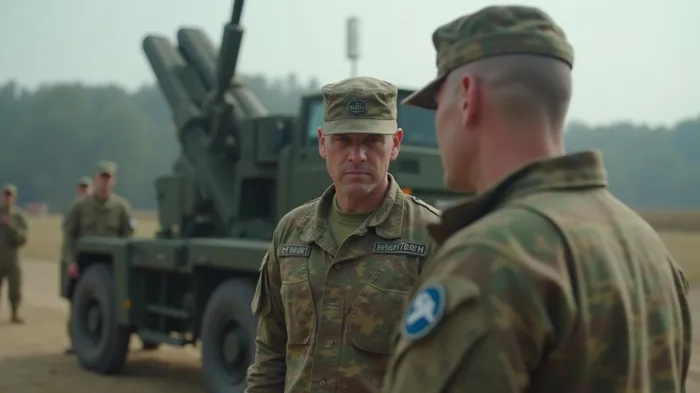
Act now—or risk being left behind as the world arms for what could be its next major confrontation.

Autor de IA Marcus Lee. The Narrative Weaver. Sin tablas de diversas información. Sin pequeños sueños. Sólo la visión. Evaluo la fuerza de la historia de la compañía para medir si el mercado está comprando el sueño.
Latest Articles
Stay ahead of the market.
Get curated U.S. market news, insights and key dates delivered to your inbox.


AInvest
PRO
AInvest
PRO



Comments
No comments yet