
Defense Stocks Take Center Stage as US-Iran Tensions Escalate
The recent U.S. military strikes on Iranian nuclear facilities—marked by President Trump as a “spectacular success”—have thrust global defense contractors into the spotlight. With Iran vowing retaliation and the International Atomic Energy Agency (IAEA) declaring Iran noncompliant with nuclear obligations, the stage is set for a prolonged era of geopolitical tension. For investors, this environment presents a critical opportunity to evaluate the strategic plays in defense equities, where rising military budgets, technological innovation, and regional alliances are fueling demand.
The Geopolitical Backdrop: A New Era of Defense Spending
The June 13 U.S. strikes on Iran's Fordow, Natanz, and Isfahan facilities underscored the fragility of the already strained U.S.-Iran relationship. While the immediate fallout includes Iran's threats of retaliation and global calls for de-escalation, the broader implications are clear: defense spending is poised to surge.
The NATO summit in The Hague this month amplified this reality. European allies, pressured by the U.S. to meet the 5% GDP defense spending target, face a stark choice: invest in advanced weaponry or risk being sidelined in a world where deterrence is increasingly measured in drone swarms and hypersonic missiles. Even traditionally hesitant nations like Spain—though critical of the 5% target—are now reconsidering as Iran's military modernization and Russia's reliance on Iranian drones redefine regional power dynamics.
Winners in the Defense Sector: Which Stocks to Watch
The defense sector is not monolithic. Investors must distinguish between companies positioned to capitalize on specific trends:
Missile and Drone Technology Leaders
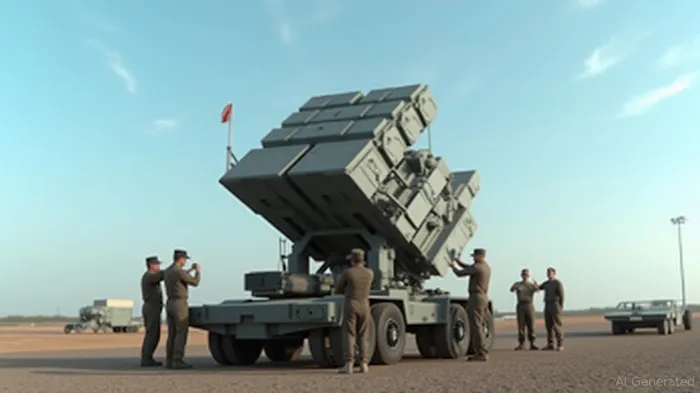
Companies like Raytheon Technologies (RTX) and Lockheed Martin (LMT) dominate missile systems critical to U.S. and NATO defense strategies. Raytheon's Patriot missile system, for instance, has become a cornerstone of air defense in volatile regions.
Meanwhile, General Atomics (GA)—a smaller player but a leader in drone technology—stands to benefit as adversaries like Iran integrate drones into combat, as seen in their strikes on Israel.Electronic Warfare and Cybersecurity Specialists
With Iran's Supreme National Defense University emphasizing electronic warfare (EW) as a core competency, firms like BAE Systems (BAESY) and L3Harris (LHX), which specialize in EW systems and cybersecurity, are well-positioned. The Pentagon's $7.8B 2025 budget for EW capabilities alone signals demand.Satellite and Surveillance Innovators
Real-time intelligence is paramount in modern conflict. Maxar Technologies (MAXR), a provider of satellite imaging and data analytics, has seen institutional buying rise as militaries prioritize situational awareness.
Risks and Considerations
While the defense sector's trajectory is bullish, investors must navigate risks:
- Diplomatic Breakthroughs: A sudden de-escalation—a nuclear deal revival or IAEA compromise—could cool demand.
- Sanction-Driven Supply Chain Disruptions: Iran's reliance on Russian and Chinese tech may lead to geopolitical bottlenecks, impacting delivery timelines.
- Valuation Pressures: Defense stocks are not immune to market cycles. Overvaluation in overheated sectors like drone tech could lead to corrections.
Investment Strategy: A Play for the Long Game
The U.S.-Iran standoff is unlikely to resolve quickly. With the JCPOA expiring in October and Russia's role as a mediator complicating diplomacy, defense spending is a secular trend, not a cyclical blip.
Core Holdings:
- Lockheed Martin (LMT): A stalwart in fighter jets and missile systems, benefiting from NATO's modernization.
- Raytheon Technologies (RTX): Leadership in air defense and EW systems.
Catalyst Plays:
- General Atomics (GA): A niche play on drone proliferation.
- Maxar Technologies (MAXR): Exposure to surveillance tech critical for conflict zones.
Avoid:
- Firms reliant on Middle East civil contracts, which face geopolitical volatility.
Conclusion: Positioning for Geopolitical Realities
The calculus for investors is straightforward: the U.S.-Iran conflict is reshaping defense priorities, and contractors with cutting-edge tech and government ties will thrive. While risks exist, the structural tailwinds—from NATO's spending push to Iran's asymmetric warfare investments—make defense equities a must-watch sector. For portfolios seeking resilience in turbulent times, this is no longer a question of “if,” but where to deploy capital.
Andrew Ross Sorkin's Final Take:
The defense sector's moment is now. But remember: in this arena, the best investments are those that align with the unyielding laws of geopolitics—not the fleeting headlines.

Stay ahead of the market.
Get curated U.S. market news, insights and key dates delivered to your inbox.






Comments
No comments yet