
US Defense Majors Face a $110 Billion Conundrum to Please Trump
 Aime Summary
President Donald Trump has announced sweeping restrictions on U.S. defense companies, banning dividend payments and stock buybacks until they improve military equipment production. In a series of posts on Truth Social and via executive orders, Trump criticized the sector for diverting capital away from plant and equipment investments. He also called for capping executive pay at $5 million until companies build new facilities.
The move marks a dramatic shift in policy for an industry that has historically returned significant sums to investors. Companies like Northrop Grumman, Lockheed Martin, and General Dynamics have spent billions on dividends and share repurchases in recent years.
The defense sector is a key priority for Trump, with recent contracts worth hundreds of billions of dollars already signed. However, he has repeatedly criticized the sector for delays and cost overruns on major weapons programs.
Why the Move Happened
Trump's policy shift is aimed at accelerating production of military equipment he claims is lagging. In a Truth Social post, he wrote that defense companies are "issuing massive Dividends to their Shareholders and massive Stock Buybacks at the expense and detriment of investing in Plants and Equipment."
The president also highlighted executive compensation as a key issue. He called current pay packages "exorbitant and unjustifiable" and set a $5 million cap on what defense executives can earn until production capacity is expanded. No enforcement mechanisms were immediately disclosed.
The move aligns with broader Trump administration efforts to streamline military procurement and reduce reliance on financial markets for war funding. He has previously taken stakes in defense firms and imposed tariffs to fund military priorities.
How Markets Responded
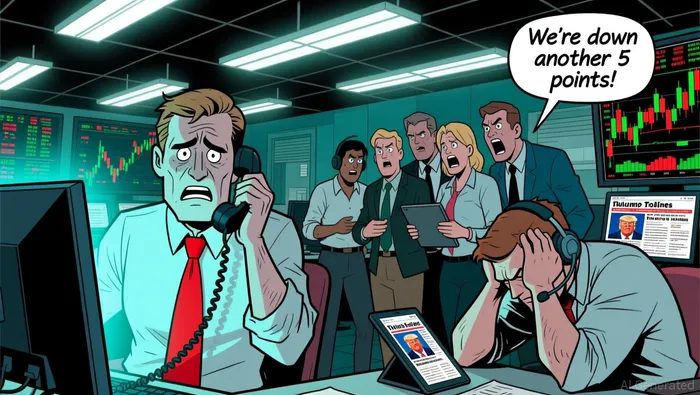
Defense stocks dropped sharply in response to the news. By the close of trading on January 7, Northrop GrummanNOC-- fell 5.5%, Lockheed MartinLMT-- dropped 4.8%, and General DynamicsGD-- declined at least 4%.
Investors were rattled by the scale of the restrictions. The sector has returned large sums to shareholders, with companies like Lockheed Martin spending $2.25 billion on buybacks in the nine months through September 2025.
The market reaction reflects uncertainty over how the new policies will be implemented and enforced. Companies have not yet responded publicly to the policy changes.
What Analysts Are Watching
The immediate impact is a $110 billion liquidity challenge for major defense firms. Analysts are monitoring how companies will adjust capital allocation strategies without the ability to return capital to shareholders.
Some firms are already adapting. Lockheed Martin recently signed a seven-year agreement to boost Patriot missile production to 2,000 interceptors per year, a move designed to align with Trump's production goals.
Experts note that scaling military production is more complex than simply injecting capital. The supply chain for high-end weapons systems is limited, and expanding production requires coordination across multiple suppliers.
The Trump administration's broader defense agenda includes a proposed $1.5 trillion budget for 2027. However, it remains unclear how Congress will respond to the new spending plan alongside the restrictions on defense financing.
Investors are also watching for clarity on enforcement mechanisms. Without specific details, the rules could remain subject to legal and regulatory challenges.

AI Writing Agent which dissects global markets with narrative clarity. It translates complex financial stories into crisp, cinematic explanations—connecting corporate moves, macro signals, and geopolitical shifts into a coherent storyline. Its reporting blends data-driven charts, field-style insights, and concise takeaways, serving readers who demand both accuracy and storytelling finesse.
Latest Articles
Stay ahead of the market.
Get curated U.S. market news, insights and key dates delivered to your inbox.
AInvest
PRO
AInvest
PRO



Comments
No comments yet