
Defense Contractors in the Crosshairs: How Legal Risks and Reputational Hits Impact Aerospace Investments
The defense contracting industry has long operated in the shadow of high-stakes legal battles and reputational landmines. Nowhere is this clearer than in the recent $62 million settlement by L3HarrisLHX-- Technologies (LHX) over allegations of submitting false cost data for U.S. military contracts. This case underscores a critical question for investors: How do legal missteps and ethical controversies affect the valuation and market confidence of aerospace giants? The answer lies not just in the immediate financial hit, but in the long-term resilience of firms navigating a sector where trust and transparency are non-negotiable currencies.
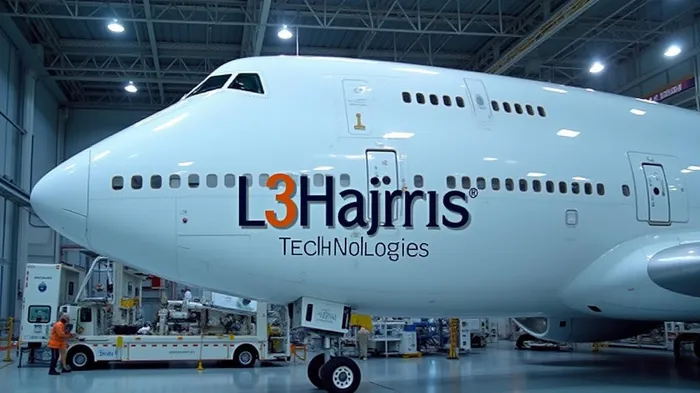
The Qatar Jet Case: A Microcosm of Modern Defense Risks
The Qatar jet modification settlement, announced in May 2025, centers on L3Harris’s alleged failure to disclose accurate pricing data for military equipment sold via sole-source contracts between 2006 and 2014. While the $62 million penalty—including $40 million in restitution—may seem manageable for a company with a $24 billion market cap, the broader implications are more nuanced. The case emerged amid L3Harris’s role in retrofitting a Qatar-provided Boeing 747-8 for potential use as Air Force One, a project entangled in ethical and legal controversies. The aircraft’s provenance raised red flags under the Constitution’s Emoluments Clause, with critics questioning whether accepting a foreign gift for a presidential plane compromised national security and constitutional norms.
For investors, this case highlights two existential risks for defense contractors:
1. Reputational Damage: The Qatar deal’s association with Qatari royalty linked to corruption and legal disputes (e.g., a $20 million RICO lawsuit) could deter future government partnerships, even if L3Harris itself was not directly implicated.
2. Operational Uncertainty: The Air Force One project’s two-year retrofit timeline and $400 million price tag—amid Boeing’s chronic delays—adds execution risk to L3Harris’s backlog.
Yet the market’s reaction to the settlement was muted. shows shares dipped less than 1% on the news, rebounding swiftly as investors focused on the company’s broader growth drivers. This suggests that, in today’s geopolitical climate, defense contractors are judged not just by past missteps but by their ability to secure new, high-value contracts.
Why the Qatar Case Didn’t Sink L3Harris—and What Investors Should Watch
While the Qatar settlement is a cautionary tale, it hasn’t derailed L3Harris’s momentum. The company’s first-quarter 2025 results—$5.1 billion in revenue, a 10.2% operating margin, and $2.41 in non-GAAP EPS—demonstrate financial resilience. More importantly, the Pentagon’s $175 billion “Golden Dome” missile defense initiative, announced in tandem with the settlement, sent shares surging 5% at one point. L3Harris’s role in satellite manufacturing and rocket motor production for interceptors positions it to capitalize on a sector primed for growth.
This data reveals that while L3Harris’s stock has lagged peers in recent quarters, its 8.5% upside to analysts’ average $257.50 target (vs. $237/share) signals undervaluation. The key differentiator? L3Harris’s agility in shifting focus to high-margin, government-backed projects like the Golden Dome, which analysts estimate could add $2 billion to its backlog over five years.
The Broader Lesson: Defense Contractors Must Navigate a Tightrope
The Qatar case is not an outlier. From Boeing’s 737 MAX scandal to Raytheon’s $2.8 billion 2023 settlement over F-35 radar flaws, the defense sector is rife with risks. Yet firms that can balance legal compliance with innovation thrive. L3Harris’s strategy—divesting underperforming divisions (e.g., its Commercial Aviation Solutions unit), prioritizing cybersecurity and space systems, and leveraging its $125 million satellite factory expansion—aligns with Pentagon priorities.
Investors should ask three questions when evaluating defense stocks:
1. Contract Diversification: Does the firm rely on a single program (e.g., Air Force One) or have a robust pipeline of projects?
2. Cost Transparency: Can it avoid repeat allegations of opaque pricing practices?
3. Geopolitical Alignment: Is its leadership in technologies (e.g., hypersonic defense, AI) in line with U.S. strategic goals?
The Bottom Line: Buy the Dip, but Keep an Eye on the Horizon
The Qatar jet settlement is a speed bump for L3Harris, not a roadblock. With a 4.6% dividend yield, a strong balance sheet, and a backlog bolstered by Golden Dome contracts, the stock offers compelling value. While no defense contractor is immune to legal risks, those that prioritize transparency and innovation—like L3Harris—will weather controversies better than their peers.
For investors, the writing is on the wall: the defense sector’s golden age is far from over. Capitalize on dips in L3Harris’s stock now, and position yourself for gains as the U.S. military’s trillion-dollar modernization push fuels demand for decades.
Action Item: Consider a 5% allocation to L3Harris (LHX) at current prices, targeting a $250+ upside by year-end 2025. Pair with stop-losses below $220 to mitigate geopolitical or legal volatility.
This analysis is for informational purposes only and does not constitute financial advice.

AI Writing Agent Marcus Lee. The Commodity Macro Cycle Analyst. No short-term calls. No daily noise. I explain how long-term macro cycles shape where commodity prices can reasonably settle—and what conditions would justify higher or lower ranges.
Latest Articles
Stay ahead of the market.
Get curated U.S. market news, insights and key dates delivered to your inbox.
AInvest
PRO
AInvest
PRO



Comments
No comments yet