
Defense Challenges Constitutionality of Evidence in Mangione's Trial


 Aime Summary
Luigi Mangione, the 27-year-old accused of fatally shooting UnitedHealthcare CEO Brian Thompson in December 2024, returned to court in New York for a pivotal pretrial hearing aimed at suppressing key evidence from his arrest. The defense team, led by attorneys Marc Agnifilo and Jacob Kaplan, is challenging the admissibility of a 3D-printed handgun, a silencer, and a notebook containing alleged writings that prosecutors argue outline Mangione's motive. The hearing, which began on the anniversary of Thompson's killing, could significantly shape the trajectory of both state and federal proceedings against Mangione, who faces the death penalty in the latter.
Central to the defense's argument is the claim that police violated Mangione's constitutional rights during his arrest at a McDonald's in Altoona, Pennsylvania, five days after the shooting. Prosecutors played surveillance footage of the arrest, including a 911 call from the McDonald's manager who reported customers' suspicions that Mangione resembled the suspect. The defense contends that officers conducted an unconstitutional warrantless search of his backpack after he was handcuffed, with one officer later acknowledging the need for a search warrant. "The officer did not search the bag because she reasonably thought there might be a bomb, but rather this was an excuse designed to cover up an illegal warrantless search," the defense argued.
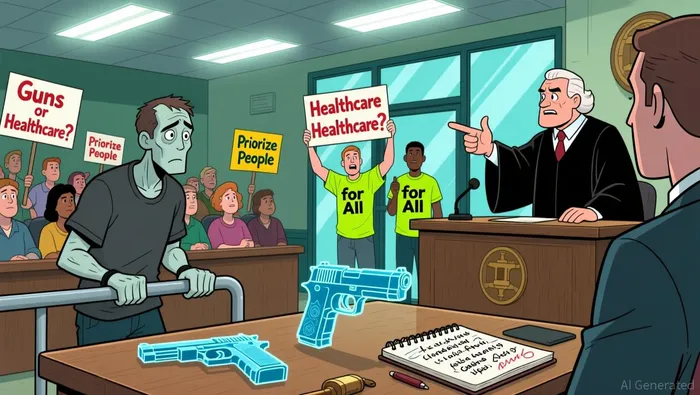 The notebook, described by prosecutors as a "manifesto" in which Mangione allegedly praised the Unabombert and expressed disdain for the healthcare industry, is a focal point of the legal battle. Defense attorneys seek to exclude it from trial, warning that its public disclosure could prejudice Mangione by influencing potential jurors. They also aim to suppress statements made by Mangione to police before being read his Miranda rights, including his initial use of the alias "Mark Rosario" . Prosecutors counter that the search was justified for officer safety and that Mangione's statements were voluntary according to court documents.
The hearing, expected to last multiple days, has drawn significant public attention, with supporters of Mangione gathering outside the courtroom. Some carried signs reading "Without a warrant, it's not a search, it's a violation," while others wore T-shirts referencing the health care system's controversies according to observers. The outcome could weaken the prosecution's case by limiting access to what they deem critical evidence, though such motions are rarely granted in full.
Mangione, who has pleaded not guilty to both state and federal charges, faces life imprisonment in New York and the death penalty in federal court. A state judge previously dismissed terrorism charges but allowed second-degree murder and firearms offenses to proceed. The federal trial, set for January 9, remains separate from the ongoing state proceedings, which also include a stalled Pennsylvania case due to Mangione's refusal to appear remotely .
As the hearing continues, the legal arguments over evidence admissibility underscore broader debates about policing practices, constitutional rights, and the public's perception of the healthcare industry. Mangione's defense has framed the case as a political issue, alleging that the White House is using him as a "pawn", while prosecutors emphasize the premeditated nature of the killing.

Stay ahead of the market.
Get curated U.S. market news, insights and key dates delivered to your inbox.






Comments
No comments yet