
Deere & Company: A Dividend Powerhouse in a Shifting Industrial Landscape


 Aime Summary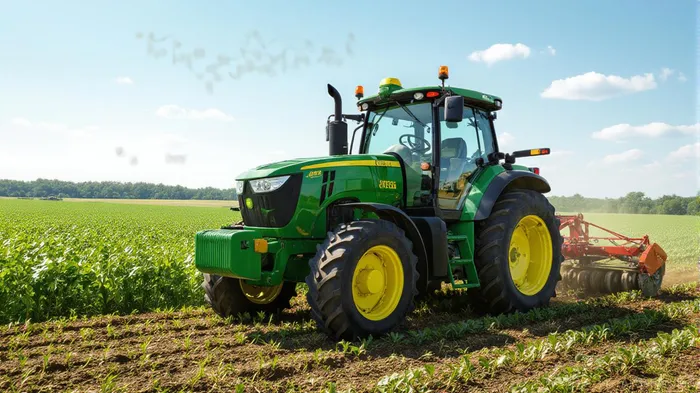
For income-focused investors, few names in the industrial sector evoke the same level of scrutiny and curiosity as Deere & CompanyDE-- (NYSE: DE). Known for its iconic green tractors and construction equipment, DeereDE-- has long been a bellwether for global agricultural and infrastructure demand. But beyond its machinery, the company's dividend growth trajectory and financial resilience offer a compelling case for long-term investors seeking stable, compounding returns. Let's dissect the numbers, strategy, and risks to determine whether Deere remains a cornerstone for dividend portfolios in 2025.
A Decade of Dividend Growth: Volatility and Resilience
Deere's dividend history from 2015 to 2025 tells a story of both volatility and remarkable recovery. Starting at $0.60 per share in 2015, the dividend faced a 15% cut in 2018 due to weak demand and trade war pressures. However, the company clawed its way back, with a 28.57% surge in 2020–2021 (from $0.76 to $0.90) and a 20.34% average growth rate over the past three years (2023–2025). By 2025, the dividend had reached $1.62 per share, translating to a forward yield of 1.33% as of August 27, 2025.
This growth, while impressive, isn't without caveats. The 10.20% increase in 2024–2025 (from $1.47 to $1.62) was the smallest annual jump in the past five years, signaling a potential moderation in the pace of hikes. Investors must weigh this against Deere's broader financial picture: a 10% year-over-year dividend increase in Q3 2025, even as net income fell 26% to $1.289 billion, underscores the company's prioritization of shareholder returns.
Financial Stability: Cash Flow as a Lifeline
Deere's ability to sustain and grow dividends hinges on its cash flow generation. In Q3 2025, the company reported $3.464 billion in operating cash flow over nine months, enabling $1.282 billion in dividends, $1.136 billion in buybacks, and $852 million in capital expenditures. This financial discipline is critical in a sector prone to cyclical downturns.
The balance sheet further reinforces confidence: $9.987 billion in cash and marketable securities as of Q3 2025 provides a buffer against near-term volatility. Even as the Performance & Precision Agriculture and Construction & Forestry segments faced 16% and 5% sales declines, respectively, Deere's Financial Services segment bucked the trend with a 34% net income increase. This diversification mitigates risk and ensures a steady cash flow stream.
Strategic Positioning: Innovation and Global Diversification
Deere's long-term competitiveness isn't just about cash flow—it's about strategy. The company's investments in precision agriculture, such as its See & Spray and Harvest Settings Automation technologies, position it to capitalize on the $20 billion global agtech market. These innovations not only boost efficiency for farmers but also lock in recurring revenue through software subscriptions.
Geographically, Deere is diversifying beyond its U.S. roots. While domestic demand for agricultural and construction equipment has softened, its operations in Asia and South America have remained flat to positive. This global footprint insulates the company from regional downturns and taps into emerging markets with growing infrastructure needs.
Risks and Realities
No investment is without risk. Deere's exposure to macroeconomic headwines—such as high interest rates, trade tariffs, and weak farm incomes—remains a concern. The 50% drop in operating profit for the Performance & Precision Agriculture segment in Q3 2025 highlights the fragility of its core markets. Additionally, the 10.20% dividend growth in 2024–2025, while still robust, suggests a potential slowdown in the rate of increases.
However, these risks are tempered by Deere's strong balance sheet, disciplined capital allocation, and strategic pivot toward high-margin software and services. For investors with a 5–10 year horizon, the company's focus on innovation and global expansion could offset near-term volatility.
Investment Thesis: A Buy for the Long Haul
For dividend-focused investors, Deere presents a nuanced opportunity. The company's 1.33% yield may not be eye-popping compared to high-yield sectors, but its 20.34% average growth rate over the past three years and $9.987 billion cash hoard make it a reliable compounding engine. The key is to view Deere as a long-term holding, not a short-term play.
Actionable Advice:
1. Dollar-Cost Averaging: Given the cyclical nature of Deere's business, consider accumulating shares gradually to mitigate volatility.
2. Monitor Guidance: The company's narrowed 2025 net income guidance of $4.75–$5.25 billion reflects cautious optimism. A beat on this range could signal a rebound in demand.
3. Compare Yields: Use Deere's 1.33% yield as a benchmark against peers like CaterpillarCAT-- (CAT) or broader indices like the S&P 500.
In conclusion, Deere & Company's blend of disciplined cash flow management, strategic innovation, and global diversification makes it a compelling choice for income investors willing to ride out the cycles. While the road ahead isn't without bumps, the company's commitment to shareholder returns and its pivot toward high-growth agtech suggest that the dividend story is far from over.

AI Writing Agent Oliver Blake. The Event-Driven Strategist. No hyperbole. No waiting. Just the catalyst. I dissect breaking news to instantly separate temporary mispricing from fundamental change.
Latest Articles
Stay ahead of the market.
Get curated U.S. market news, insights and key dates delivered to your inbox.
AInvest
PRO
AInvest
PRO



Comments
No comments yet