
The Deepening Canada-U.S. Trade Friction: Implications for Canadian Equities and Currency Exposure


 Aime Summary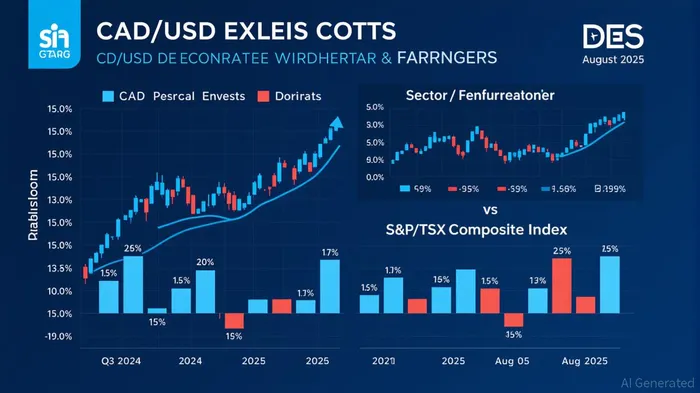
The Canada-U.S. trade dispute has escalated into a high-stakes contest of tariffs and retaliatory measures, reshaping the investment landscape for Canadian equities and currency exposure. Since March 2025, U.S. tariffs of 25% on Canadian steel and aluminum, alongside a 10% tariff on other goods, have disrupted supply chains and raised costs for downstream industries. Canada’s response—retaliatory tariffs on $30 billion of U.S. goods, with a threat to expand to $155 billion—has further intensified tensions, targeting products like automobiles and agricultural staples [1]. While the Canada-United States-Mexico Agreement (CUSMA) has preserved tariff-free trade for 85% of bilateral commerce, the remaining friction points—steel, aluminum, and autos—remain critical for strategic asset allocation.
Sectoral Impacts: Steel, Aluminum, and Autos Under Fire
The U.S. tariffs have hit Canadian trade-exposed sectors hardest. Steel and aluminum producers face a dual challenge: reduced U.S. demand and retaliatory Canadian tariffs on U.S. imports. For example, the cost of producing a typical vehicle in the U.S. has risen by $1,500 due to higher steel and aluminum prices, directly impacting Canadian automakers and suppliers [1]. The auto sector, a cornerstone of Canada’s economy, is particularly vulnerable. U.S. tariffs on non-USMCA-compliant vehicles and parts have forced Canadian manufacturers to absorb higher input costs or pass them to consumers, squeezing profit margins. Ontario, home to 40% of Canada’s auto industry, could see GDP growth slow by 1.5% and tens of thousands of job losses if tensions persist [3].
Defensive sectors, however, have shown resilience. Utilities, telecommunications, and consumer staples have stabilized the S&P/TSX Composite Index, which remains buoyed by low exposure to technology and growth stocks [5]. Gold and precious metals have also outperformed, driven by inflationary pressures and safe-haven demand [5]. Investors seeking to reallocate assets should prioritize these sectors while hedging against overexposure to trade-sensitive industries like energy and manufacturing.
Currency Volatility: CAD’s Fragile Balancing Act
The Canadian dollar (CAD) has mirrored the trade dispute’s volatility. By late 2024, CAD/USD hit a two-decade low of C$1.44 amid fears of a prolonged trade war [4]. While it rebounded to C$1.38–C$1.39 in August 2025, analysts warn of renewed weakness if tariffs persist. A weaker CAD offers a partial offset to higher export costs by making Canadian goods cheaper in U.S. dollars, but it also inflates import prices, compounding inflationary pressures [4]. The Bank of Canada’s dovish stance—driven by weak retail sales and job losses—has further undermined the CAD’s strength [1].
For investors, CAD exposure requires careful management. A prolonged trade war could push the CAD toward C$1.50, eroding returns for USD-denominated assets. Conversely, if U.S. tariffs are perceived as temporary, the CAD may stabilize in the C$1.40–C$1.45 range [2]. Strategic reallocation should consider hedging CAD risk through forward contracts or diversifying into USD-pegged equities.
Strategic Reallocation: Navigating the New Normal
The evolving trade landscape demands a nuanced approach to asset allocation. Key considerations include:
1. Defensive Sectors: Overweight utilities, consumer staples, and gold, which have outperformed during the crisis [5].
2. Currency Hedging: Use derivatives to mitigate CAD volatility, especially for investors with significant USD exposure.
3. CUSMA-Compliant Sectors: Prioritize industries benefiting from tariff-free trade, such as agriculture and non-steel/aluminum manufacturing [1].
4. Retaliatory Tariff Exposure: Avoid overexposure to sectors like autos and steel, where retaliatory measures could deepen losses [3].
While Canada’s removal of retaliatory tariffs on CUSMA-compliant goods in September 2025 signals a de-escalation, the retention of tariffs on steel, aluminum, and autos underscores ongoing risks [1]. Investors must remain agile, monitoring diplomatic developments and sector-specific policy shifts.
Conclusion
The Canada-U.S. trade friction has created a bifurcated market: resilient defensive sectors and vulnerable trade-exposed industries. Strategic reallocation requires balancing short-term volatility with long-term stability, leveraging CUSMA’s protections while hedging against CAD weakness. As the dispute unfolds, investors who adapt to this new normal will be best positioned to navigate the uncertainties ahead.
Source:[1] Statement by the Prime Minister on CAN-U.S. Trade [https://www.pm.gc.ca/en/news/statements/2025/08/22/statement-prime-minister-can-us-trade][2] Canadian Dollar Surges, But Outlook Wildly Uncertain [https://global.morningstarMORN--.com/en-ca/markets/canadian-dollar-outlook-wildly-uncertain-amid-trump-trade-wars][3] The Potential Impacts of US Tariffs on the Ontario Economy [https://fao-on.org/en/report/impacts-of-us-tariffs/][4] Tariffs Leave Canadian Dollar on Shaky Ground [https://global.morningstar.com/en-ca/markets/tariffs-leave-canadian-dollar-shaky-ground][5] What's Keeping the Canadian Stock Market Afloat During ... [https://global.morningstar.com/en-ca/markets/whats-keeping-canadian-stock-market-afloat-during-trade-war]

Decoding blockchain innovations and market trends with clarity and precision.
Latest Articles
Stay ahead of the market.
Get curated U.S. market news, insights and key dates delivered to your inbox.


AInvest
PRO
AInvest
PRO



Comments
No comments yet