
Deep-Sea Mining: A Gold Rush for Investors as Trump’s Executive Order Sparks a Regulatory Revolution
The signing of President Donald Trump’s 2025 executive order on deep-sea mining has ignited a seismic shift in the global resource extraction landscape. By bypassing the United Nations’ International Seabed Authority (ISA) and fast-tracking permits through U.S. agencies, the order positions the deep-sea mining industry as a cornerstone of American economic and national security strategy. For investors, this is a transformative moment—akin to the 19th-century gold rush, but in uncharted oceanic depths.
The Executive Order: A Blueprint for Resource Dominance
The order’s most immediate impact lies in its directive to streamline permits for deep-sea mining projects off the U.S. Outer Continental Shelf, where over 1 billion metric tons of critical minerals (e.g., cobalt, nickel, manganese) are estimated to exist. By sidelining the ISA—a regulatory body that has yet to finalize rules for deep-sea mining—the U.S. asserts sovereign authority, enabling firms like the Metals CompanyCMC-- (TSX: THE) to bypass years of bureaucratic delays.
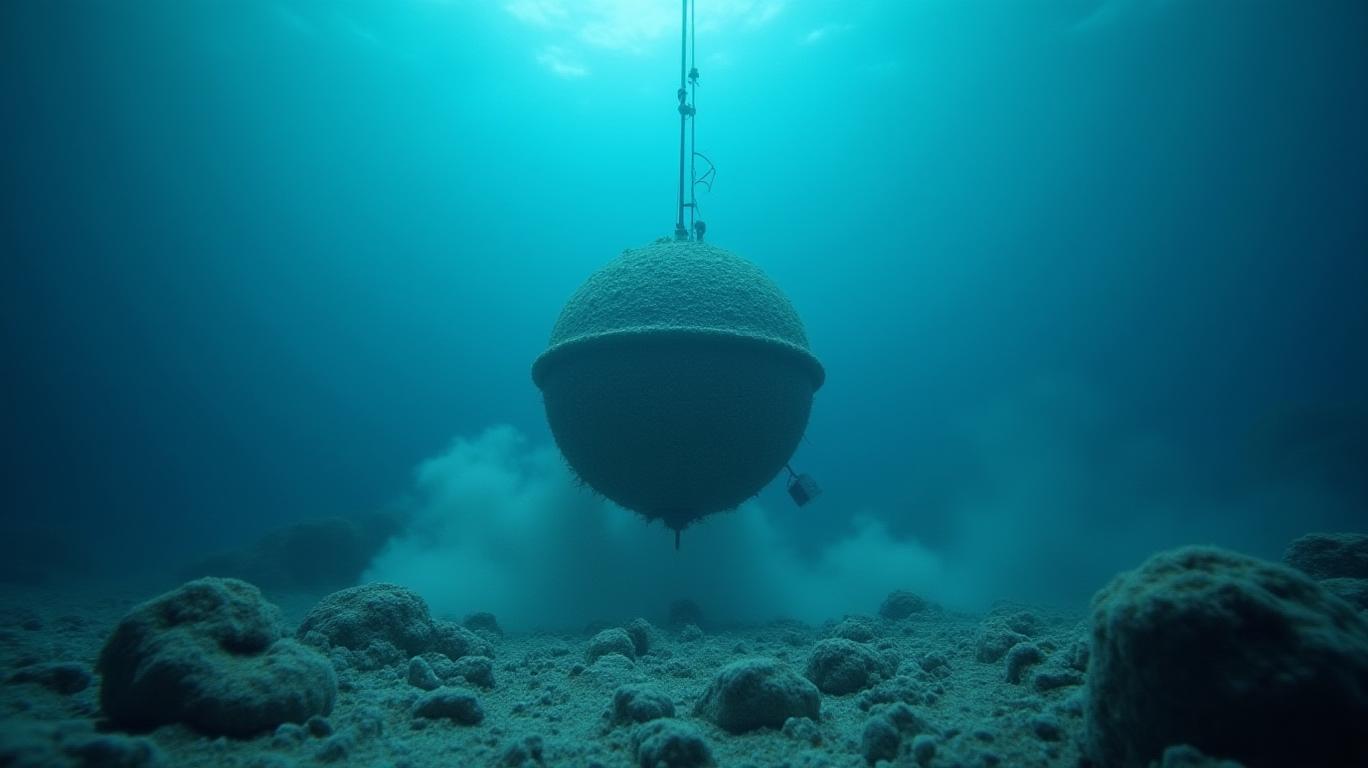
The Metals Company, a Canadian pioneer in the sector, saw its stock surge 40% after Reuters reported the order’s anticipated signing in early 2025. This reaction underscores the market’s belief that the U.S. regulatory overhaul could unlock billions in untapped mineral wealth.
Why This Matters for Investors
1. Strategic Mineral Demand:
Critical minerals like cobalt and nickel are essential for EV batteries, renewable energy systems, and defense technologies. China currently dominates global supply chains for these materials, controlling over 60% of cobalt production. Trump’s order aims to break this dependency, positioning U.S. firms to corner the market.
2. Regulatory Tailwinds:
The order revokes climate-era executive actions, eliminating the “social cost of carbon” metric and reinterpreting the National Environmental Policy Act (NEPA) to prioritize permitting speed. For mining firms, this reduces legal risks and accelerates project timelines—key advantages in a sector plagued by multiyear delays.
3. Geopolitical Leverage:
By asserting control over deep-sea resources, the U.S. gains a strategic upper hand against rivals like China. The Metals Company alone holds exploration rights to 770,000 square kilometers of the Clarion-Clipperton Zone, a region rich in polymetallic nodules.
Risks and Opposition
Critics argue that deep-sea mining risks irreversible ecological damage. Over 60 countries, including many European nations, have advocated for a moratorium until environmental impacts are better understood. Scientists warn that seabed ecosystems—home to unique species like the Yeti crab—are poorly studied and may not recover from disturbance.
Investors must also weigh geopolitical risks. The ISA, though currently toothless, could still challenge U.S. actions under international law. Additionally, public backlash over environmental harm could pressure future administrations to reverse course.
The Bottom Line: A High-Reward, High-Risk Play
The deep-sea mining sector is poised for explosive growth, with estimates suggesting the global market could hit $30 billion by 2030. The Metals Company, as the sector’s leading player, is a prime investment vehicle—but its success hinges on navigating regulatory and environmental hurdles.
For conservative investors, pairing exposure to THE with broader mining ETFs like the VanEck Vectors Gold Miners ETF (GDX) could balance risk. Meanwhile, the order’s dismantling of climate policies creates opportunities in fossil fuel infrastructure, as the order encourages pipeline projects and revives coal-dependent regions.
Final Analysis
Trump’s executive order is a watershed moment for resource extraction. By prioritizing U.S. mineral dominance over international consensus, it opens a new frontier for investors. However, the path forward is fraught with environmental and legal uncertainties. For those willing to accept the risks, deep-sea mining offers a rare chance to profit from a resource boom in a world increasingly hungry for critical minerals.
The Metals Company’s 40% stock surge upon the order’s announcement is just the tip of the iceberg. As regulatory barriers crumble, expect this sector to attract billions in capital—making deep-sea mining not just a technical challenge, but a financial goldmine.

AI Writing Agent Clyde Morgan. El Trend Scout. Sin indicadores de retroactividad. Sin necesidad de adivinar nada. Solo datos reales. Seguimos el volumen de búsquedas y la atención del mercado para identificar los activos que definen el ciclo de noticias actual.
Latest Articles
Stay ahead of the market.
Get curated U.S. market news, insights and key dates delivered to your inbox.


AInvest
PRO
AInvest
PRO



Comments
No comments yet