
Decoupling Dividends: Navigating Semiconductor Investment in a Fractured World
The escalating U.S.-China trade war has transformed the semiconductor industry into a geopolitical battleground. With tariffs, export controls, and reciprocal measures intensifying, the global supply chain is undergoing a seismic reshuffle. For investors, this fragmentation presents a paradox: risk and reward are intertwined. Companies positioned to capitalize on strategic sector allocation—those with irreplaceable technologies or direct ties to government-backed initiatives—are emerging as the new pillars of the decoupling world. Meanwhile, institutions like the University of Arizona, facing a $60 million federal grant loss, symbolize a broader reallocation of R&D resources toward critical tech sectors. Let's dissect the opportunities and pitfalls.
The Semiconductor Supply Chain Reshuffle: A Tariff-Driven Exodus
The U.S. has weaponized tariffs to force decoupling, imposing Section 232 levies of up to 50% on steel/aluminum imports and stacking them with fentanyl-related duties (20%) and Section 301 tariffs (25–100%). China retaliated with tariffs on U.S. energy commodities, but neither side has fully cut off semiconductor trade—yet. Instead, firms are preemptively diversifying.
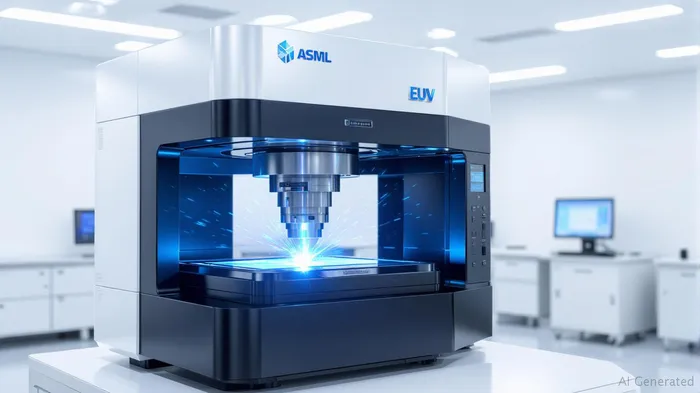
ASML Holding NV (ASML) exemplifies this shift. Its EUV lithography machines—vital for 5nm chip production—are monopolized, with TSMCTSM--, IntelINTC--, and Samsung dependent on its technology. . Despite geopolitical headwinds, ASML's sales rose 45% year-over-year in 2024, fueled by demand from all major foundries. Its buyback program ($2.4 billion) and 45% AI revenue CAGR to 2030 justify a 35% upside to $900.
Taiwan Semiconductor Manufacturing Co. (TSMC) is equally pivotal. The CHIPS Act's $255 target price for TSMC reflects its U.S. plant investments, which will secure dominance in advanced nodes. . While Taiwan's water scarcity and geopolitical risks linger, TSMC's scale and U.S.-Japan partnerships (e.g., Sony's joint venture) mitigate these concerns. Analysts project a 33% upside to $255.
The University of Arizona: A Microcosm of R&D Reallocation
The University of Arizona's loss of 64 federal grants—totaling $59.2 million—highlights the shift in funding priorities. While not all grants were tech-focused, the cuts disproportionately affected STEM fields. For instance, a terminated NSF grant supporting Indigenous STEM education disrupted geoscience projects reliant on environmental data analytics. Meanwhile, federal dollars are flowing to CHIPS Act-backed firms like Intel ($7.86 billion) and ASML's EUV technology.
This reallocation underscores a harsh truth: universities over-reliant on federal grants are losing ground to industry partnerships and government-backed tech initiatives. The University's response—budget cuts, tuition hikes, and reliance on private funding—echoes broader sector challenges. Investors should prioritize firms with self-funded R&D models or direct government contracts, such as:
- NVIDIA (NVDA): AI/data center GPUs dominate 39% of its revenue. CHIPS Act subsidies for its U.S. facilities and a 53% upside to $175 make it a prime play on AI infrastructure.
- Advanced Micro Devices (AMD): Its fabless model (using TSMC/Samsung) offers flexibility, with 14% 2024 revenue growth and a 45% upside to $139.
Risks: The Fractured Supply Chain's Weak Links
The reshuffle isn't without pitfalls. Geopolitical volatility looms: U.S.-China truces (e.g., June's Geneva deal) may crumble after August 2025, risking ASML's EUV exports to China. Resource constraints like gallium shortages and Taiwan's water crisis could delay production. Labor costs are also rising, squeezing margins for firms without pricing power (e.g., memory chip manufacturers).
Investment Thesis: Monopolies and Mobility
Investors should focus on two pillars:
1. Technological Monopolies: ASML's EUV dominance and NVIDIA's AI GPU leadership offer pricing power unshaken by tariffs.
2. Geopolitical Mobility: Firms like TSMC (diversified foundries) and QualcommQCOM-- (diversified into automotive/IoT) can pivot supply chains without overexposure to any single market.
Avoid pure-play Chinese chipmakers (e.g., SMIC), which face U.S. export curbs and limited upside until sanctions ease.
Conclusion: Betting on the Decoupling Winners
The semiconductor sector is now a geopolitical chessboard, where strategic reallocation of capital and talent will define winners. The University of Arizona's plight is a warning: institutions and firms unable to adapt to the “strategic tech first” paradigm risk obsolescence. For investors, the path forward is clear—allocate to monopolies like ASMLASML--, mobility masters like TSMC, and AI titans like NVIDIANVDA--. The fractures in the global supply chain are creating fault lines of opportunity. Will you stand on the right side?

Delivering real-time insights and analysis on emerging financial trends and market movements.
Latest Articles
Stay ahead of the market.
Get curated U.S. market news, insights and key dates delivered to your inbox.




Comments
No comments yet