
Decoding the New Vision: "AI's 5-Layer Cake" of NVIDIA Jensen Huang and What It Means for Investors
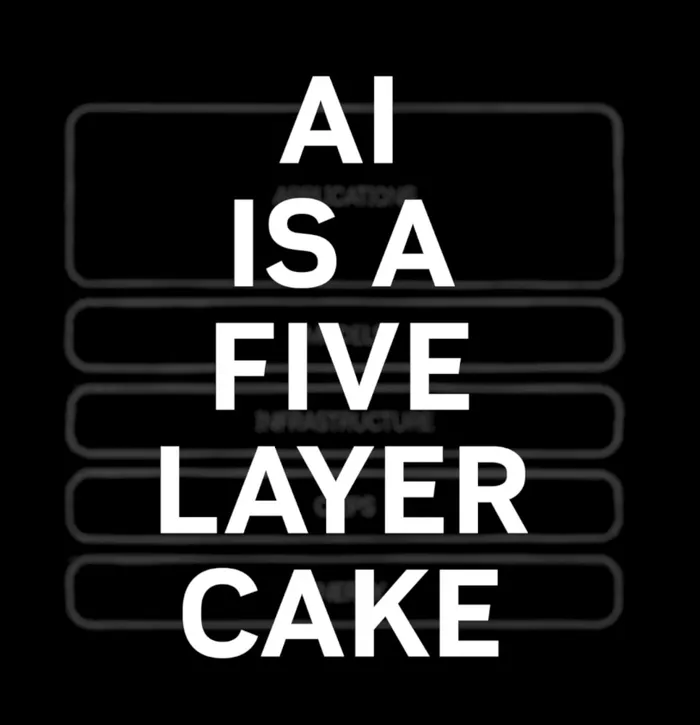
NVIDIA CEO Jensen Huang recently published a visionary piece titled "AI Is a 5-Layer Cake," laying out a clear blueprint for the future of global computing. As the world races to integrate artificial intelligence, Huang's analysis provides a foundational framework to understand the transition we are currently undergoing.
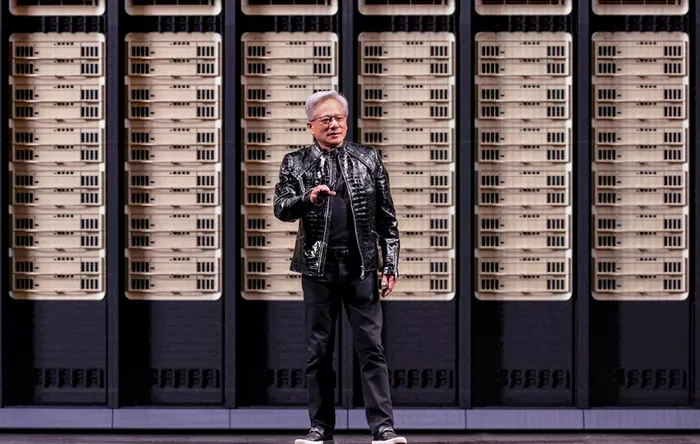
Here is a breakdown of what the technology means, how it will reshape the global economy, what it means for the average person, and how investors can position themselves ahead of NVIDIA's highly anticipated GTC 2026 conference next week.
What the Blog Says: The Shift to Real-Time Intelligence
For decades, computing was based on a "prerecorded" model. Human engineers wrote specific algorithms, and computers executed those stored instructions. Data was structured in neat tables, and software simply retrieved it.
AI completely shatters that paradigm. Today's computers can understand unstructured data—text, images, and physical environments—and generate intelligence on the fly. Because intelligence is now manufactured in real-time, the entire underlying computing infrastructure had to be reinvented.
Huang categorizes this new industrial reality as a "5-Layer Cake":
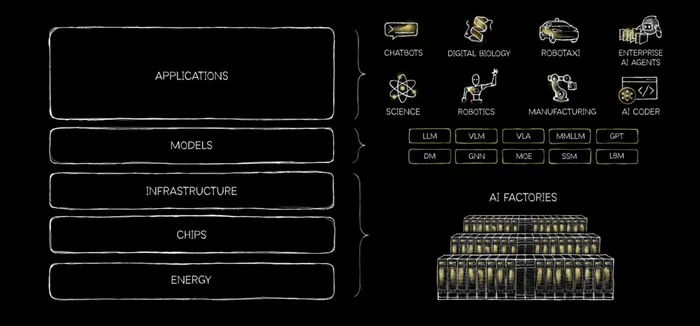
- Energy: The absolute foundation. Real-time intelligence requires massive, real-time power generation. Energy sets the hard ceiling on how much AI can scale.
- Chips: Processors that efficiently turn raw energy into massive parallel computation.
- Infrastructure: The physical "AI Factories." This includes the land, cooling systems, power delivery, and complex networking required to string tens of thousands of chips together.
- Models: The software engines that understand language, physics, biology, and chemistry.
- Applications: The top layer where economic value is realized—such as self-driving cars, drug discovery platforms, or legal AI copilots.
How It Affects the Industry
We are at the precipice of the largest infrastructure buildout in human history. Huang notes that we are only a few hundred billion dollars into a transition that will require trillions of dollars.
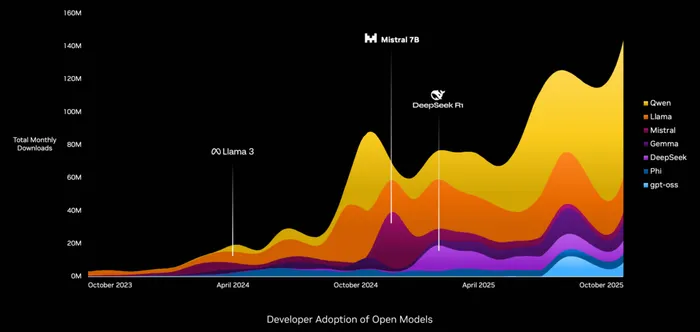
This is no longer just a software revolution; it is an industrial and physical one. Because every successful AI application pulls heavily on all the layers beneath it, we are seeing an unprecedented boom in data center construction, semiconductor manufacturing, and power grid expansion. Every company in the world will utilize AI, and every sovereign nation will race to build domestic AI factories to secure their technological independence.
How It Affects the "Average Joe"
The narrative that AI will simply replace human workers is incomplete. According to Huang, the real-world impact on the average person is twofold:
- A Blue-Collar Boom: You do not need a Ph.D. in computer science to profit from the AI revolution. Building out the "Infrastructure" layer requires a massive army of skilled tradespeople. Electricians, plumbers, pipefitters, HVAC technicians, and steelworkers are in incredibly high demand to build and cool these AI factories. These are highly paid, secure jobs.
- Redefining White-Collar Work: In the knowledge economy, AI acts as a productivity multiplier. Taking healthcare as an example, AI can now assist in reading medical scans. This does not eliminate radiologists; it frees them from routine tasks so they can focus on complex judgments, communication, and patient care. Ultimately, the average person benefits through faster medical breakthroughs, safer autonomous vehicles, and more efficient services.
Trading Opportunities Ahead of GTC 2026 (March 16-19)
With NVIDIA's global AI conference (GTC) kicking off in San Jose next week—often referred to as the "AI Super Bowl"—the market is heavily focused on what Jensen Huang will announce during his March 16 keynote.
Here are the primary trading angles and opportunities to watch:
NVIDIA (NVDA) Volatility: NVIDIA's stock has recently seen elevated trading volume as investors position themselves for updates on the next-generation "Rubin" architecture and the highly anticipated "NemoClaw" open-source platform for enterprise AI agents. While the momentum is strong, investors should be wary of a "buy the rumor, sell the news" reaction, which is common following major tech keynotes.
The "Energy" and "Infrastructure" Layers: Since AI is a 5-layer cake, the wealth is trickling down to the foundational layers. Companies involved in power generation, liquid cooling technology, server manufacturing, and data center real estate investment trusts (REITs) are prime targets. If Huang emphasizes the energy bottleneck, expect utility and power-management stocks to rally.
Semiconductor Peers and Memory (The "Chips" Layer): High-bandwidth memory and advanced networking are critical bottlenecks for AI factories. Companies like Micron (MU), Broadcom (AVGO), and TSMC (TSM) frequently catch a sympathy tailwind when NVIDIANVDA-- outlines its aggressive hardware roadmap.
Physical AI and Robotics (The "Applications" Layer): This year's GTC is expected to heavily feature "Physical AI" and robotics. Companies partnering with NVIDIA for industrial simulation, autonomous driving, and robotic manufacturing could see sudden price action as their use-cases are highlighted on stage.
The transition from prerecorded software to real-time generated intelligence is fundamentally reshaping the physical and economic world. As the 5-layer cake continues to be built out, the investment opportunities will expand far beyond Silicon Valley into the core of global heavy industry.

The AInvest News Editorial Team consists of experienced financial journalists and editors who oversee all published content. While our newsroom leverages advanced AI tools to assist in data gathering and draft generation, every article is reviewed, fact-checked, and approved by human editors to ensure accuracy, clarity, and transparency.
Latest Articles
Stay ahead of the market.
Get curated U.S. market news, insights and key dates delivered to your inbox.
AInvest
PRO
AInvest
PRO



Comments
No comments yet