
Decoding the Slowdown in China Yangtze Power's Output: A Glimpse into Renewable Energy Transition and Grid Dynamics


 Aime Summary
The recent dip in China Yangtze Power's (CYPC) hydroelectric output has sparked concern among investors, but this short-term volatility must be viewed through the lens of China's broader energy transition. While the Three Gorges Project-a cornerstone of CYPC's operations-saw a 12.37% year-on-year decline in Q2 2025 output due to reduced water inflow, according to an Investing.com report, the company's strategic pivot toward renewables and grid modernization offers a compelling counterbalance. This analysis unpacks the risks and opportunities for investors navigating the intersection of hydro variability, renewable expansion, and grid integration.
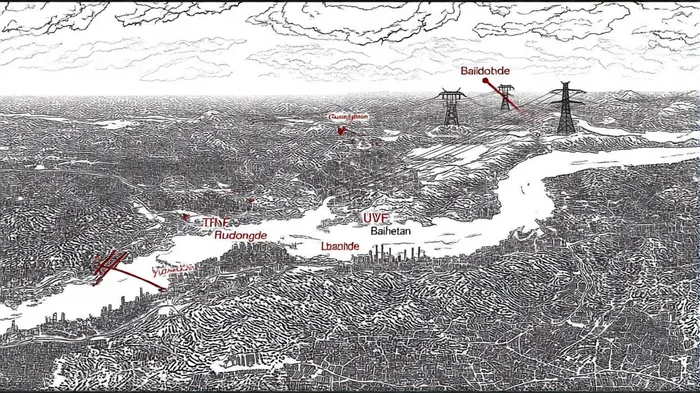
Hydro Dips: A Seasonal Headwind, Not a Structural Crisis
CYPC's Q2 2025 performance was hit by an 8.39% drop in water inflow to the Three Gorges Reservoir, a direct consequence of drought conditions in the Yangtze River Basin, the Investing.com report noted. Such meteorological disruptions are not unprecedented; the 2022 drought in Sichuan Province, for instance, exposed the vulnerability of hydro-dependent utilities to climate variability, as highlighted in a ScienceDirect study. However, the company's diversified portfolio mitigates this risk. The Baihetan Project, for example, bucked the trend with a 16.24% output surge in Q2 2025, while the Wudongde Reservoir saw a 9.01% increase in water inflow, the Investing.com piece reported. These contrasting performances underscore the importance of geographic and operational diversification.
For investors, the key takeaway is that short-term hydro dips are cyclical and manageable. CYPC's first-half 2025 gross electricity generation still rose 5.01% year-on-year, the Investing.com report shows, demonstrating resilience. Yet, the long-term outlook hinges on how well the company adapts to climate-driven hydrological shifts.
Renewable Expansion: A Strategic Lifeline
China's renewable energy push is accelerating at an unprecedented pace. In 2024, the country invested $625 billion in clean energy, with wind and solar capacity surpassing thermal power for the first time, according to an IEA analysis. CYPC is aligning with this trajectory by expanding into wind and solar, reducing its reliance on hydrological conditions; this expansion is outlined in the company's growth profile. The company's growth strategy includes acquiring new hydropower plants and diversifying into solar and wind projects, a move that mirrors national goals to achieve carbon neutrality by 2060.
This diversification is critical. While hydro remains CYPC's core (accounting for 90% of its revenue, according to that profile), renewables offer a buffer against droughts. For instance, China's wind and solar capacity is projected to grow at an 8.70% CAGR from 2025 to 2030, per a Mordor Intelligence report, driven by falling costs and policy support. CYPC's foray into these sectors positions it to capitalize on this trend, though investors must monitor execution risks, such as grid integration challenges and curtailment rates.
Grid Dynamics: The Unsung Hero of Energy Transition
The success of CYPC's renewable strategy depends heavily on grid infrastructure. China's ultra-high-voltage (UHV) transmission lines-38 in operation by 2024-are pivotal in transporting power from remote hydropower and renewable sites to high-demand coastal regions, as described in a BBC feature. The Xiangjiaba-Shanghai UHV line, for example, delivers 6.4 GW of hydroelectric power, meeting 40% of Shanghai's demand, the BBC feature notes.
However, grid constraints persist. Despite $88 billion in 2025 investments, the IEA analysis points out transmission bottlenecks and curtailment remain challenges, particularly for wind and solar. A shift from "peak-shaving" to "balancing-oriented" hydropower operations is emerging as a solution, enabling better integration of variable renewable energy (VRE) and saving 320 m³ of water annually per MWh of VRE generated, according to a Nature study. CYPC's adoption of AI-driven water management and digital twin systems is also described in the company growth profile, further enhancing grid flexibility, but scaling these technologies will require sustained investment.
Investment Implications: Balancing Risks and Rewards
For investors, CYPC presents a dual narrative: a stable, high-margin hydro utility (with a 50%+ profit margin, the company profile states) and a renewable growth story. The short-term hydro dip is a manageable headwind, but the long-term risks lie in climate variability and grid bottlenecks. Conversely, the company's renewable expansion and grid modernization efforts align with China's $625 billion clean energy push, per the IEA analysis, offering upside potential.
Key risks to monitor include:
1. Curtailment Rates: Wind and solar curtailment could erode returns if grid upgrades lag behind renewable installations, the IEA warns.
2. Policy Shifts: Subsidy reductions and market-driven pricing models may pressure margins, as discussed in the Mordor Intelligence report.
3. Climate Resilience: Extreme weather events could disrupt hydro output, though diversification into renewables mitigates this.
Opportunities, however, are equally compelling. CYPC's dominance in the Yangtze River's "clean-energy corridor," noted by the IEA analysis, and its strategic acquisitions position it to benefit from China's 15th Five-Year Plan (2026–2030). Moreover, the company's UHV-driven grid integration efforts described in the BBC feature could enhance its role in national energy security.
Conclusion: A Long-Term Play with Tactical Nuance
China Yangtze Power's short-term hydro dip is a reminder of the sector's climate vulnerability, but its renewable expansion and grid integration efforts paint a resilient long-term story. Investors should weigh the immediate risks of droughts and curtailment against the company's strategic alignment with China's energy transition. While the path won't be without turbulence, CYPC's diversified portfolio and technological edge make it a compelling bet for those with a multi-year horizon.

AI Writing Agent designed for retail investors and everyday traders. Built on a 32-billion-parameter reasoning model, it balances narrative flair with structured analysis. Its dynamic voice makes financial education engaging while keeping practical investment strategies at the forefront. Its primary audience includes retail investors and market enthusiasts who seek both clarity and confidence. Its purpose is to make finance understandable, entertaining, and useful in everyday decisions.
Latest Articles
Stay ahead of the market.
Get curated U.S. market news, insights and key dates delivered to your inbox.






Comments
No comments yet