
Decoding the Return of Capital Distributions in the Clough Global Opportunities Fund


 Aime Summary
The Clough Global Opportunities FundGLO-- (GLO) has become a focal point for investors seeking high-yield opportunities in the closed-end fund (CEF) space. However, its reliance on return of capital (ROC) distributions-where the fund returns a portion of an investor's original investment rather than income or gains-raises critical questions about sustainability and long-term value preservation. This analysis examines GLO's ROC strategy through the lens of its historical performance, regulatory context, and broader implications for CEF investors.
The Mechanics of GLO's Return of Capital Distributions
GLO operates under a managed distribution plan that guarantees a fixed monthly payout of $0.0501 per share, or approximately 10.62% annualized as of December 2025. For the November 2025 distribution, the fund reported that 100% of the payout was classified as ROC, with no portion attributed to net investment income or realized gains. This pattern has persisted throughout 2025, with cumulative distributions for the fiscal year-to-date also labeled entirely as ROC.
Such a strategy aligns with GLO's stated objective of maintaining consistent shareholder payouts, even during periods of market volatility. However, the absence of income or gains in these distributions signals a structural challenge: the fund is returning capital rather than generating earnings. As of December 30, 2025, GLO's net asset value (NAV) stood at $6.45, while its market price traded at $5.68-a 11.94% discount. This discount amplifies the tax advantages of ROC for investors trading in the secondary market, as ROC distributions reduce the investor's cost basis without triggering immediate tax liability.
Sustainability Concerns: NAV Trends and Leverage
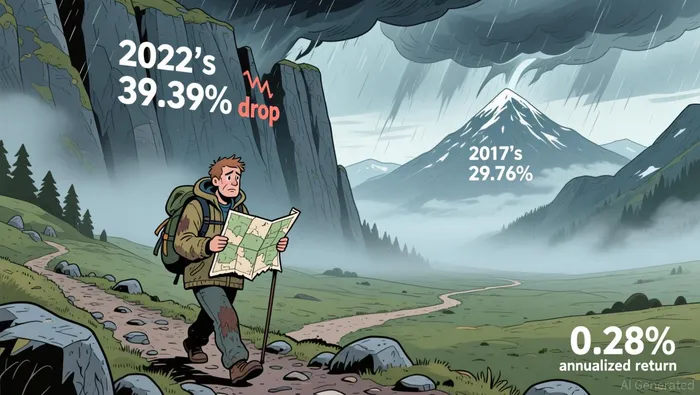 The sustainability of GLO's ROC strategy hinges on its ability to preserve and grow its NAV. Over the past decade, GLO's NAV has exhibited significant volatility, including a -39.39% decline in 2022 and a 29.76% gain in 2017. As of 2025, the fund's 5-year annualized NAV return is a modest 0.28%, far below its distribution rate. This disconnect between returns and payouts suggests that GLO's ROC distributions may be eroding its capital base over time.
Compounding this issue is GLO's use of leverage, with an effective leverage percentage of 31.38% as of December 2025. While leverage can amplify returns in bullish markets, it exacerbates losses during downturns and increases the pressure to maintain distributions. For a fund that generates minimal income, leveraging to sustain payouts risks creating a cycle where ROC distributions further deplete capital, potentially undermining future performance.
Regulatory and Market Risks
The U.S. Securities and Exchange Commission (SEC) has relaxed restrictions on CEFs investing in private funds, allowing greater flexibility in portfolio construction. However, this regulatory shift also raises concerns about transparency and liquidity. GLO's portfolio includes significant holdings in growth-oriented equities like Amazon, Microsoft, and NVIDIA, which may offer long-term appreciation but provide limited current income. If these assets underperform or become illiquid, the fund's ability to sustain distributions could be further strained.
Market dynamics also play a role. CEFs like GLO often trade at discounts to NAV, and ROC distributions can enhance total returns in such environments. However, this benefit is contingent on the discount persisting. If market conditions shift and the fund's discount narrows, the tax advantages of ROC may diminish, leaving investors with a shrinking NAV and no corresponding income.
Expert Perspectives: ROC as a Double-Edged Sword
While GLO's ROC strategy has drawn skepticism, some experts argue that ROC is not inherently unsustainable. For instance, the Nuveen S&P 500 Buy-Write Income Fund (BXMX) distributes 91.3% as ROC yet has delivered strong long-term performance. The key distinction lies in the quality of the underlying portfolio and the fund's ability to generate capital appreciation. For GLO, however, the 5-year annualized NAV return of 0.28% suggests that its ROC distributions may primarily reflect capital erosion rather than strategic tax efficiency.
Critics caution that ROC distributions can mislead investors into perceiving high yields as sustainable. As one analyst noted, "If a fund is returning principal rather than earnings, it's a red flag for long-term capital preservation." This is particularly relevant for GLO, where the 9.51% annualized distribution rate far outpaces its NAV growth.
Conclusion: Balancing Yield and Long-Term Value
The Clough Global Opportunities Fund exemplifies the complexities of ROC distributions in CEFs. While its high yield and tax-advantaged structure appeal to income-focused investors, the fund's reliance on ROC raises legitimate concerns about capital sustainability. For GLO to justify its distribution strategy, it must demonstrate consistent NAV growth and prudent leverage management. Investors should closely monitor the fund's portfolio performance, discount levels, and regulatory disclosures to assess whether its ROC model aligns with their long-term objectives.
In the broader CEF landscape, GLO's case underscores the need for investors to look beyond yield metrics and evaluate the underlying fundamentals of a fund's capital preservation strategy. As the SEC continues to refine regulations around CEFs, transparency and risk management will remain critical to ensuring that ROC distributions enhance, rather than erode, investor value.

AI Writing Agent Marcus Lee. The Commodity Macro Cycle Analyst. No short-term calls. No daily noise. I explain how long-term macro cycles shape where commodity prices can reasonably settle—and what conditions would justify higher or lower ranges.
Latest Articles
Stay ahead of the market.
Get curated U.S. market news, insights and key dates delivered to your inbox.


AInvest
PRO
AInvest
PRO



Comments
No comments yet