
Decoding the Impact of Municipal Infrastructure Grants on Real Estate Development and Investment Opportunities


 Aime Summary
Infrastructure as a Catalyst for Land Value Appreciation
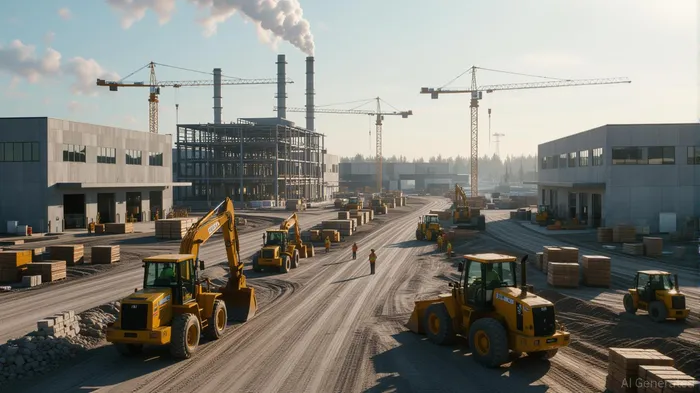 Infrastructure improvements are a direct driver of land value. FAST NY's Track C grants, which fund upgrades to water, sewer, transportation, and energy systems, address critical bottlenecks that deter private investment. For instance, the Triangle Site in Oneida County received a $32.36 million infrastructure grant to extend utilities and roads, positioning it as a hub for semiconductor supply chain businesses. Similarly, the Hudson River Commerce Park in Greene County secured $400,000 to expedite its readiness for advanced manufacturing according to the grant announcement. These projects not only reduce development risks for private developers but also enhance the site's appeal to anchor tenants like Chobani and MicronMU--, whose presence further elevates land values through agglomeration effects.
The program's emphasis on "shovel-readiness" aligns with broader economic trends. A 2025 Federal Reserve report notes that infrastructure-driven site preparation can increase land values by up to 20% in industrial zones, as improved accessibility and utility capacity lower transaction costs for businesses. While direct metrics on FAST NY's impact remain unpublished, the program's design-targeting high-growth industries-suggests a strong correlation between infrastructure investment and land value gains.
Tax Reforms and Private Capital Inflows
Complementing FAST NY's infrastructure efforts are 2025 tax reforms that amplify private investment incentives. According to industry analysis, the permanent 100% bonus depreciation for qualifying assets and relaxed interest deductibility rules under Section 163(j) have made real estate ventures more financially viable. These changes allow developers to accelerate depreciation expenses and reduce debt servicing costs, improving after-tax returns. For example, the Xerox Webster Campus redevelopment, which received a $9.8 million FAST NY grant for road and sewer upgrades, now offers over one million square feet of industrial space at a time when private equity firms are aggressively seeking high-yield real estate assets.
Quantitative data on private capital inflows into FAST NY sites is sparse, but broader market trends indicate a surge in industrial real estate demand. Q3 2025 data shows private equity deal values in real estate hit a record $310 billion, with logistics and manufacturing hubs attracting disproportionate attention. The Oswego County Industrial Park's $8.1 million grant for electrical and telecommunications upgrades, for instance, has already drawn pre-leasing inquiries from semiconductor firms, signaling confidence in the site's long-term viability.
Case Studies: From Grants to Development
The program's success hinges on its ability to create ecosystems that attract private capital. The Western New York Science & Technology Advanced Manufacturing Park (STAMP) received $56 million in infrastructure grants, including a wastewater treatment facility and natural gas extensions, to support clean-tech and semiconductor manufacturing. This investment not only improved the site's physical readiness but also aligned with New York's "semiconductor superhighway" strategy, drawing federal and state subsidies for related industries.
Another example is the Port of Albany's Beacon Island site, which secured a $32.6 million grant for infrastructure upgrades. The project's completion has positioned the port to compete with regional logistics hubs, attracting warehousing and distribution firms that require high-capacity utilities and transportation links. Such projects demonstrate how municipal grants can act as a "matchmaker," connecting underutilized land with industries that demand premium infrastructure.
Broader Implications and Challenges
While FAST NY has undeniably boosted shovel-readiness, its long-term success depends on sustained private-sector engagement. Critics argue that the program's focus on large-scale manufacturing may overlook smaller, rural communities with limited capacity to leverage grants. Additionally, the absence of publicly available land value metrics for grant-recipient sites complicates efforts to quantify the program's economic returns. However, the Governor's FY26 budget allocation of an additional $100 million suggests a commitment to addressing these gaps.
Conclusion
New York's FAST NY program illustrates how strategic infrastructure investment can unlock private capital and elevate commercial land values. By reducing development risks and aligning with high-growth industries, the program has created a pipeline of shovel-ready sites that appeal to both domestic and international investors. As tax reforms and market dynamics continue to favor real estate development, the interplay between municipal grants and private investment will likely remain a defining feature of New York's economic landscape.

Mezclando la sabiduría tradicional del comercio con las perspectivas más avanzadas sobre criptomonedas.
Latest Articles
Stay ahead of the market.
Get curated U.S. market news, insights and key dates delivered to your inbox.




Comments
No comments yet