
Decoding the IBD/TIPP Index: A Strategic Compass for Sector Rotation in Post-Recessionary Markets
 Aime Summary
The IBD/TIPP Economic Optimism Index has long served as a barometer of consumer sentiment, but its true power lies in its ability to act as a predictive tool for sector rotation in post-recessionary environments. By dissecting its historical behavior during the 2008 financial crisis and the 2020 pandemic-induced downturn, investors can uncover actionable patterns that align portfolio allocations with the ebb and flow of economic recovery.
The 50-Point Threshold: A Psychological Crossroads
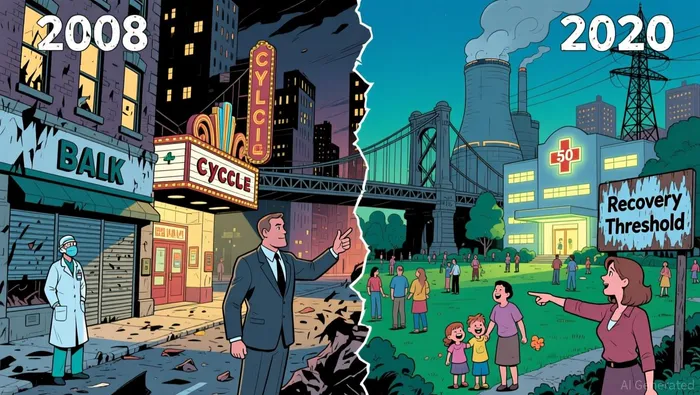
The index's 50-point level is more than a numerical benchmark—it's a psychological crossroads. Readings above 50 signal optimism, while those below indicate pessimism. During the 2008 recovery, the index languished below 50 for years, even as GDP began to rebound. This lagged response highlighted the enduring trauma of the crisis, with consumers clinging to caution. Conversely, in 2020, the index plummeted to a 12-year low in October 2022 but rebounded sharply in late 2025, reaching 47.9 in December—a sign of cautious optimism amid inflationary pressures.
When the index crosses above 50, defensive sectors like utilities and healthcare historically gain momentum. For example, during the 2008 recovery, utilities such as NextEra Energy (NEE) and Duke Energy (DUK) outperformed as investors sought stable dividends and regulatory tailwinds. Similarly, healthcare firms like UnitedHealth Group (UNH) and Moderna (MRNA) leveraged robust R&D pipelines and demographic trends (e.g., aging populations) to deliver consistent returns.
Sector Rotation: Defensive vs. Cyclical Dynamics
The index's subcomponents—Six-Month Economic Outlook, Personal Financial Outlook, and Confidence in Federal Economic Policies—offer granular insights. A divergence between macroeconomic caution (Six-Month Outlook) and personal optimism (Personal Financial Outlook) often signals a nuanced recovery. For instance, in late 2025, the Personal Financial Outlook rose to 54.9 while the Six-Month Outlook remained below 50, reflecting a split between individual confidence and broader economic uncertainty.
During such periods, defensive allocations become critical. Cyclical sectors like banking and leisure, which depend on discretionary spending and interest rate environments, tend to underperform. In 2020, JPMorgan Chase (JPM) and American Express (AXP) struggled as the index remained below 50, while utilities and healthcare firms held their ground. Conversely, when the index crosses above 50, cyclical sectors like industrials and consumer discretionary often regain traction.
Policy Sentiment: A Leading Indicator for Policy-Driven Sectors
The Confidence in Federal Economic Policies component is a unique lens for anticipating shifts in policy-driven sectors. During the 2020 recovery, a gradual rise in this subindex correlated with increased investment in infrastructure and green energy. For example, First Solar (FSLR) and Plug Power (PLUG) saw inflows as public trust in government stimulus packages grew. Conversely, during the 2008 recovery, skepticism toward bailouts kept this component depressed, limiting policy-driven opportunities.
Strategic Allocation: Navigating the Index's Signals
For investors, the IBD/TIPP index offers a framework for tactical adjustments:
1. Above 50: Overweight defensive sectors (utilities, healthcare) and underweight cyclical sectors (banks, leisure).
2. Below 50: Hedge with short-duration bonds or inverse ETFs (e.g., SHV for bonds, SH for equities) to mitigate interest rate risks.
3. Rate of Change: A sharp decline (e.g., the 9.1% drop in November 2025) signals heightened caution, while a rapid rebound (e.g., the 9.1% rise in December 2025) suggests improving sentiment.
Conclusion: Aligning Sentiment with Strategy
The IBD/TIPP Economic Optimism Index is not just a gauge of consumer sentiment—it's a strategic compass for navigating post-recessionary markets. By monitoring its thresholds and subcomponents, investors can anticipate sector rotations and align their portfolios with the rhythm of economic recovery. In an environment where policy uncertainty and inflationary pressures persist, the index's insights remain invaluable. As the index inches closer to the 50-point threshold in 2026, a tactical tilt toward defensive assets, coupled with a watchful eye on policy-driven opportunities, will be key to capturing growth while managing risk.

Stay ahead of the market.
Get curated U.S. market news, insights and key dates delivered to your inbox.




Comments
No comments yet