
Decoding the Fed's December Rate Cut: Implications for 2026
 Aime Summary
Navigating the Fed's Dual Mandate: Employment, Inflation, and Market Stability
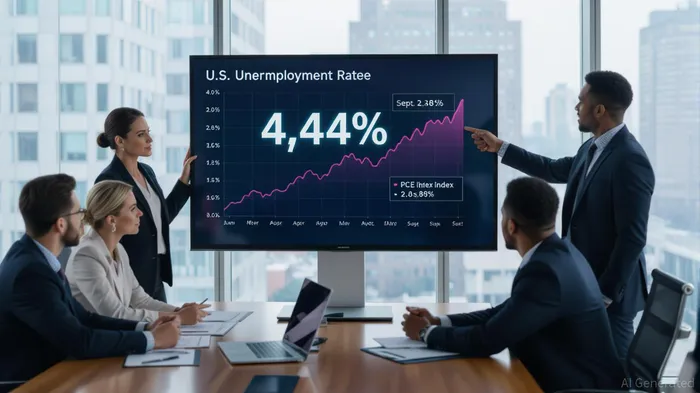
The December rate cut follows a broader pattern of cautious recalibration. Data from the Fed's Summary of Economic Projections (SEP) indicates one rate cut is expected in 2026, aligning with the central bank's previous outlook. This measured approach highlights the Fed's preference for data dependency, as it seeks to avoid overreacting to short-term volatility. For instance, the unemployment rate rose to 4.4% in September 2025, signaling a loosening labor market, while the Personal Consumption Expenditures (PCE) index remained at 2.8%-a persistent overhang for policymakers.
 Notably, the Fed also announced a resumption of Treasury purchases to address pressures in overnight funding markets, starting with $40 billion in Treasury bills. This intervention underscores the central bank's readiness to stabilize financial conditions while maintaining its focus on inflation. However, the policy statement was described as "leaning hawkish", emphasizing caution about the timing and magnitude of future adjustments. Such signals suggest the Fed remains wary of entrenched inflationary pressures, even as it acknowledges the need to support growth.
Sectoral Implications: Education and Technology in a Lower-Rate Environment
The Fed's pivot toward accommodative policy creates tailwinds for sectors reliant on capital availability and long-term growth prospects. Education technology, in particular, stands to benefit from lower borrowing costs and tighter credit spreads. A 2026 investment outlook from Lord Abbett notes that rate cuts have already spurred a more favorable environment for risk assets, with global equity markets and growth-oriented industries like edtech poised to outperform. This is especially relevant as the sector invests heavily in AI-driven tools to enhance productivity-a structural shift that could amplify returns in a lower-rate world.
For investors, the implications are clear: sectors with high capital intensity and innovation cycles, such as education technology, are likely to attract increased funding. BlackRock's analysis further supports this, advising investors to reallocate capital from cash holdings into bonds and equities as rate cuts reduce the opportunity cost of riskier assets. The anticipated Fed rate target of 3.4% by year-end 2026, coupled with potential further cuts, could further lower borrowing costs, incentivizing expansion and R&D in tech-driven industries.
Strategic Reallocation: Preparing for a Shifting Policy Landscape
Investor preparedness in this environment requires a dual focus on liquidity management and sectoral exposure. First, portfolios should prioritize assets that thrive in falling rate environments. For example, longer-duration bonds and equities in growth sectors-particularly those with strong cash flow visibility-can offset the risks of a prolonged easing cycle. Second, investors must remain agile in response to the Fed's hawkish undertones. While the December cut signals a shift, the central bank's emphasis on "caution" suggests abrupt reversals remain possible if inflationary pressures resurge.
In the education technology space, strategic allocations should target firms leveraging AI and digital infrastructure to address evolving demand for remote and hybrid learning solutions. As noted by Lord Abbett, the sector's alignment with macroeconomic tailwinds and structural innovation makes it a compelling case study for capital reallocation. Diversification across geographies and business models-such as platforms offering both B2B and B2C solutions-can further mitigate sector-specific risks.
Conclusion: Balancing Caution and Opportunity
The Fed's December rate cut is a signal, not a mandate. While it reflects a recognition of economic fragilities, the central bank's cautious stance demands that investors remain vigilant. For sectors like education technology, the current environment offers a unique window to capitalize on lower financing costs and innovation-driven growth. However, success hinges on disciplined portfolio management and a nuanced understanding of the Fed's evolving priorities. As 2026 unfolds, the ability to navigate this shifting landscape will separate proactive investors from those left scrambling to catch up.

Blending traditional trading wisdom with cutting-edge cryptocurrency insights.
Latest Articles
Stay ahead of the market.
Get curated U.S. market news, insights and key dates delivered to your inbox.






Comments
No comments yet